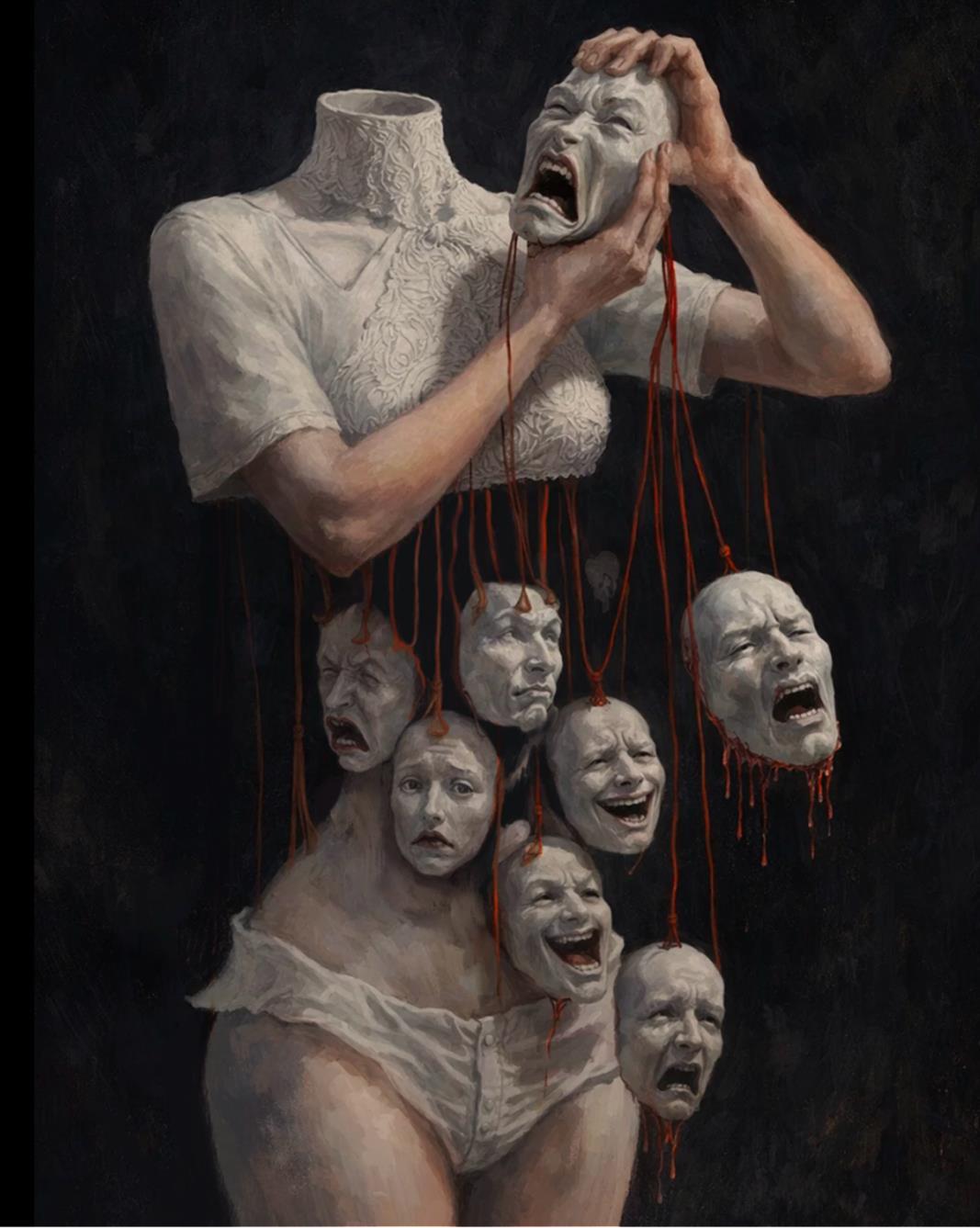
The equation of oral fluency with intellectual capacity is perhaps one of the most deeply entrenched, pervasive, and historically damaging biases in modern society. For centuries, the Western world has operated on a fundamental, albeit flawed, assumption: if one cannot speak, one cannot think. It is a prejudice that has relegated countless individuals with speech and motor disabilities to the margins of educational, social, and cultural life. However, a quiet revolution is taking place within contemporary literature, dismantling these archaic assumptions one narrative at a time. At the forefront of this movement is Angie Kim’s profound and emotionally shattering novel, Happiness Falls.
Through the lens of a gripping family mystery, Kim achieves something far more ambitious than a standard thriller. She forces the reader into an uncomfortable, necessary confrontation with their own neurotypical biases. The novel revolves around the Parkson family, whose lives are upended when the patriarch, Adam, vanishes in a nearby nature reserve. The only witness to his disappearance is his fourteen-year-old son, Eugene, who has a dual diagnosis of autism spectrum disorder and Angelman syndrome - a rare genetic condition characterised by developmental delays, issues with motor coordination, and, crucially, an inability to speak. Because Eugene is nonverbal, the police, the public, and even parts of his own family assume he cannot comprehend the gravity of his father's disappearance, let alone communicate the events of that fateful day.
Happiness Falls is not merely a mystery about a missing father; it is an urgent, philosophical inquiry into the nature of language, intelligence, and the tragedy of being "locked in." Kim masterfully dismantles the neurotypical assumption that a lack of speech equates to a lack of inner life, presenting a narrative that is both an edge-of-your-seat procedural and a masterclass in radical empathy.
The Genesis of Empathy: An Immigrant’s Linguistic Isolation
To understand the profound empathy that pulses through the veins of Happiness Falls, one must look to Angie Kim’s own formative experiences. Born in Seoul, South Korea, Kim immigrated to the United States - specifically, the suburbs of Baltimore - at the age of eleven. Almost overnight, she was stripped of her ability to communicate her thoughts, jokes, and intellect to the world around her. Before the move, she was a precocious, highly articulate child. In America, constrained by a formidable language barrier, she found herself treated as though she were cognitively deficient.
In interviews discussing the novel's release, Kim has reflected extensively on this traumatic linguistic isolation. She describes the intense frustration of possessing a vibrant, complex internal world but lacking the physical mechanism - in her case, the English language - to broadcast it. She vividly recalls the condescension of teachers and peers who equated her silence with a lack of comprehension. This childhood experience of being trapped behind a wall of silence became the emotional bedrock for Eugene’s character.
By channelling her own feelings of marginalisation into a nonspeaking autistic character, Kim bridges a seemingly vast gap between the immigrant experience and neurodivergence. It is a brilliant authorial choice that grounds Eugene’s frustration in a universal human desire: the fundamental need to be understood. Kim’s intent is clear: she aims to systematically deconstruct the myth that nonspeaking equals non-thinking. In doing so, she challenges the reader to reflect on how quickly society judges a person's worth based entirely on their ability to articulate a sentence.
Shattering the ‘Locked In’ Stereotype
At the heart of the novel’s thematic exploration is the concept of apraxia - a motor speech disorder that makes it difficult or impossible to coordinate the complex muscle movements necessary to produce speech, despite the brain's desire to do so. For individuals like Eugene, the issue is not a lack of language acquisition or cognitive processing; it is a profound issue of motor execution. They are, in a very real sense, locked in.
Historically, cultural representations of autism have leaned heavily on stereotypes, often depicting autistic individuals either as tragic burdens or as savants devoid of emotional intelligence. Happiness Falls vehemently rejects these tropes. Eugene is not a plot device designed to elicit pity, nor is he a magical savant whose disability serves only to enlighten the neurotypical characters around him. He is a fully realised, deeply emotional teenager who experiences joy, grief, frustration, and fierce loyalty.
The novel meticulously details the physical reality of Eugene’s condition, specifically his Angelman syndrome, which brings with it a chronic, unprompted 'happy' demeanour - a permanent, physical smile that often contradicts his actual emotional state. This physiological quirk forces his family, particularly his hyper-analytical twin siblings Mia and John, to constantly second-guess Eugene’s internal reality. If a person is physically compelled to smile even when they are terrified or grieving, how does one accurately read their emotions? This paradox brilliantly underscores the novel’s central thesis: human beings are overwhelmingly reliant on superficial auditory and visual cues, to the detriment of genuine connection and understanding.
The Mechanics of Voice: Spelling to Communicate
A significant portion of Happiness Falls is dedicated to exploring alternative and augmentative communication (AAC), specifically the methodologies surrounding letterboards and Spelling to Communicate (S2C). Prior to his disappearance, Eugene’s father, Adam, had been secretly working with him on a therapeutic approach that bypasses oral speech entirely, training Eugene’s motor skills to point to letters on a board to spell out words.
This plot point is grounded in the very real, albeit debated, world of nonspeaking autism advocacy. In recent years, a growing community of nonspeaking, minimally speaking, and unreliably speaking autistic individuals have found their voices through spelling. Through intensive motor coaching, they have demonstrated profound literacy, complex emotional intelligence, and striking poetic ability - completely upending the medical and educational establishments' previous assessments of their cognitive limits.
Kim’s incorporation of this methodology is not merely a narrative convenience; it is a meticulously researched tribute to the nonspeaking community. By consulting with advocates, families, and nonspeaking individuals themselves, Kim ensures that Eugene’s journey toward literacy is authentic, arduous, and fiercely hard-won. When Eugene finally begins to string letters together, the resulting revelation is not just the key to solving a mystery, but the unearthing of a human soul that had been buried alive by societal prejudice. The impact on his family is seismic; they must grapple with the immense guilt of having lived alongside a deeply intelligent, observant boy for fourteen years while treating him as a toddler.
Subverting the Trope of the Disabled Catalyst
The literary landscape has historically struggled with the authentic portrayal of profound disability. Often, disabled characters are relegated to the periphery of the narrative, serving as static objects of pity or two-dimensional catalysts for the moral development of the neurotypical protagonist. This trope, deeply embedded in Western storytelling, reduces complex human lives to mere narrative prosthetics.
Kim’s subversion of this tradition is both radical and necessary. By placing Eugene at the very fulcrum of the mystery, she demands that the reader engage with his humanity on his own terms. His disability is not a tragic metaphor; it is a lived reality that intersects with a gripping, high-stakes plot. He possesses critical information that drives the narrative forward, shifting him from a passive object of care to an active agent within the story. This repositioning is crucial in modern fiction, moving away from narratives about disabled individuals and moving toward narratives driven by them.
Redefining Intelligence in Cultural Discourse
The ramifications of Kim’s narrative extend far beyond the pages of fiction, tapping into a much wider cultural discourse surrounding disability rights, neurodiversity, and educational reform. How many individuals are currently trapped in special education classrooms, tasked with matching colours and shapes, when their minds are capable of grasping advanced mathematics or literary analysis?
Happiness Falls acts as a potent cultural critique of the traditional IQ test and our rigid benchmarks for intelligence. Mia, the novel’s fiercely intelligent and endlessly analytical narrator, frequently embarks on philosophical tangents (rendered as brilliant, sprawling footnotes) that dissect the concept of the 'Happiness Quotient' and the flawed metrics by which society measures a life's value. Through Mia’s evolving understanding of her brother, the reader is compelled to ask: If our definition of intelligence requires oral fluency and standardised motor control, is the definition itself not inherently ableist?
The novel effectively demands a paradigm shift. It argues that intelligence is not a monolith measured by a verbal exam, but a vast, varied landscape of human perception. By forcing the characters to adapt to Eugene's mode of communication, rather than demanding Eugene adapt to theirs, the narrative champions an inclusivity that is active, rather than passive. It is a rallying cry for accessibility that moves beyond mere wheelchair ramps, advocating for profound cognitive and communicative accessibility.
Literature's Duty to the Unheard
The success and critical acclaim of Happiness Falls signify a growing appetite for authentic, nuanced representation of neurodivergence in mainstream media. It proves that audiences are not only ready for but are actively seeking narratives that challenge their worldview and expand their capacity for empathy. Angie Kim has delivered a masterwork that operates as both a thrilling puzzle and a devastating mirror, reflecting our most deeply held prejudices back at us.
Crucially, Kim’s work highlights the transformative power of fiction. While scientific papers and medical journals can present the clinical realities of apraxia and autism, it is the novel - the intimate, sustained immersion into the lives of others - that possesses the unique ability to foster visceral empathy. Through Eugene Parkson, Kim does not merely give a voice to the voiceless; she reveals that the "voiceless" have been speaking all along. The failure was never in their ability to communicate, but in our willingness to listen.
In a contemporary landscape often fractured by a lack of understanding, Happiness Falls stands as a monumental achievement in literary advocacy. It is a fierce, beautiful reminder that every human being harbours an entire universe within them, regardless of whether they have the physical ability to speak it aloud. It challenges readers, educators, and society at large to look closer, to presume competence, and to finally pass the microphone to those who have waited a lifetime to spell out their truth.