It was a bitter January evening in 1931 at the Hotel Des Indes in The Hague. The woman who had traversed 350,000 miles of the globe, dragging an esoteric, fiercely guarded Russian art form to the furthest reaches of six continents, lay dying of pneumonia. Her train journey through the European winter had been arduous, but illness was an alien concept to a constitution forged in the unforgiving rehearsal rooms of St. Petersburg. As her lungs failed, her final instruction to her husband and manager, Victor Dandré, was not an expression of physical suffering but a reflex of pure performance: “Get my Swan costume ready.” Within hours, Anna Pavlova was dead, just weeks shy of her fiftieth birthday.
Yet the legacy she left behind had already permanently rewritten the cultural geography of the twentieth century. Before Pavlova, classical ballet was a rigidly institutionalised discipline, confined largely to the gilded opera houses of Western Europe and the imperial courts of Russia. It was an art form of the elite, by the elite, and for the elite. By the time of her death, ballet had become a universal language of emotion, recognised and revered in provincial theatres across South America, the rural outposts of Australia, and the bustling cities of India. Anna Pavlova did not merely perform ballet; she evangelised it. In doing so, she became the first truly global superstar of dance, a figure whose silhouette remains etched into the collective consciousness of modern theatrical history.
The Imperial Crucible and the Birth of a Swan
Anna Pavlovna Pavlova was born in 1881 in St. Petersburg, Russia. The mythology surrounding her early life often leans heavily on the narrative of the frail, impoverished child who found salvation in art, a romanticised arc that Pavlova herself did little to discourage. What is incontrovertible, however, is the rigorous, almost monastic training she underwent at the Imperial Ballet School, from which she graduated in 1899. At the time, the dominant aesthetic of Russian ballet, largely dictated by Marius Petipa, championed muscular athleticism, pyrotechnic virtuosity, and a robust Italianate technique. Pavlova, with her slender frame, hyper-extended insteps, and delicate constitution, was physically antithetical to the reigning ballerinas of the era.
But where she lacked the sheer physical power of her contemporaries, she possessed an otherworldly grace and a profound theatrical intelligence. This unique quality was recognised early on by the choreographer Michel Fokine. In 1905, Fokine choreographed a brief solo for Pavlova to the sorrowful cello melody of Camille Saint-Saëns’ Le Cygne (from The Carnival of the Animals). Titled The Dying Swan, the piece was barely four minutes long, yet it became the defining artistic statement of Pavlova’s career - a solo she would perform approximately 4,000 times.
Fokine’s choreography stripped away the bravura trickery of the nineteenth century. There were no thirty-two fouettés, no gravity-defying leaps. Instead, the solo demanded a total psychological commitment to the portrayal of a fragile creature clinging desperately to the final moments of life. Pavlova’s interpretation was so intensely emotional, her bourrées so fluid and agonisingly delicate, that she effectively transformed the role of the ballerina from a mere technician into a tragic actor. The Dying Swan became her signature, a symbol of ephemerality that captivated audiences whether they were seasoned balletomanes in Paris or uninitiated spectators in the American Midwest.
Breaking Ranks with the Avant-Garde
Pavlova’s career trajectory initially seemed destined to intersect with the radical vanguard of European modernism. When Sergei Diaghilev launched the Ballets Russes in Paris in 1909, Pavlova was a leading figure in his company, dancing alongside Vaslav Nijinsky in a season that irrevocably shocked and thrilled the Parisian cultural elite. The Ballets Russes was a hotbed of collaborative innovation, bringing together the likes of Igor Stravinsky, Pablo Picasso, and Léon Bakst.
However, Pavlova’s tenure with Diaghilev was brief. She was fundamentally a classicist and a fierce individualist who chafed against the ensemble-driven, avant-garde direction in which Diaghilev and Fokine were taking the company. When she was offered the lead in Stravinsky’s The Firebird in 1910, she rejected the dissonant, modern score, preferring the melodic predictability of older composers. More importantly, Pavlova did not want to be a cog in Diaghilev’s modernist machine; she wanted to be the sun around which her own artistic universe orbited. In 1913, she took the bold, financially precarious step of forming her own touring company, a decision that would dictate the rest of her life.
Ivy House: A London Sanctuary
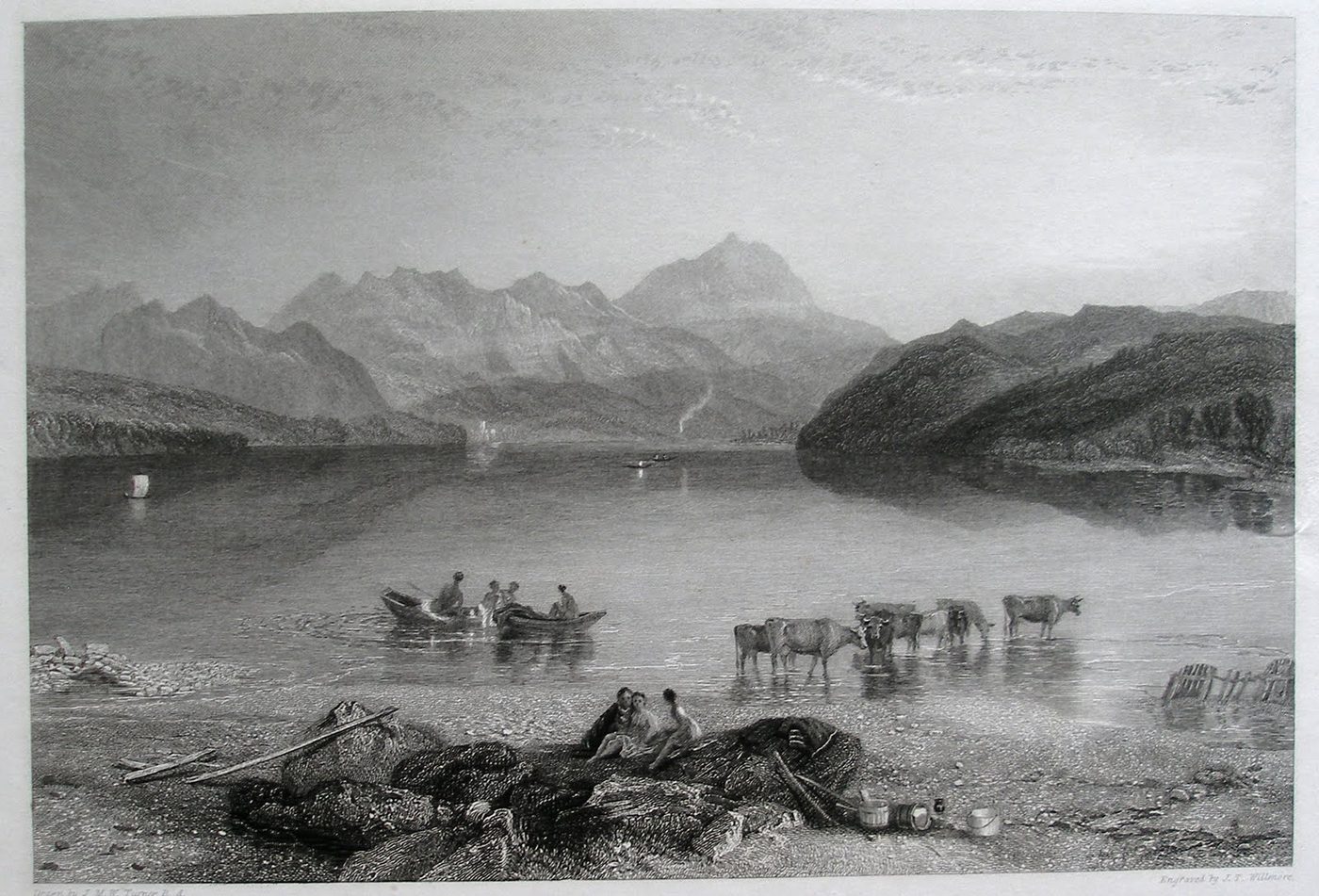
For a woman whose life was defined by perpetual motion, Pavlova required a sanctuary. She found it in London. In 1912, she purchased Ivy House in Golders Green, Hampstead. The imposing mansion, which had once been the residence of the landscape painter J.M.W. Turner, became her permanent home, her rehearsal studio, and the administrative headquarters for her sprawling global enterprise.
Ivy House was a reflection of Pavlova’s aesthetic sensibilities and her deep need for tranquillity amidst the chaos of international touring. The expansive gardens featured an ornamental pond where she kept a flock of swans. These birds, particularly a notoriously irascible swan named Jack, were extensively photographed with Pavlova, blurring the lines between her on-stage persona and her private reality. The London residence also allowed her to establish a ballet school, ensuring that her specific pedagogical methods and stylistic nuances were passed down to a new generation of English dancers, many of whom formed the backbone of her touring company. Her presence in Hampstead significantly bolstered the burgeoning British cultural scene, planting seeds that would eventually help nurture the creation of a distinctively English ballet tradition.
The Missionary of Dance
If Ivy House was her anchor, the world was her stage. The sheer scale of Pavlova’s touring between 1913 and 1931 remains staggering even by contemporary standards. She embarked on an era of unprecedented global travel, earning the moniker of the "missionary of dance." She was driven by an almost messianic belief that the beauty of ballet was a fundamental human right, not a privilege reserved for the metropolitan bourgeoisie.
Her itineraries read like the manifests of early explorers. Pavlova’s company performed in the major cultural capitals of North and South America, but they also ventured far off the beaten path. They danced in the humid heat of India, the high altitudes of Mexico, the sprawling regional towns of Australia, and the traditional theatres of Japan. Travelling by ocean liner, steam train, and sometimes rudimentary motor transport, the physical toll on Pavlova and her dancers was immense.
What made Pavlova’s global tours revolutionary was not just the geography, but her profound respect for the audiences she encountered. She did not merely export a rigid, uncompromising vision of Russian ballet; she engaged with local cultures. In India, she collaborated with the young Uday Shankar, incorporating Indian classical dance motifs into her repertoire. In Mexico, she performed the traditional Jarabe Tapatío on pointe, to the rapturous delight of local crowds. By adapting her programs to incorporate regional influences and ensuring her performances were accessible, she demolished the elitist barriers surrounding classical dance.
The Anatomy of Genius
Pavlova’s enduring appeal lay in a philosophy of dance that merged ferocious discipline with an almost spiritual devotion to aesthetics. She was notoriously demanding of her dancers, but she was entirely merciless with herself. Her hyper-extended feet, while beautiful in line, were structurally weak for the brutal demands of pointe work, requiring her to reinforce her shoes with hardened leather - a practice that was initially derided but eventually became standard in the manufacture of pointe shoes.
She viewed her art not as a profession, but as a vocation. "God gives talent," she famously observed. "Work transforms talent into genius." This was the bedrock of her existence. Her performances were never merely technically proficient; they were imbued with a visceral, nervous energy that made every movement feel intensely alive. She understood that technique was merely the vocabulary of dance; the emotion was the poetry. "It is useless to dabble in beauty," she once remarked. "One must be utterly devoted to beauty, with every nerve of the body."
This devotion manifested in performances that older critics and audiences spoke of with a reverence bordering on religious awe. She possessed an indefinable magnetism - a theatrical presence that could silence a raucous vaudeville house or command the cavernous auditorium of the Metropolitan Opera.
The Enduring Legacy
Today, Anna Pavlova’s name is frequently recognised by the general public only as the inspiration for a meringue-based dessert created in her honour during her tours of Australia and New Zealand. Yet her true monument is the very existence of globalised ballet. Every international touring company, every dancer who boards a flight to perform in a foreign capital, and every young student in a remote provincial town who laces up a pair of pointe shoes owes a debt to the trails Pavlova blazed.
She took an art form that was cloistered in the palaces of the Romanovs and democratised it, carrying it across oceans and continents through sheer force of will. In the tragic, fluttering demise of The Dying Swan, Anna Pavlova discovered a metaphor for the fragile, ephemeral beauty of dance itself. But in her relentless, pioneering life, she proved that such beauty possesses an iron strength - a strength capable of changing the world.