By Anna Zhila
Every so often an academic finding arrives in public with a headline already attached, and the headline is better than the finding. Correcting it is thankless work: the correction is duller than the claim, it arrives later, and it asks people to give up something they enjoyed believing.
April DeConick did that work in 2007, and it is the reason her name is attached to the Gospel of Judas.
What was announced
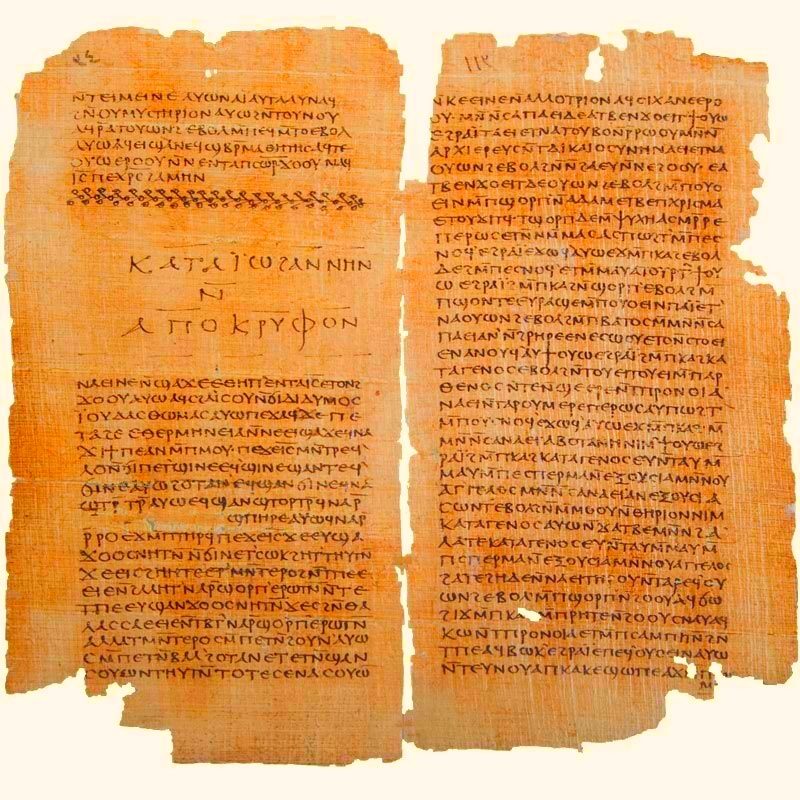
In 2006 the National Geographic Society published a translation of a Coptic codex containing a text known as the Gospel of Judas. The framing given to the public was striking and simple: the gospel rehabilitated Judas Iscariot. Far from betraying Jesus, he had acted on instruction, as the one disciple who understood. Two thousand years of Western art, literature and antisemitic iconography had, on this reading, been built on a misunderstanding.
It was an exceptional story. It travelled accordingly.
What the text says
DeConick, who holds the Isla Carroll and Percy E. Turner Professorship in New Testament and Early Christianity at Rice University, went back to the Coptic.
Her conclusion, published in the New York Times and then at length in The Thirteenth Apostle: What the Gospel of Judas Really Says, was that the translation had gone wrong at several decisive points, and that the text, read carefully, does not make Judas a hero at all. In her reading he remains a demonic figure, as he is in the canonical gospels. The gospel is a bitter satire directed at a rival Christian group, and Judas is the instrument of the satire, not its redeemed subject.
The disagreement was technical: how to render particular Coptic terms, where to place negations, what a word like "daimon" is doing in that context. Technical disagreements are exactly where popular translations tend to fail, because the pressure to produce a readable and remarkable text is enormous and the constraints are invisible to the reader.
Why the episode is worth remembering
The Gospel of Judas story is now a standard teaching case, and not only in biblical studies.
It shows how a finding acquires a narrative before it acquires a consensus. It shows the asymmetry between an announcement backed by a large institution's publicity apparatus and a correction backed by one scholar's reading. And it shows that the correction can nonetheless win, given enough time and enough people willing to check.
DeConick's position is now broadly accepted among specialists. The public memory of the story, however, is still roughly the 2006 version. That gap is the real subject.
The wider work
The Judas episode is the most visible part of a much larger body of scholarship. DeConick took her doctorate at the University of Michigan in 1994 and has spent her career on early Christianity, mysticism and gnosticism, subjects that sit awkwardly between religious studies, ancient history and the study of esoteric traditions.
She founded and chaired the Mysticism, Esotericism and Gnosticism group within the Society of Biblical Literature, and chaired its Nag Hammadi and Gnosticism group. She is co-founder and executive editor of Gnosis: Journal of Gnostic Studies, published by Brill.
Her book The Gnostic New Age argues that gnosticism is not a heresy inside Christianity but a distinct and recurring form of religious thought, one whose central move is the claim that the individual can know directly rather than through an institution. The book received an award from the Figure Foundation for the best university press book in philosophy and religion.
The point that outlasts the controversy
If there is a single lesson in the Judas affair, it is not about Judas.
It is that the interesting question in any sensational finding is always the same, and always boring to ask: what exactly does the primary text say, in its own language, and who has checked. Almost everyone reads translations. Almost no one asks who made the choices inside them.
DeConick's contribution was to ask, in public, at a moment when the answer was inconvenient.
Sources: April D. DeConick, "The Thirteenth Apostle: What the Gospel of Judas Really Says" (Continuum, 2007) and "The Gnostic New Age" (Columbia University Press, 2016); her faculty profile at Rice University; Gnosis: Journal of Gnostic Studies (Brill).