There is a map of the British art world that lives in the minds of many, and its topography is remarkably simple. It consists of a single, sprawling metropolis: London. For decades, the capital has been the undisputed sun in our cultural solar system, its gravity pulling in talent, money, and attention, while the rest of the nation orbited at a respectful distance. But this map is becoming obsolete. A new, more complex geography is emerging, one where the true creative pulse of the nation is often found elsewhere, in coastal towns, historic country estates, and revitalised industrial cities. Here at ArtCulture.UK, where our very algorithms are tuned to the frequency of cultural shifts, we will tell you about this vital new geography of art. This summer offers a compelling invitation to undertake a new kind of cultural pilgrimage, one that traces the vibrant ley lines of British creativity far beyond the capital’s gaze.
Painting light and legacy
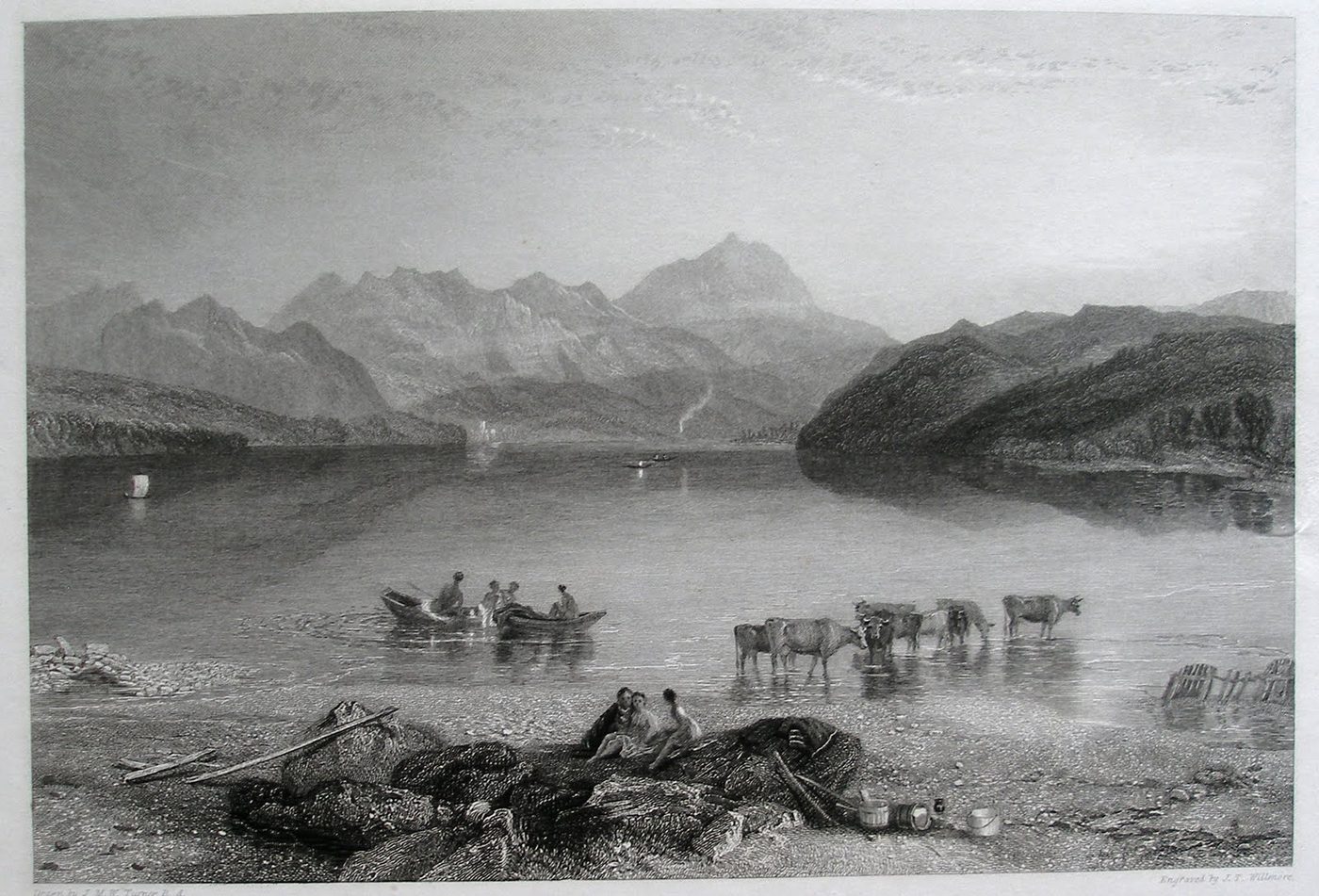
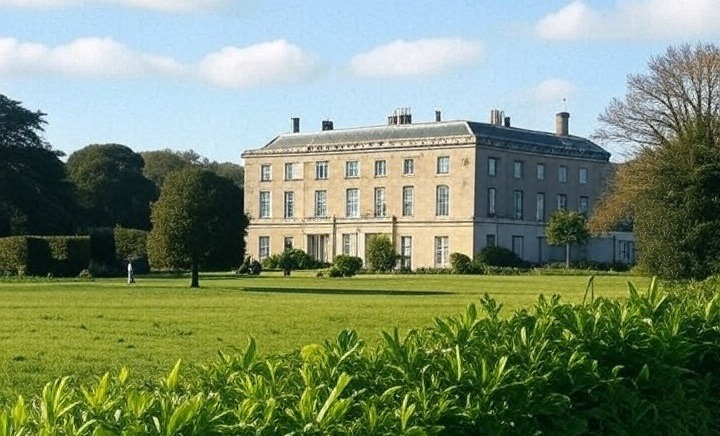
Our journey begins, fittingly, with the master of light himself. At Petworth House in West Sussex, Turner’s Vision at Petworth is more than an exhibition; it is a homecoming. For the first time in two decades, the raw, elemental studies J.M.W. Turner created on this very estate are displayed in the place that inspired them. This is not the finished, polished Turner of the national galleries, but Turner in his laboratory, the engine room of his genius laid bare. The exhibition, part of the nationwide Turner 250 celebrations, juxtaposes these experimental sketches and watercolours with the magisterial oil paintings collected by his great patron, the 3rd Earl of Egremont.
To walk through these rooms is to witness a conversation across centuries between an artist, a patron, and a landscape. One can almost feel the damp Sussex air and see the low, golden light that Turner chased with such revolutionary fervour. The exhibition offers a profound insight into his methods - his radical experiments with colour, his almost alchemical use of materials, and his deep, emotional connection to this specific patch of England. As Petworth House Curator Dr Emily Knight notes, the exhibition enriches our understanding of a place that "played such a significant role in his life." It is a rare chance to see not just the art, but the source of the art, to understand how a corner of the English countryside was transmuted into sublime, world-changing work.
The man behind pop
From the sublime light of the 19th century, we travel to the cool, ironic glare of the 20th. Also in Petworth, Newlands House Gallery presents Andy Warhol: My True Story, an exhibition that promises to peel back the layers of one of modern art’s most persistent myths. We all know Warhol: the fright wig, the Campbell’s Soup Cans, the technicolour Marilyns. This exhibition, curated by Professor Jean Wainwright, seeks the man behind the persona. Wainwright’s advantage is her extraordinary access, built over decades of friendship with Warhol’s family and collaborators, and hundreds of hours spent listening to the artist’s own secretly recorded tapes.
The result is an unusually intimate portrait. We see Warhol not as a pop culture machine, but as a son, a draughtsman, and an obsessive observer. A rarely seen film he made of his mother, Julia, in 1966 is a centrepiece, her ornate calligraphy, which graced many of his early illustrations, a poignant reminder of his origins. The exhibition traces his journey through drawings, photographs, and artefacts that reveal a tender, experimental, and deeply human artist. By including works by contemporary artists he inspired, such as David LaChapelle and Gavin Turk, the show also serves as a testament to his colossal, enduring influence. It is a chance to re-evaluate an artist we think we know, and to discover the quiet, observant soul at the centre of the pop hurricane.
Histories beneath the waves
On the Kent coast, at the aptly named Turner Contemporary in Margate, Venice Biennale Golden Lion winner Anna Boghiguian plunges us into an entirely different world. The Sunken Boat: A glimpse into past histories is a vast, theatrical installation that transforms the gallery into an immersive underwater realm. The Cairo-based artist has long been celebrated for her powerful, site-specific works that untangle complex histories of power, trade, and colonialism. Here, she turns her attention to the sea itself.
Drawing on Margate’s own rich maritime heritage, Boghiguian weaves together a narrative of labour, conflict, and migration. The installation is a dense tapestry of papier-mâché divers, seashells, and fish, interwoven with locally sourced driftwood and an soundscape that blends the shorelines of Margate and Alexandria, Egypt. It is a work that speaks directly to our times, addressing the climate emergency and the geopolitical crises playing out on our seas. It creates a powerful dialogue with the gallery’s namesake, another artist obsessed with the sea’s beauty and brutality. Boghiguian’s work is a potent reminder that the oceans are not just empty spaces between lands, but vast, living archives of human history.
The beautiful, bracing seaside
A short journey along the coast to Hove Museum of Creativity offers a different, though no less insightful, perspective on our relationship with the sea. Beside The Sea brings together the work of two master observers of British life: the internationally celebrated Martin Parr and the Brighton-based photographer JJ Waller. In a wonderfully collaborative twist, each has chosen the other’s photographs for this exhibition, resulting in a joyful, witty, and deeply poignant celebration of the British seaside holiday.
Parr’s photographs, including classics from his groundbreaking 1980s series The Last Resort, are masterpieces of affectionate cynicism. He captures the gaudy colours, the melting ice creams, the stoic resilience of holidaymakers in the face of questionable weather, with an eye that is both critical and deeply empathetic. Waller’s work provides a more local, intimate counterpoint, a love letter to the unique character of Brighton and the Sussex coast. Together, their images create a vibrant, funny, and unmistakably British portrait of leisure, a visual document of a cultural ritual that is at once deeply familiar and endlessly strange.
A rebellion in tailoring
Brighton is also the spiritual home of our next destination. At the Brighton Museum & Art Gallery, The In Crowd: Mod Fashion & Style 1958-66 is a razor-sharp exploration of one of Britain’s most influential youth subcultures. Curated by Roger K. Burton, a stylist whose career has encompassed seminal films like Quadrophenia and collaborations with David Bowie, this is an authoritative and visually stunning exhibition. It is a reminder that Mod was never just about clothes; it was a total aesthetic, a social statement, and a rebellion in tailoring against the drab conformity of post-war Britain.
Over 35 mannequins are styled in rare, pristine examples of early Mod fashion, from sharp Italian-style suits to bold, graphic prints. The exhibition traces the movement’s evolution, its deep connection to the club and music scene, and its lasting impact on global fashion. As curator Mart Pel explains, Mods "weren’t just dressing up, but redefining what it meant to be young and British." Set against the backdrop of Brighton, a city whose seafront became both a catwalk for Mod style and a battleground for clashes with the Rockers, the exhibition feels particularly resonant. It is a vibrant, energetic tribute to a movement that weaponised style to forge a bold new identity.
The planet's slow pulse
Our pilgrimage concludes in Bristol, at the Undershed gallery, with a vision of the future. FRAMERATE: Pulse of the Earth is a profound, meditative artwork by the pioneering ScanLAB Projects. This is art operating at the intersection of technology and ecology. Spread across multiple screens in an immersive installation, the work bears witness to our changing planet on a scale impossible to perceive with the human eye or a traditional camera.
The artists used groundbreaking 3D time-lapse scanning technology to collect thousands of daily scans of the British landscape over a two-year period. The result is a hauntingly beautiful portrait of a world in flux. We see forests breathe, glaciers retreat, and coastlines erode, the immense forces of nature and the impact of human industry made visible. This is not just an artistic endeavour; the data collected is groundbreaking scientific research used by institutions like the British Geological Survey to study environmental change. It is a powerful, deeply moving experience that redefines what a landscape artwork can be, using the tools of the future to ask the most urgent questions of our present.
This journey across the country reveals a cultural landscape that is richer, more diverse, and more dynamic than the old maps would have us believe. The artistic soul of Britain is not confined to a single city. It lives in the light of the Sussex downs, in the defiant style of a seaside town, and in the digital pulse of a changing planet. It is a sprawling, vibrant ecosystem, and this summer, it is waiting to be explored.