By Anna Zhila, artist, art and music critic
The internet is a voracious machine for creating disposable pop stars. Yet, somehow, the Canadian rapper Bbno$.
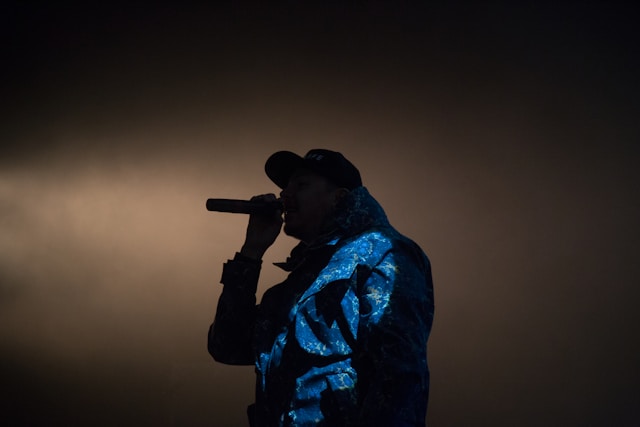
Which brings us to Alexander Gumuchian, the Canadian rapper known as Bbno$ (pronounced, he tells me, Baby No Money). You almost certainly know his work, even if you don't know his name. His 2019 single "Lalala," a collaboration with the producer Y2K, was a cybernetic organism that escaped the lab. It replicated itself across ten million TikTok videos, a piece of fun, up-tempo nonsense that became the inescapable soundtrack of a summer. By all the laws of the digital jungle, that should have been the end of his story. He should be a trivia question.
With a sixth album, Eat Ya Veggies, and a near sell-out world tour, Bbno$ has broken the one-hit-wonder curse. In speaking with him, you begin to understand that his success is not just about the music; it is about a radical indifference to the very metrics of fame that obsess his peers. He represents a new kind of artist, one who has mastered the game by appearing not to care about the rules.
Who is Bbno$? The Man Behind the Music
To understand the artist, you must first understand Alexander Gumuchian. He was never supposed to be here. "I hated music when I was 19," he says, with no trace of irony. "I had no idea that I would actually be successful." He was studying kinesiology at university, comes from a tight-knit family in Vancouver, and likes video games and "objectively good food." This is not the myth-making of a rap mogul in waiting.
His stage name, Bbno$, which he confirms means Baby No Money, isn’t some grand statement on capitalism. "Truthfully," he admits, "I'm just really cheap." This refusal to build a persona is central to his entire project. His music career began not from ambition, but as a coping mechanism after a severe back injury ended his future in elite swimming. "I didn't have anything for 2 years and then I found music, and I felt like I had everything again," he explains. Music was his outlet, his salvation. Everything else - the hits, the tour, the fame - is just an unexpected bonus.
Eat Ya Veggies: The Album Without a Plan
This philosophy - or lack thereof - extends directly to the creative process for his new album, Eat Ya Veggies. When I ask about the themes that connect the twelve tracks, which feature collaborators like Rich Brian and Rebecca Black, I am met with a refreshing bluntness.
"There really is no creative link between these songs," he says. "I just make individual songs and then I ask myself, 'Are these good enough? Do I like them enough?' and that's pretty much it." The album's title was an equal afterthought. "I had no idea I had to name it, and I just thought vegetables would be decent." He tells me this while detailing his tour diet, a quest for kale salads in the American Midwest. This is not affectation. In an industry of grand statements, the work of Bbno$ is fun, catchy, and refuses to take itself seriously. In that refusal, it achieves a kind of radical honesty.
Beyond "Lalala": How Bbno$ Beat the TikTok Curse
The shadow of his massive 2019 hit "Lalala" is inescapable, but it’s a shadow he seems perfectly happy to stand in. Does it bother him to be known as the "Lalala guy"? "In the smallest way, yes," he concedes. "But otherwise - dude, I am the Lalala guy, so fuck everyone else, right?" He fully accepts the absurdity of his own fame.
He understands the nature of TikTok, a platform he correctly identifies not as a double-edged sword, but as "a sword with a handle." He is grateful for its power but keenly aware of its fleeting, hyper-accelerated nature. "People have TikTok brains now," he says. "They give the most of 15 seconds and then they move on."
This is why he seems unconcerned with the modern artist’s obsession with "staying relevant." He measures success not in Spotify's monthly listeners - a metric he dismisses as largely meaningless - but in the tangible evidence of people showing up to his concerts. The happiness comes from the human interaction, not the abstract numbers. He is not trying to please the algorithm; he is serving the dedicated audience that the algorithm brought him.
The Bbno$ Paradox: Success Without Ambition
The conversation circles back, again and again, to this idea of music as a tool for living, rather than a career to be managed. He talks about making more serious, emotional music like his song "I Remember," not as a calculated career move, but simply because "sometimes, I don't want to have to write fun, goofy lyrics." The fact his fans appreciate this variety gives him the freedom to follow his interests and, crucially, not get bored.
Perhaps the most telling moment comes when we discuss his ambitions. Does he want his career as Bbno$ to be bigger? "Sure," he says, before immediately pivoting. "I think [my happiness] matters more to me than having all the fame and success in the world." He seems to truly believe it, speaking of his sister, a PhD student in psychology, as someone he feels is "far more successful than I will ever be."
It is a stunning statement from an artist of his stature, and it is, I think, the secret to his strange and durable success. He has already won the only prize that ever really mattered to him. Music gave him an outlet, a purpose, and a way to be happy after his life was upended by injury. He is not driven by the hunger for external validation that fuels so many artists, because he has already been validated from within. The rest is just a job. A fun, strange, and wildly successful job, but a job nonetheless.
When I ask him what fans should expect from Bbno$ in the near future, his answer is immediate, and perfect.
"I need a vacation."