By Yulia Tulegenova
Why We Cling to "Blosom"
There is a small, and seemingly insignificant, mistake that haunts the English language. It is a mistake that is made every day, in emails, in text messages, in the quiet, hurried corners of our digital lives. It is the act of writing "blosom" instead of "blossom." On the surface, this is a simple spelling error, a minor and forgivable slip of the finger. But as a curator of the strange, and often beautiful, ways in which we use language, I have come to see it as something more. It is a ghost in the machine. It is a typo with a soul. And in its very wrongness, it reveals a profound and subtle truth about our relationship with the language we speak.
The debate between "blosom" and "blossom" is not just a matter of grammatical pedantry. It is a window into the soul of a language, a case study in the way that we, as speakers, are constantly pushing against the established rules, trying to make the language say what we feel, not just what the dictionary tells us it can. The story of "blosom" is the story of a beautiful, and necessary, mistake.
The Weight of a Word
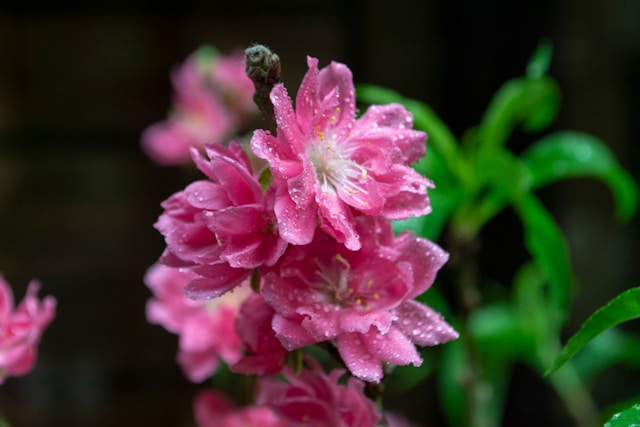
Let us begin with the facts, as the grammarians would have them. "Blossom" is the correct spelling. It is a word with a long and honourable history, a word that is, in its very essence, about the beautiful, and often fleeting, moment of a flower opening to the world. It is a word that is, by all accounts, sufficient.
"Blosom," on the other hand, is a phantom. It is a common misspelling, a ghost word that has no official place in the English language. And yet, it is a ghost that refuses to be exorcised. It appears in articles, in social media posts, in the everyday, unselfconscious use of the language. And the question we should be asking is not "Why are people so bad at spelling?" but "Why are we so drawn to this particular mistake?"
The Sound of a Feeling
The answer, I believe, lies in the subtle, almost subliminal, difference in the sound of the two words. "Blossom" is a soft, and gentle, word. The double "s" in the middle creates a kind of hissing, almost whispering, sound. It is a word of the garden, of the spring, of a quiet, and almost sacred, moment of natural beauty.
But "blosom" feels different. The single "s" in the middle of the word is a harder, more percussive, sound. It is a word that feels, in a sense, more active, more energetic, than its correct, and more gentle, older brother. The person who writes "blosom" is not just misspelling a word. They are, in a small and largely unconscious way, trying to change its meaning. They are trying to create a word that can capture not just the quiet, and often passive, beauty of a flower, but the active, and often explosive, energy of a thing that is in the very act of becoming.
"Blossom" is a word of the still life, of the beautiful, and often static, image. But "blosom" is a word of the time-lapse, of the beautiful, and often violent, process of a thing bursting into life.
A Language of the People
A language is not a static thing. It is a living, breathing, and constantly evolving organism. And it is in these small, and often incorrect, choices that are made by its speakers every day that we can see the true, and beautiful, nature of this evolution.
The persistence of a word like "blosom" is a testament to the creative, and often rebellious, spirit of the people who use it. It is a reminder that a language is not just a set of rules to be followed. It is a tool to be used, a medium to be shaped, a living thing that can be bent, and broken, and remade in our own image.
The grammarians may tell us that "blosom" is a mistake. But the heart of the language, the collective, and often unruly, wisdom of its speakers, knows better. It knows that sometimes, the wrong word is the only word that can truly capture the feeling of a thing.
So, the next time you see someone write "blosom," do not be so quick to correct them. They may be grammatically wrong, but they are, in a deeper, more profound, and more human way, entirely correct. They are not just using the language. They are making it. They are adding a little bit of energy, a little bit of life, a little bit of beautiful, human imperfection, to a world that is, all too often, a little too quiet, a little too still, a little too perfect. And in their beautiful, and necessary, mistake, we can hear the sound of a language that is still, and always will be, gloriously, and thrillingly, alive.