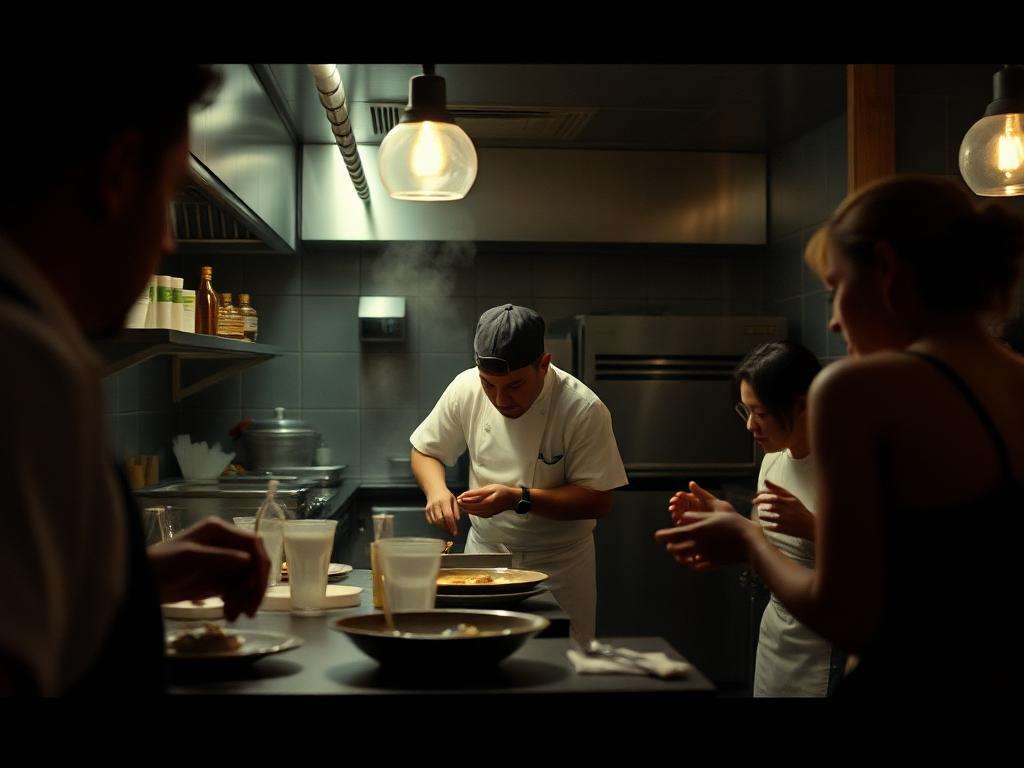
In Phil Barantini's one-shot masterpiece "Boiling Point" (2020), we witness the unravelling of a chef's carefully constructed world during a single night of service. The film's technical brilliance - shot in one continuous take - mirrors its thematic exploration of a life sustained by precarious momentum, where stopping means collapse.
Behind Kitchen Doors
Barantini, who later directed the currently discussed series "The Transition Age," employs his signature one-take method to immerse viewers in the pressure cooker environment of a trendy restaurant kitchen. The lack of edits creates an unrelenting tension that perfectly captures the essence of high-end hospitality - there are no cuts, no breaks, only the constant forward motion required to keep the service from imploding.
The chef-protagonist exists in a state of perpetual crisis. The kitchen staff clashes with front-of-house, a Black dishwasher retreats to heroin in the bathroom, a famous chef-friend demands money, and diners demonstrate their culinary ignorance. When a customer suffers anaphylactic shock after a French cold station chef uses walnut oil in a salad, the disaster feels inevitable rather than accidental. Meanwhile, our protagonist secretly drinks vodka from a health bottle and snorts powder in moments of privacy, culminating in his collapse as voices desperately attempt resuscitation.
Culinary Competence
What's particularly striking about "Boiling Point" is how it subtly questions the chef's actual culinary abilities. Throughout the film, only three dishes are highlighted - one disliked by customers, another triggering allergic reaction, and a third receiving lukewarm praise from a chef-friend with ulterior motives. The film cleverly positions these failures as potentially coincidental (ignorant customers, an oversight with allergens), yet the pattern reveals something more profound.
The restaurant, ostensibly successful enough to attract a buyout offer, clearly generates insufficient profit. The chef-friend's praise feels hollow, motivated by his desire to acquire 70% of the business. The uncomfortable truth emerges: perhaps our protagonist lacks talent both as a chef and as a businessman. His frantic energy masks fundamental incompetence.
Social Performances
This revelation invites broader reflection on those we encounter who maintain impressive social media personas while lacking substance. We've all known individuals who project success through endless conferences, meetings, and project launches - yet we remember them from earlier contexts as unremarkable or even incompetent. Their carefully constructed images inevitably collapse without the foundation of genuine accomplishment or character.
"Boiling Point" suggests this collapse is inevitable. While "fake it till you make it" remains a popular mantra, the film demonstrates how many never reach the "make it" stage - their lives ending at the "fake it" phase, with devastating consequences. The chef's desperate attempts to preserve his restaurant, staff relationships, connection with his son, friendships, and business ultimately fail because they're built on an unsustainable performance rather than authentic capability.
Personal Reflection
The film's power lies in its ability to prompt uncomfortable self-examination. Watching the chef's downfall, viewers inevitably wonder: "Could this be me?" Are my own efforts genuine contributions, or merely performances designed to maintain appearances? The question haunts precisely because the line between legitimate struggle and delusional stubbornness often blurs in our own lives.
Barantini creates a masterful character study that operates simultaneously as technical achievement, hospitality industry exposé, and existential meditation. Through its unbroken take, "Boiling Point" forces viewers to experience the chef's breakdown without the relief of cuts or narrative distance - we must witness every moment of his collapse, just as he must live it.
Professional Façades
The restaurant setting proves particularly effective for this exploration. Professional kitchens represent one of the few remaining environments where immediate competence remains impossible to fake. A dish either works or it doesn't. Service either flows or collapses. The dining room either fills or empties. Unlike corporate environments where failure can be obscured through presentations and reports, restaurant success demands tangible results.
Yet our protagonist has managed to maintain his precarious position despite fundamental inadequacies. His restaurant represents a legitimate social screen - a physical space that lends credibility to his identity as a successful chef. The film demonstrates how such screens eventually fall away, revealing the emptiness behind them.
Substance Versus Image
"Boiling Point" ultimately examines the relationship between substance and appearance in contemporary professional life. The chef's vodka-filled water bottle serves as a perfect metaphor - outwardly signalling health consciousness while actually containing self-destruction. His constant motion creates an impression of purpose and control, yet each crisis emerges from his own deficiencies rather than external circumstances.
The screenplay brilliantly positions the chef's struggles against the broader backdrop of hospitality industry challenges - racism, addiction, mental health issues, economic pressures - while never allowing these contextual factors to excuse his fundamental failures. His collapse results not from these external pressures but from the unsustainable effort required to maintain appearances without commensurate ability.
Technical Brilliance
Barantini's decision to film in one continuous take proves essential rather than gimmicky. The technique forces viewers to experience events in real-time, without the emotional distance editing provides. We cannot look away from uncomfortable moments or skip ahead to resolution. Like the chef himself, we remain trapped in an unfolding disaster, watching as the façade crumbles with excruciating inevitability.
The camera moves through the restaurant like another staff member, catching intimate moments and public performance alike. This technical approach underscores the film's thematic concern with authenticity - there are no cuts to mask mistakes or heighten drama. What we see is what exists within the film's reality, whether characters wish to acknowledge it or not.
Universal Questions
While "Boiling Point" specifically examines restaurant culture, its insights apply broadly to contemporary professional life. Social media has transformed self-presentation into a perpetual performance, encouraging many to construct elaborate personas disconnected from their actual capabilities and achievements. The film asks what happens when reality finally catches up with these performances.
The chef's collapse feels both tragic and inevitable - the natural conclusion to a life built on appearances rather than substance. His desperate efforts to hold everything together generate the film's excruciating tension, yet viewers recognize the futility of these efforts. Without fundamental competence and authentic value, no amount of frantic activity can prevent eventual collapse.
Beyond Judgement
What elevates "Boiling Point" beyond simple morality tale is its refusal to judge its protagonist. While the film exposes his inadequacies, it also acknowledges the very human desire to be seen as successful and respected. His vodka drinking and powder snorting emerge not as moral failings but as predictable responses to the crushing pressure of maintaining appearances.
The film invites viewers to consider how social and economic pressures create environments where appearance often matters more than substance. Our protagonist's collapse feels inevitable not because he's uniquely flawed but because the gap between his presented self and actual capabilities has grown unsustainably wide - a condition many might recognize in themselves or others.
"Boiling Point" offers no easy solutions or comforting resolutions. Instead, it presents an unflinching portrait of contemporary professional anxiety, where the fear of being exposed as inadequate drives increasingly desperate performances. As viewers, we're left wondering not only about the chef's fate but about our own professional identities and the authentic value behind our carefully maintained appearances.
Through its technical brilliance and thematic depth, Barantini's film transcends its restaurant setting to become a profound meditation on authenticity in an age of performance - challenging viewers to examine their own lives for the dangerous gap between appearance and substance that ultimately proves the chef's undoing.