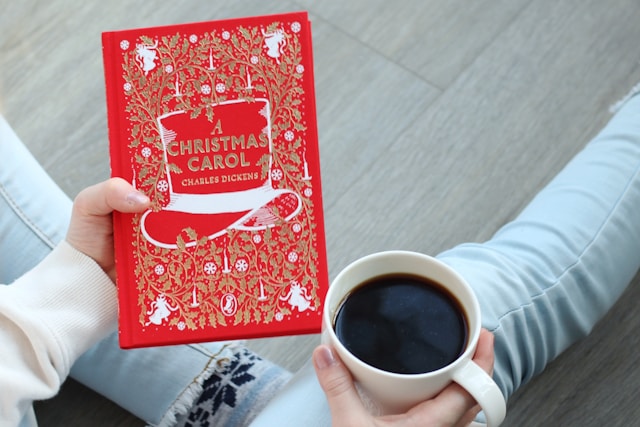
When Charles Dickens published A Christmas Carol in December 1843, Christmas was not the major cultural event it would become. The holiday existed, of course - it had been celebrated in various forms for centuries - but it lacked the cohesion, the rituals, and the cultural significance that we now associate with it. Dickens’s novella did more than tell a ghost story; it provided a template for Christmas as a season of generosity, family, and moral renewal.
The Victorian Context
The Victorian Christmas that Dickens helped create was not inevitable. In the early nineteenth century, Christmas was a relatively minor holiday, overshadowed by other seasonal celebrations. The Puritans had suppressed many Christmas traditions during the seventeenth century, and the Industrial Revolution had disrupted the agricultural calendar that had structured seasonal observance.
Dickens’s genius was to imagine a Christmas that responded to the conditions of his time. The urbanisation and industrialisation that had created new forms of poverty also created a hunger for community, generosity, and moral clarity. A Christmas Carol provided all three, wrapped in a narrative that was accessible, entertaining, and emotionally powerful.
The Story’s Impact
A Christmas Carol was an immediate success. The first edition sold out by Christmas Eve 1843, and the story was quickly adapted for the stage, where it became one of the most popular productions of the Victorian era.
The story’s influence on Christmas customs was direct and measurable. Dickens described customs that were already known in some form - family gatherings, festive meals, charitable giving - but he presented them as essential components of a coherent celebration. His descriptions of the Cratchit family’s Christmas dinner, the Christmas games at Fezziwig’s party, and the transformation of Scrooge’s character provided models that readers and audiences adopted.
The turkey, rather than the goose, became the preferred Christmas dinner in part because of Scrooge’s gift of a turkey to the Cratchits in the story’s conclusion. The phrase “Merry Christmas” - which Dickens used repeatedly - became the standard seasonal greeting. The emphasis on family, generosity, and moral renewal that characterises modern Christmas owes much to Dickens’s vision.
The Broader Legacy
Dickens’s influence on Christmas extended beyond A Christmas Carol. His other Christmas writings - the Christmas numbers of Household Words and All the Year Round, the novels that feature Christmas scenes - reinforced and expanded the cultural template he had established.
The Dickensian Christmas became a cultural reference point that subsequent generations have invoked, adapted, and critiqued. Its emphasis on domesticity, generosity, and moral clarity continues to shape how Christmas is imagined and celebrated, even as the specific customs and rituals have evolved.
The Critique
Dickens’s Christmas has also attracted criticism. Feminist scholars have noted that the domestic Christmas he imagined placed particular burdens on women, who were expected to create and maintain the domestic environment that made Christmas possible. Class critics have observed that the generosity Dickens celebrated was individual rather than structural - that Scrooge’s transformation addressed the symptoms of poverty without challenging the economic system that produced it.
These critiques do not diminish Dickens’s achievement. They remind us that cultural phenomena - even beloved ones - carry assumptions and values that deserve scrutiny.
For readers interested in Dickens’s broader cultural influence, our analysis of Dickens and social reform provides additional context. Those exploring the history of Christmas may also appreciate our feature on pre-Victorian Christmas customs.