By Yulia Tulegenova
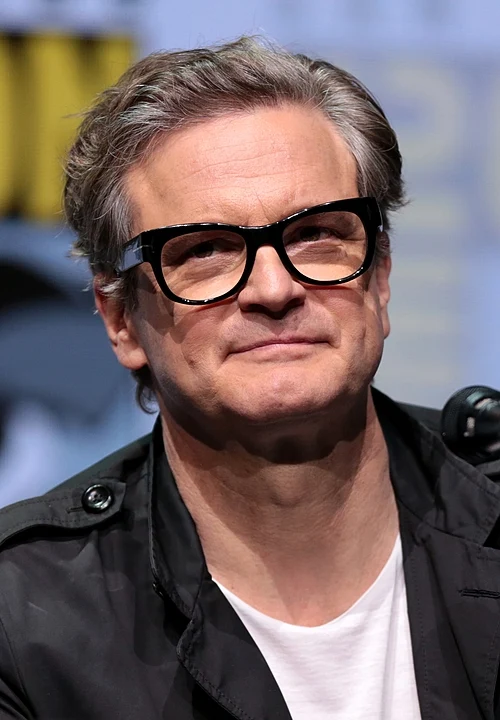
To consider the career of Colin Firth, who turns sixty-five this month, is to reflect on the evolution of the English gentleman on screen. For over three decades, he has been its primary architect and its most compelling saboteur. He is an actor defined by a certain kind of restraint, yet his most memorable performances are underscored by a powerful sense of inner turmoil. His career is not a simple arc but a fascinating study in how to build a persona and then, piece by piece, artfully take it apart.
It truly began with a dive into a lake. The 1995 BBC adaptation of Pride and Prejudice was a phenomenon, and Firth’s turn as Mr Darcy became the benchmark against which all subsequent romantic heroes would be measured. Before this, he was a respected actor with notable roles, but the series made him a household name. The role could have been a gilded cage, forever casting him as the aloof aristocrat. The interesting thing is how Firth managed to both honour and escape that very expectation.
His immediate next steps were telling. In Anthony Minghella’s sweeping wartime drama, The English Patient, he played the wronged husband. It was a secondary role, a figure of quiet anguish on the periphery of a grand, tragic romance. It was a deliberate move away from the heroic centre, an early sign of an actor more interested in complexity than in simple adoration.
Of course, the shadow of Darcy was long. The casting of Firth as Mark Darcy in the adaptation of Helen Fielding's Bridget Jones's Diary was a postmodern masterstroke. Fielding's novel was, itself, a loving homage to Pride and Prejudice, and Firth found himself playing a meta-version of the character that made him famous. Across the franchise, he perfected the art of the emotionally repressed Englishman whose decency eventually shines through. It was a role that solidified his international appeal, demonstrating the timelessness of the Darcy archetype.
But just as the mould seemed set, Firth began to show his true range. In 2003, he delivered two remarkably different performances. As the painter Johannes Vermeer in Girl with a Pearl Earring, he was a man of intense, coiled stillness. Opposite Scarlett Johansson, his Vermeer was a figure of few words, his passion and torment conveyed almost entirely through his gaze. The air in his studio felt thick with unspoken things. That same year, he charmed audiences in the ensemble piece Love Actually. As a heartbroken writer who retreats to France and falls for his Portuguese housekeeper, he was warm, funny, and deeply relatable. The performance was a reminder that beneath the stiff upper lip, there was a man of genuine warmth.
The ultimate validation, however, came with The King’s Speech in 2010. His portrayal of the stammering King George VI was a technical and emotional triumph. Firth captured the profound fear and isolation of a man forced onto the world stage, fighting for every word. The physical transformation was impressive, but the real power of the performance lay in the vulnerability he exposed in a man raised to show none. The Academy Award he won felt less like a discovery and more like a long-overdue coronation for an actor who had been quietly mastering his craft for years. Reportedly, the role seeped so deeply into his process that he had to seek help to lose the stammer after filming wrapped.
In the wake of his Oscar win, Firth’s choices became even more eclectic. He sparred with Emma Stone in Woody Allen’s light-hearted Magic in the Moonlight, playing a sceptical magician whose rational worldview is upended by a charming spiritualist. But the most audacious pivot came with the Kingsman films. As the exquisitely tailored secret agent Harry Hart, Firth weaponised the very idea of the English gentleman. The now-infamous church massacre scene was a moment of pure cinematic shock, a brutal and elegant ballet of violence that felt utterly incongruous and yet perfectly executed. He spent six months in intensive physical training, performing the majority of his own stunts. It was as if Mr Darcy had finally, and spectacularly, lost his patience.
Even in brief appearances, Firth’s presence is commanding. His role as General Erinmore in Sam Mendes’s one-take war film 1917 is a case in point. He appears for only a few minutes, but his weary, grave delivery sets the entire desperate narrative in motion. More recently, he embraced the moral ambiguity of true crime in the television series The Staircase. As the novelist Michael Peterson, a man accused of murdering his wife, Firth was an enigma. He shifted effortlessly between grieving widower and plausible monster, refusing to provide easy answers. It was a challenging, unsettling performance that stripped away any remaining veneer of the romantic hero.
Firth's career is a testament to quiet intelligence. He understood his defining role and, instead of fighting it, used it as a foundation. He has spent the subsequent years exploring what that archetype means, where it can be bent, and when it needs to be broken entirely. He has built a legacy not on one iconic portrayal, but on a long and thoughtful conversation with it. He remains the quintessential Englishman, but his work constantly reminds us just how much complexity, passion, and danger can exist behind a polite smile.