On Sunday, 12 November 2023, the nave of St John’s Church in Friern Barnet became the focal point for a distinct tradition in British musical pedagogy. The Finchley Children’s Music Group (FCMG), a multi-tiered choral organisation based in North London, presented a sprawling concert that traced an ambitious arc from the austere drama of Henry Purcell’s English Baroque to the spirited bombast of Georges Bizet’s French Romanticism.
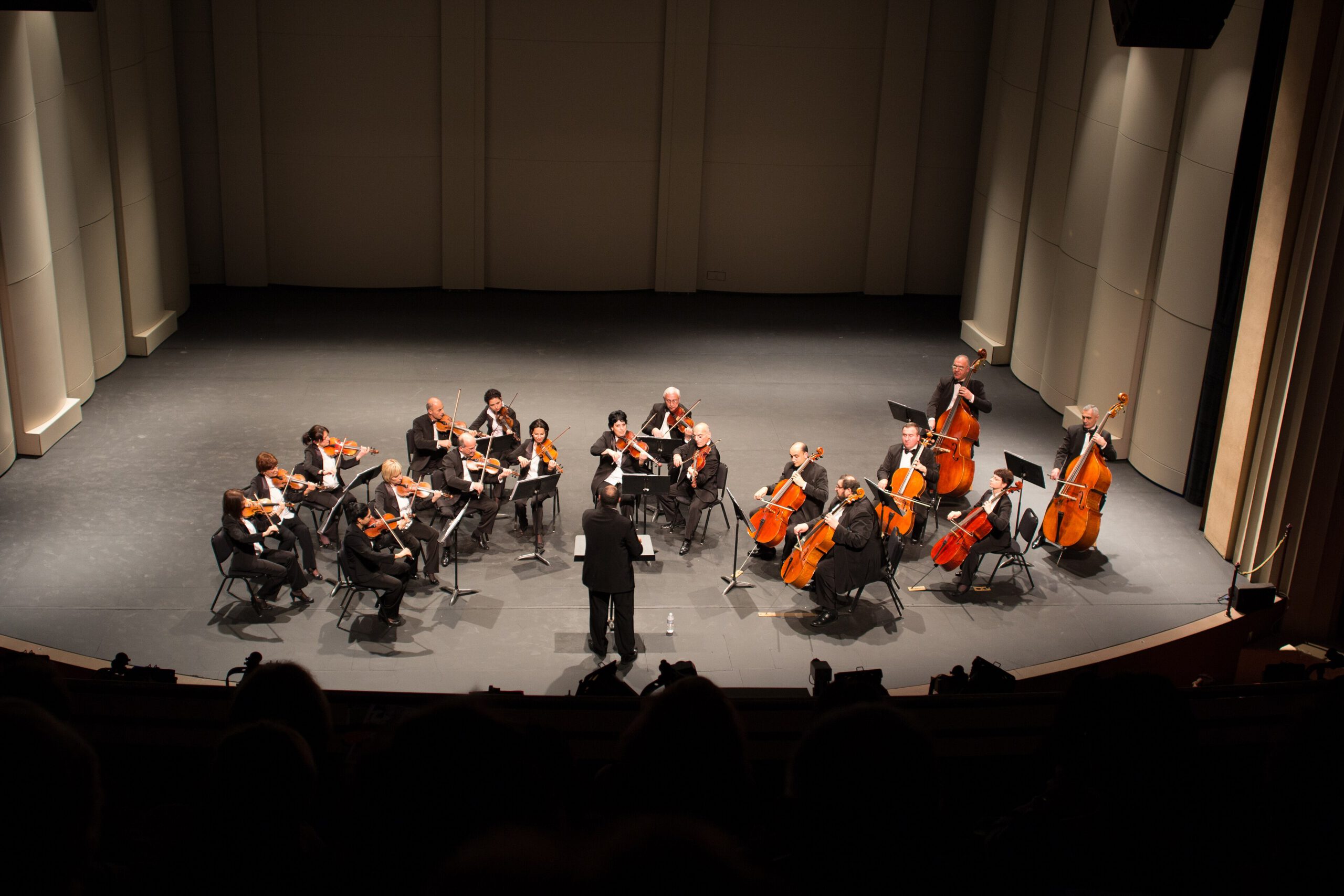
To witness the FCMG in performance is not merely to observe a youth choir executing a recital; it is to see a living archive of Britain’s post-war cultural history in action. While the evening was ostensibly a showcase for the group’s Chamber, Senior, Intermediate, and Tenor & Bass choirs, the event also served as a demonstration of the rigorous technical standards and expansive artistic vision that have sustained the organisation for more than six decades. Under the meticulous baton of Music Director Grace Rossiter - who has guided the ensemble since 2001 - and conductor Rebecca Lodge-Birkebaek, with highly sensitive piano accompaniment by John Evanson and Yau Cheng, the young musicians navigated a demanding repertoire that would challenge many adult amateur ensembles.
A Foundation Built on Benjamin Britten’s Vision
To understand the institutional weight of the Finchley Children’s Music Group, one must look to its genesis in 1958. The choir was initially assembled by John Andrewes for a highly specific purpose: to perform the first amateur production of Benjamin Britten’s one-act opera Noye’s Fludde. Britten, a composer who consistently elevated the children’s chorus from a background texture to a vital dramatic mechanism, required singers who could bring both innocence and piercing accuracy to his complex harmonic language.
The ensemble that Andrewes gathered for that landmark production did not disband after the final curtain. Instead, recognising a stark absence of high-quality, contemporary music composed specifically for children's voices, the group formally established itself as the FCMG. This founding ethos - that children are capable of executing serious, emotionally complex, and avant-garde compositions - remains the central operating principle of the organisation today.
Over the decades, the choir has moved far beyond its initial association with Britten, evolving into a premier vocal training ground that frequently supplies young singers for large-scale professional productions with the London Symphony Orchestra and the BBC Symphony Orchestra. Yet, as the November 2023 concert demonstrated, the FCMG still approaches every piece of music with the same disciplined focus that Britten demanded.
The Chamber Choir and the Baroque Sensibility
The Friern Barnet programme opened with excerpts from Henry Purcell’s Dido and Aeneas, delivered by the FCMG Chamber Choir. Composed in the 1680s, Dido and Aeneas is a foundational work of English opera, demanding a highly specific vocal aesthetic characterised by straight tone, rhythmic agility, and a sharp command of the English text.
The Chamber Choir’s interpretation successfully balanced the required stylistic restraint with underlying emotional volatility. The excerpts were anchored by the performances of soloists Sophia Burns, Elsie Bonfield, Hannah Stubbings, Kiara Fernando, Elizabeth Shepherd, and Lizzie Ostrovsky. In navigating Purcell’s intricate ground basses and stark harmonic shifts, the young soloists displayed a commendable understanding of baroque ornamentation and phrasing. Their diction was uniformly precise, ensuring that the tragedy and despair inherent in the libretto were communicated without the heavy vibrato that often obscures early music performances.
This section of the concert underscored a crucial pedagogical strategy employed by Rossiter: exposing young singers to historical performance practices rather than allowing them to default to a generic, modern choral sound. By demanding stylistic fidelity to the baroque era, the FCMG provides its members with a technical grounding that will serve them across all genres.
The Maturation of Voice: Yan Bregman and Individual Artistry
While choral singing is fundamentally an exercise in collective cohesion, a thriving ensemble must also cultivate and accommodate individual artistry. The Friern Barnet concert highlighted several musicians who are already demonstrating significant promise beyond the choir stalls. Among them was Yan Bregman, whose contribution to the evening highlighted the intersection of formal choral training and broader musical versatility.
Bregman, who studies voice, piano, and composition at the Rachmaninoff Music Academy, represents the kind of multi-disciplinary musician that the FCMG frequently develops. His emerging career already encompasses a striking variety of stages and genres. He has performed at the Royal Albert Hall for the RMA Junior Department Concert, presented original piano compositions at the Barbican Centre, and delivered guest performances at the Manchester Jazz Festival.
His presence in the choir illustrates how the FCMG serves as both a primary educational vehicle for many children and a complementary, grounding discipline for those already pursuing advanced solo studies. The ability to switch seamlessly between the improvisational demands of a jazz standard and the strict, score-bound requirements of classical choral singing is a rare skill, and one that the FCMG environment explicitly nurtures.
Navigating the Repertoire: From Verdi to Cinematic Scores
As the concert progressed, the programming deliberately widened in scope, demonstrating the specific tonal qualities of the organisation's different tiers. The Senior Choir pivoted sharply from the English Baroque to the grand theatricality of the 19th century, tackling choruses by Pyotr Ilyich Tchaikovsky and Giuseppe Verdi.
The juxtaposition of the cheerful Chorus of Peasant Girls from Tchaikovsky’s Eugene Onegin with the malevolent Witches’ Chorus from Verdi’s Macbeth required sudden and absolute shifts in vocal colour. The Senior Choir met this challenge adeptly. In the Tchaikovsky, they produced a bright, forward-placed sound suited to the rustic joy of the Russian text. Minutes later, they manufactured the darker, more jagged timbre required to convey the supernatural malice of Verdi’s witches. This linguistic and tonal flexibility is a hallmark of rigorous vocal coaching, ensuring the singers understand that technique must always serve the dramatic narrative.
The Intermediate Choir shifted the focus toward the 20th century, drawing heavily on musical theatre and cinema. Their set spanned Brian Chappell’s whimsical setting of Humpty Dumpty, the soaring balladry of James Horner, Barry Mann, and Cynthia Weil’s Somewhere Out There, the rhythmic complexity of Lionel Bart’s Who Will Buy? from Oliver!, and the gentle melancholia of Richard and Robert Sherman’s Hushabye Mountain from Chitty Chitty Bang Bang. Rather than treating these popular standards as light relief, the Intermediate Choir applied the same intonational accuracy and breath control that the Senior Choir applied to Verdi.
Crucially, the concert also featured the Tenor & Bass Choir, a vital component of the FCMG structure that provides a dedicated space for older boys and young men whose voices have changed. Retaining male singers through the vocal transition of adolescence is a chronic difficulty for youth choirs worldwide. The FCMG addresses this by offering repertoire specifically suited to developing lower voices. Their renditions of the Priests’ Chorus from Mozart’s Die Zauberflöte and the Huntsmen’s Chorus from Carl Maria von Weber’s Der Freischütz were robust and confident. The young men produced a resonant, mature sound that blended seamlessly with John Evanson’s piano accompaniment, proving the efficacy of keeping adolescent males engaged in the choral tradition.
The Commissioning Tradition and Contemporary Culture
While the November concert relied on established historical repertoire, the FCMG’s reputation is equally defined by its commitment to the modern canon. In its early years, frustrated by the lack of challenging contemporary music for children, the group began commissioning new works. This policy has resulted in significant additions to the British choral repertoire, including Malcolm Williamson’s Julius Caesar Jones (1966), Gordon Crosse’s Potter Thompson, and Alastair Putt’s Under the Giant Fern of Night (2019).
In 2010, to mark its 50th anniversary, the group premiered The Jailer's Tale by Malcolm Singer, a composer whose work has consistently pushed the boundaries of what is expected from young performers. The FCMG’s willingness to engage with complex, dissonant, and structurally challenging new music ensures that they are not merely a museum for classical works, but an active participant in contemporary cultural production. As seen in recent retrospectives on British composers, such as the Malcolm Singer’s 70th Birthday Concert, the ensemble’s historical commissions continue to resonate throughout the wider musical landscape. Furthermore, their precedent of engaging with serious historical material, similar to the works discussed in Music Made In Auschwitz Is Performed In London After 80 Years, demonstrates a profound commitment to music as a vehicle for serious cultural memory.
The Climax: Carmen and the Enduring Power of Collective Song
The evening in Friern Barnet culminated in a massed performance of the Habanera and the March of the Toreadors from Georges Bizet’s Carmen. Combining the forces of the Senior and Chamber Choirs, and featuring soloist Molly Frow, the finale was a masterclass in controlled power. Bizet’s score demands an aggressive rhythmic drive and a highly specific, biting French diction. Frow anchored the Habanera with a smoky, self-assured vocal performance, while the combined choirs navigated the complex, syncopated choral responses with sharp precision. The sheer volume and dynamic range achieved in the Toreador song served as a powerful conclusion, prompting an immediate standing ovation from the audience in the nave.
Ultimately, the concert at St John’s Church was far more than an opportunity for parents to hear their children sing. It was a rigorous demonstration of British choral excellence. The Finchley Children’s Music Group operates as a vital cultural incubator, teaching successive generations of young people how to listen deeply, interpret history, and collaborate within a complex artistic structure. Whether they go on to become professional soloists like Yan Bregman or simply carry an appreciation for Purcell and Verdi into their adult lives, the singers of the FCMG are actively participating in the preservation and advancement of the UK's musical heritage. Under the current leadership of Rossiter and Lodge-Birkebaek, this 65-year-old institution remains as essential, and as dynamically compelling, as it was the day Benjamin Britten first called upon them to sing.