In a universe historically overstuffed with lightsabers, ancient prophecies, and legacy characters, Andor carved its name into Star Wars lore with a scalpel rather than a blaster. When the second and final season premiered on Disney+ in April 2025, it did not merely stick the landing; it retroactively elevated the entire franchise. Across twelve meticulously structured episodes, showrunner Tony Gilroy solidified what the first season had audaciously promised: a mature, grounded, and devastatingly precise anatomy of fascism and the crushing human cost of resisting it.
The achievement of Andor Season Two lies in its refusal to conform to the comforting myth-making that has sustained Lucasfilm for nearly five decades. Here, rebellion is not born in the pristine council chambers of the Jedi or through the mystical intervention of the Force. It is forged in dockworker strikes, illicit financial transfers, Imperial tax audits, and the quiet, desperate compromises made in the shadows of a galaxy buckling under tyranny. As the series hurtles toward the predetermined tragedy of Rogue One: A Star Wars Story, it transforms a straightforward prequel into a prestige masterclass in political espionage, challenging the very parameters of what contemporary blockbuster television can be.
The Architecture of Temporal Storytelling
One of the most striking structural gambits of Season Two is its handling of time. Where the first season detailed a single, highly compressed year in the life of Cassian Andor, the concluding chapter spans four years, bridging the temporal gap leading directly into Rogue One. This narrative is elegantly divided into four distinct blocks of three episodes each, with every arc representing a specific, high-stakes slice of time.
This structure was not merely a convenient way to cross the finish line; it was a deliberate narrative mechanism to show the compounding pressure of revolution. As Tony Gilroy explained to Script Magazine regarding the conceptualisation of these time jumps: "I kinda always knew that when I'd be coming back, I had the wedding [of Mon Mothma’s daughter] to deal with... What if I make it a three-day wedding? All of a sudden that idea is like, 'Wow, that's pretty specific. I wonder if the other episode blocks can work that way'."
This episodic clustering allowed the creative team to treat each block as a self-contained film, tracking the metastasis of the Rebel Alliance from a fragmented network of desperate insurgents into a cohesive, militarised force. It mirrors the relentless momentum of history itself. We do not see every battle or every stolen transmission; instead, we witness the critical stress points. This accelerated timeline forces the characters - and the audience - to confront the rapid, often horrifying escalation of war, where the luxury of morality is the first casualty.
The Evolution of Cassian Andor
At the centre of this sprawling geopolitical thriller is Diego Luna’s Cassian Andor, a role that has profoundly deepened since his introduction in 2016. In the first season, Cassian was a jaded survivalist - a cynical mercenary whose heroism was entirely accidental. By the dawn of Season Two, the reluctance has burned away, replaced by the grim resolve of an operative who understands the mechanics of insurgency.
Speaking to CBR ahead of the season's launch, Luna noted the drastic shift in his character's disposition: "We're gonna go for four years [in season two], and when we find him, he's so far away from where we left him at the end of season one. He's basically the guy to trust for something like that mission."
Luna’s performance in these final twelve episodes is a study in restraint. Cassian rarely speaks in soaring monologues; his transformation is communicated through hardened glances, tactical silences, and the physical exhaustion of a man who is constantly looking over his shoulder. The season rigorously documents his espionage apprenticeship under Luthen Rael (the ever-commanding Stellan Skarsgård). We watch Cassian orchestrate intelligence operations and navigate the treacherous waters of Imperial infiltration, culminating in the fully-formed intelligence officer who will eventually sacrifice everything on the beaches of Scarif.
As Luna promised fans at the D23 Brazil expo: "For those who love Rogue One, this season is going to be very special. And it's going to be fascinating to go straight to Rogue One after watching this second season, because you will see Rogue One from a different perspective. I promise you that." The weight of this promise is felt in every frame; knowing his ultimate fate imbues Cassian’s every survival tactic with a tragic, inescapable irony.
The Bureaucratic Banality of Evil
If Andor excels in its depiction of rebellion, it is equally masterful in its portrayal of the Empire. Gilroy and his production design team, led by the brilliant Luke Hull, understand that true authoritarian terror is not found in cackling villains or planet-destroying superlasers, but in the banal, bureaucratic machinery of the state.
The Empire in Andor Season Two is terrifying because of its competence and its institutional cruelty. The Imperial Security Bureau (ISB) operates like a hyper-efficient corporate entity, where ambitious officers vie for promotions by crushing dissent through administrative overreach and brutal interrogations. Dedra Meero (Denise Gough) and Syril Karn (Kyle Soller) represent the terrifying reality of fascism: it is upheld not just by zealots, but by ambitious middle managers desperate for order and validation.
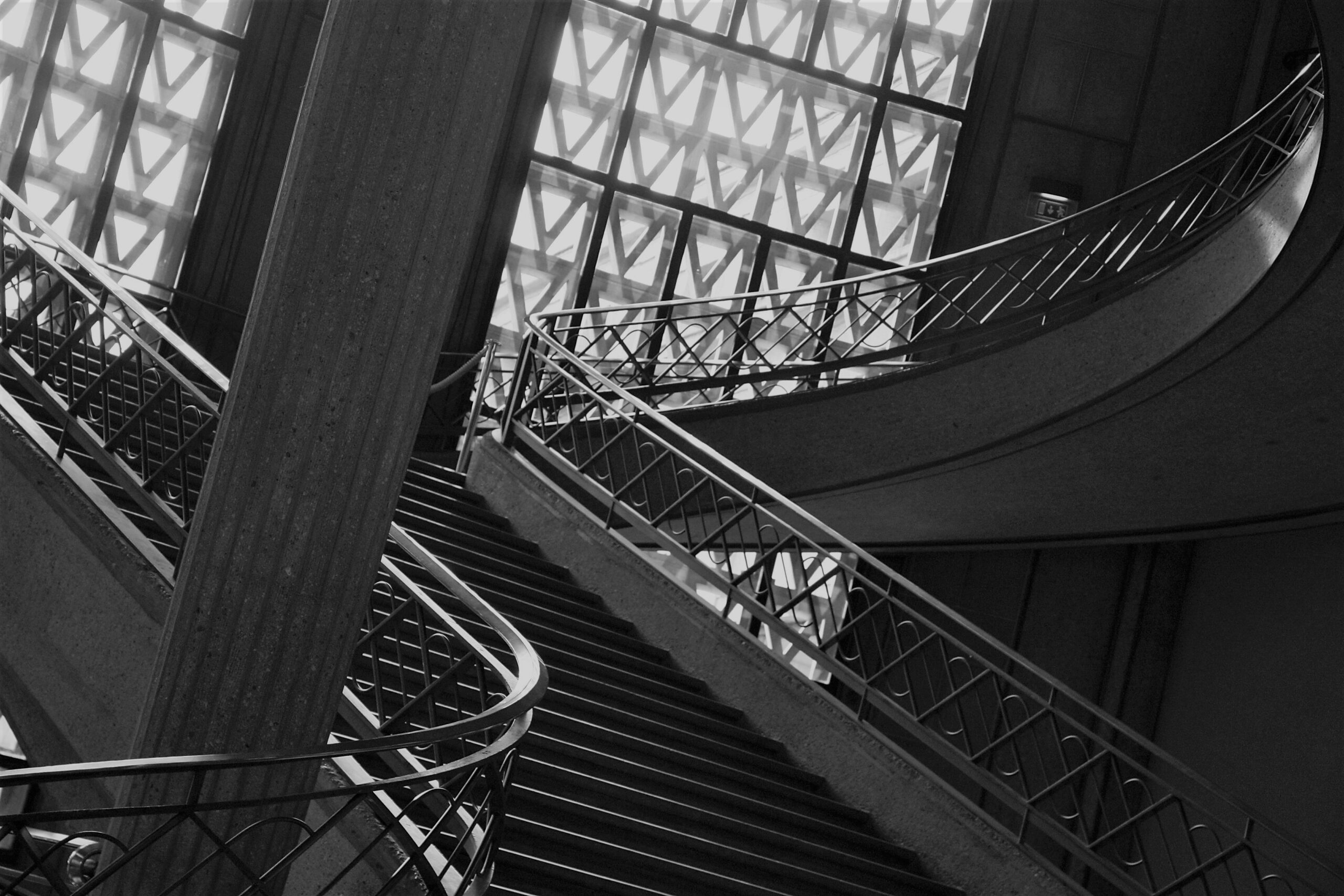
The aesthetic of the series reinforces this thematic bleakness. The Coruscant we see is not the gleaming, sunlit hub of the prequel trilogy; it is a nest of brutalist architecture and surveillance-state paranoia, reminiscent of Cold War-era East Berlin. The show's visual language - steeped in gunmetal greys, stark clinical lighting, and suffocating symmetry - visualises the systemic control the Empire exerts over its citizens. It is a striking reminder of why the Film industry continually returns to dystopic aesthetics to reflect contemporary anxieties about surveillance and authoritarian creep.
Realpolitik and the Cost of Defiance
Perhaps the most compelling narrative thread of the entire series belongs to Mon Mothma, played with exquisite tension by Genevieve O’Reilly. In other iterations of Star Wars, Mon Mothma is the composed, regal leader of the Alliance. In Andor, she is a desperate politician trapped in a gilded cage, laundering credits through mob fronts to fund the insurgency while navigating the suffocating surveillance of Coruscant high society.
Season Two pushes Mothma to her absolute ethical limits. Following the fallout of the Ghorman Massacre, her political tightrope walk becomes a freefall. The season intimately explores the domestic and moral toll of her double life, including the heartbreaking deterioration of her family dynamics as she sacrifices personal relationships for the survival of the galaxy.
This uncompromising look at the cost of rebellion is the true thematic core of the series. Tony Gilroy’s original pitch for the show stated: "Andor is an adventure story about the rise of a galactic revolution, told through the journey of a nobody who ascends to an epic destiny." Yet, the series constantly reminds us that this ascension is paved with moral compromise. It leans heavily into the realpolitik of insurgency. The Rebellion is not a unified front of righteous heroes; it is a messy, fractured coalition of extremists, separatists, and political pragmatists.
Luthen Rael’s unforgettable Season One monologue - "I burn my life for a sunrise I’ll never see" - serves as the grim thesis for Season Two. The narrative dissects the moral erosion required to fight a monster without becoming one, highlighting the false-flag operations, the sacrificed informants, and the ruthless pragmatism required to topple an empire. It asks uncomfortable questions about the ethics of resistance that transcend the confines of the science fiction genre.
The Auditory Landscape of Rebellion
Equally crucial to the show's atmospheric success is the contribution of composer Nicholas Britell. Shunning the sweeping, operatic brass traditionally associated with John Williams' legendary scores, Britell crafted an auditory landscape that is industrial, rhythmic, and intensely claustrophobic. In Season Two, the score evolves alongside the Rebellion. The electronic synths and clanging percussive motifs of the first season begin to incorporate subtle, mournful orchestral swells, reflecting the growing scale of the conflict and the mounting casualties.
Britell’s soundscape perfectly complements the show's visual grit. During the tense espionage sequences on Coruscant or the covert meetings in the lower levels, the music often drops to a pulsing, heartbeat-like rhythm, elevating the suspense to unbearable levels. When the action finally erupts, the score does not triumphantly celebrate the violence; rather, it underscores the chaos and the tragedy of the moment. This deliberate subversion of the franchise's musical expectations is yet another way Andor asserts its unique identity, demanding that the audience feel the anxiety and exhaustion of its protagonists.
A Legacy Written in the Stars
When Andor Season Two concluded its run in May 2025, it left behind a staggering critical legacy. With near-perfect scores across major review aggregators and a historic run of audience ratings, it definitively proved that there is a massive appetite for mature, intellectually demanding storytelling within established intellectual property. It stands as a beacon for what franchise television can achieve when it treats its universe as a sandbox for adult drama rather than a mere delivery system for nostalgia and merchandise.
For viewers seeking similarly ambitious narratives, the success of the series has raised the bar across the board (making lists of Halo Season 2: The Best Sci-Fi Shows and Films to Watch While You Wait look entirely different in a post-Andor landscape). It demonstrated that audiences do not need constant fan service or familiar cameos to remain invested, provided the writing is sharp, the stakes are palpable, and the character arcs are rigorously earned.
To dissect Andor is to witness a franchise successfully shedding its skin. By stripping away the mysticism and focusing on the dirt beneath the fingernails of revolution, Tony Gilroy and his team have created a seminal work of contemporary culture. Beneath the discordant strings of Nicholas Britell’s haunting score and the clatter of blaster fire, Andor Season Two delivered the definitive portrait of a galaxy waking up to the necessity of war. It is not just exceptional Star Wars; it is exceptional television, a stark and unforgettable testament to the enduring power of ordinary people choosing to stand against the dark.