The hallowed halls of art institutions, often perceived as serene repositories of cultural heritage, can also be battlegrounds where ideas about representation, power, and value are fiercely contested. Within this arena, few entities have wielded the weapons of wit, data, and audacious visual provocation with such enduring impact as the Guerrilla Girls. This anonymous collective of feminist activist artists, their identities concealed behind iconic gorilla masks, has for decades acted as the art world's unsparing conscience, their work possessing an almost sentient ability to expose uncomfortable truths and ignite crucial dialogues. As they mark a significant anniversary, their legacy of "making trouble" continues to resonate, challenging us to look critically at who creates, who is celebrated, and who holds the power within the art ecosystem. ArtCulture.UK will tell you about the enduring legacy and evolving tactics of these art world agitators.
A Moment of Revelation
The genesis of the Guerrilla Girls in 1985 was a direct response to a glaring inequity. A major exhibition at New York's Museum of Modern Art, An International Survey of Recent Painting and Sculpture, featured an astonishingly low number of women artists (13 out of 169) and even fewer artists of colour. The traditional protests that ensued felt, to some attendees, ineffectual, a polite murmur against a deaf establishment. This perceived indifference sparked an "aha moment" for a group of female art professionals – artists, writers, curators – who decided that a new, more disruptive approach was needed. They resolved to fight fire with fire, adopting the persuasive language of advertising and the anonymity of masks to deliver their incisive critiques.
The Power of Anonymity
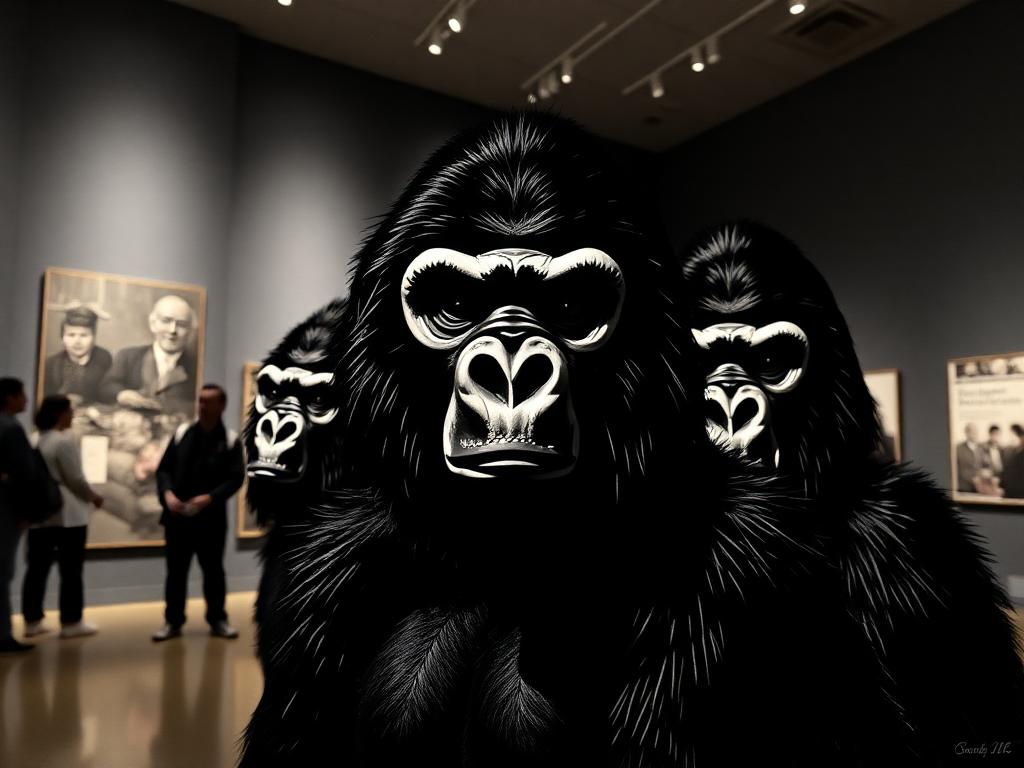
The decision to remain anonymous, adopting pseudonyms of deceased female artists like Frida Kahlo, Käthe Kollwitz, and Zubeida Agha, was a masterstroke. The gorilla masks, initially a humorous error (one member misspelt "guerrilla" as "gorilla" and the visual pun stuck), became their potent symbol. This anonymity served multiple purposes: it protected their professional careers from potential backlash, shifted the focus from individual personalities to the collective message, and powerfully underscored the historical erasure of women artists. Each masked appearance became a performance, a constant reminder of the hidden figures and silenced voices in art history. This tactic of concealed identity amplified their art activism significantly.
The 'Naked Poster' Shockwave
Perhaps their most iconic and impactful work remains the 1989 poster emblazoned with the question: Do women have to be naked to get into the Met. Museum? Accompanied by a reclining female nude (derived from Ingres's La Grande Odalisque) wearing a gorilla mask, the poster starkly presented their findings: "Less than 5% of the artists in the Modern Art Sections are women, but 85% of the nudes are female." This statistic, gleaned from their own meticulous count within the Metropolitan Museum of Art, was a damning indictment of the art world's pervasive gender bias, exposing how women were overwhelmingly represented as passive objects of the male gaze rather than as active creators. The Public Art Fund, which had initially commissioned the piece, controversially pulled its funding upon seeing the final provocative design. Undeterred, the Guerrilla Girls self-funded its display on New York City buses and through guerrilla postering, ensuring its widespread visibility and igniting a fierce public debate. This piece became a cornerstone of feminist art.
Weaponising Wit and Data
The Guerrilla Girls' methodology was groundbreaking. They combined irrefutable statistics, culled from their own research or publicly available data, with bold, attention-grabbing graphics and a biting, often humorous, tone. Their posters, billboards, and public interventions mimicked the visual language of advertising, using its persuasive power to expose discrimination rather than sell products. Early works, such as lists of galleries showing minimal or no women artists, were direct, factual, and impossible to ignore. This fusion of data-driven critique with accessible, impactful design became their signature style, making complex issues of inequality immediately comprehensible and deeply unsettling to the art establishment. Their use of statistics in art was revolutionary.
Expanding the Critique
While gender inequality in museums and galleries was their initial focus, the Guerrilla Girls' critical lens soon broadened. They tackled issues of racial discrimination within the art world, the underrepresentation of artists of colour, the exclusionary practices of art critics and collectors, and the influence of money and power on artistic validation. Their campaigns also extended beyond the art world, addressing sexism and bias in Hollywood, politics, and broader popular culture. They understood that these systems of inequality were interconnected and required a multifaceted approach to challenge. Their work consistently highlighted the systemic nature of discrimination.
Institutional Infiltration, Enduring Activism
Ironically, the Guerrilla Girls, once considered radical outsiders, have seen their work acquired and exhibited by many of the very institutions they initially targeted. Museums like Tate Modern in London and the Museum of Modern Art in New York now include their posters in their permanent collections. This institutional embrace, however, has not diluted their critical stance. They continue to produce new work, conduct "weenie counts" (their term for tracking representation statistics), and engage in public actions and lectures, always in their signature masks. The fight, as they consistently maintain, is far from over. Their presence within museum collections signifies a shift, yet they remain vigilant art activists.
Evolution of Tactics, Global Reach
Over the decades, the Guerrilla Girls' tactics have evolved. While postering remains a core activity, they have embraced new media, public speaking engagements, books, and international collaborations. Their "cell-like" structure has allowed for the formation of affiliated groups in various countries, adapting their core messages to local contexts. Recent projects have seen them address issues such as the lack of female representation in Bulgarian government, demonstrating the global applicability of their activist model. They have also, alongside other artist-activists like Nan Goldin, turned their attention to the ethics of museum funding, questioning the sources of wealth that support major cultural institutions and highlighting the art world's complicity in broader societal issues.
Measuring Impact, Confronting Stagnation
Tracking the direct impact of the Guerrilla Girls' activism is complex, yet undeniable changes have occurred in the art world since their formation. There is greater awareness of gender and racial disparities, and many institutions have made concerted efforts to diversify their collections and exhibition programmes. However, progress remains frustratingly slow. The Guerrilla Girls themselves have periodically revisited their iconic Met Museum "weenie count," and the updated statistics often reveal only incremental improvements, and in some instances, regressions. This ongoing data collection serves as a stark reminder that systemic change requires sustained pressure and vigilance. Recent reports still indicate significant underrepresentation of women artists and artists of colour in gallery sales and museum acquisitions, proving that the Guerrilla Girls' mission remains urgent.
A Legacy of Provocation
The enduring legacy of the Guerrilla Girls lies in their unwavering commitment to "making trouble" in the most constructive sense. They have demonstrated that art can be a powerful tool for social critique and activism, and that humour and hard data can be potent weapons against complacency and injustice. They have inspired countless artists, curators, and activists to question the status quo and to demand greater accountability from cultural institutions. Their anonymity, far from being a gimmick, has become a powerful symbol of collective action and a tribute to the overlooked women artists of the past. By refusing to play by the established rules, the Guerrilla Girls have fundamentally altered the conversation about art, power, and representation.
As they continue their work, their gorilla masks remain a potent symbol of defiance, a visual shorthand for the ongoing struggle for a more equitable and inclusive art world. Their journey from renegade postering in the streets of New York to being subjects of major museum retrospectives is a testament to their tenacity and the undeniable power of their message. The Guerrilla Girls have proven that even the most entrenched establishments can be challenged, and that a small group of determined, anonymous women can indeed change the way we see art – and the world around us. Their influence on contemporary art and feminist discourse is profound and continues to unfold.