By Yulia Tulegenova, artist and theatre critic
There is a strange, satisfying symmetry to the London stage this August. As the summer heat begins to wane, a series of theatrical pairings has emerged, two-handers and biopics that place complex, often combustible, relationships under the microscope. From the imagined rivalry of Shakespeare and Marlowe to the tense seduction of a journalist and a starlet, the city’s stages are alive with the electric hum of human connection, its dangers, and its desires. Here is a guide to the essential theatrical evenings to mark the end of the season.
Born With Teeth
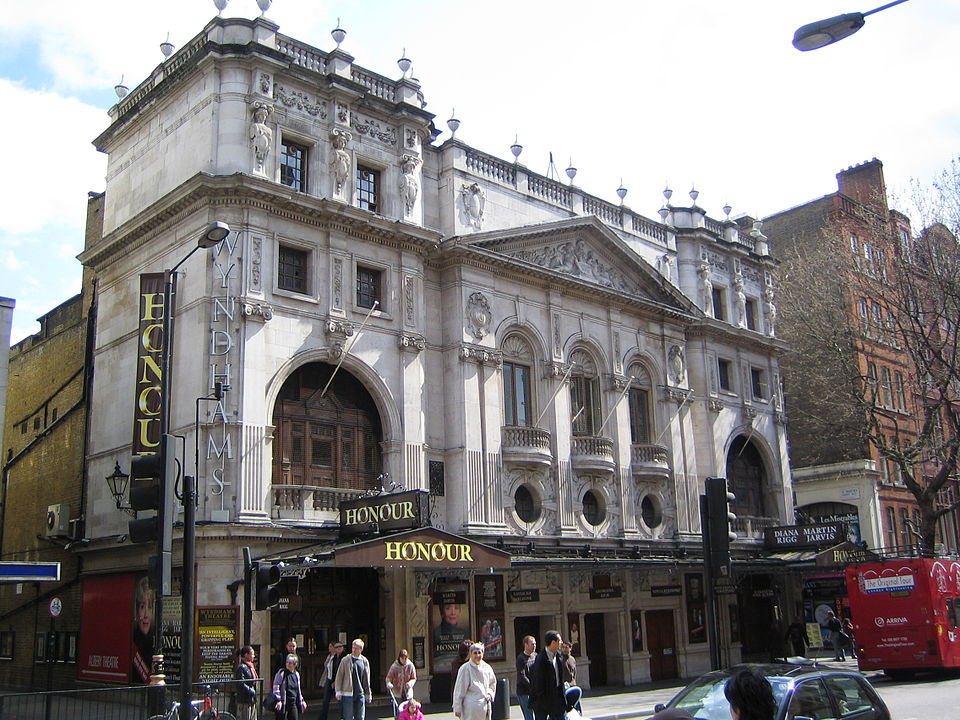
Wyndham’s Theatre
History is a silent document. It tells us that Christopher Marlowe and William Shakespeare moved in the same, tightly-knit circle of the London stage, but it offers no record of their ever having met. Into this silence, playwright Liz Duffy Adams has dropped a theatrical firecracker. Born With Teeth is an act of audacious, brilliant imagination, a dangerous, witty, and deeply sexy fever dream of what might have been.
In the back room of a grimy inn - a place, legend has it, that still exists on the edge of the murky Deptford Creek where Marlowe would later meet his end - a game of cat and mouse unfolds. This is not a polite literary salon. This is a high-stakes duel between two men who recognise in each other both a rival and a reflection.
Ncuti Gatwa’s Marlowe is a supernova, a charismatic, free-spirited, and deeply dangerous presence who radiates an almost feral intelligence. He is the established star, the darling of the London scene, and he toys with the younger, more cautious Shakespeare, played with a coiled, lizard-like energy by Edward Bluemel. Bluemel’s Will is watchful, quick, and always ready to bite back, his ambition a palpable, hungry force. Their dialogue is a dense, viscous volley of wit and veiled threats, a dance of intellectual and erotic power that feels both entirely of its time and thrillingly modern. The title itself is an Elizabethan warning: a child born with teeth is destined for violence. In this room, it is clear that both men are armed.
Storehouse
Deptford Storehouse
From the imagined history of Deptford to its tangible, subterranean present. Storehouse is not a play you watch; it is an environment you inhabit. This is immersive theatre on a vast, almost overwhelming scale. The audience members are cast as trustees, summoned to a vast underground archive to investigate a failed utopian project: a forty-year-old attempt to preserve a physical record of every trace of every user online.
The sheer scale of the space - 9,000 square metres of twilight corridors and echoing galleries - is a character in itself. You wander through this labyrinth, guided by the disembodied voices of a stellar cast (Toby Jones, Meera Syal, Kathryn Hunter), piecing together a story of data manipulation, memory games, and the slippery nature of truth in an age of information overload.
You will not leave with a neat conclusion. You will leave with a profound sense of disorientation, a lingering unease that feels intensely relevant to our times. It is an experience that bypasses the analytical part of the brain and speaks directly to a more primal, anxious place. It is a ghost story for the digital age, and its ghosts are our own forgotten online selves.
Evita
London Palladium
Jamie Lloyd has made a career of theatrical shock and awe. His productions are events, defined by sold-out houses, big stars, and audacious directorial choices that often divide audiences. His new take on the Webber-Rice classic Evita is no exception. This is not a reverent museum piece; it is a bright, bold, and fiercely contemporary deconstruction of the myth.
The masterstroke of the production is also its most controversial moment. Each evening, as the show’s most iconic anthem begins, the star, Rachel Zegler, leaves the stage. She appears on the theatre’s real-life balcony to sing “Don’t Cry For Me Argentina” to the crowds gathered on Argyll Street below. The audience inside watches on a live-streamed screen. Some have grumbled at the ticket price for a second-hand view of the show’s key aria. But this is precisely Lloyd’s sly, brilliant point. He is demonstrating, in real time, the populist magic of Eva Perón, her ability to bypass the establishment and forge a direct, charismatic connection with the “ordinary” people.
Zegler, in her West End debut, is a revelation. She is a small, steel-willed figure, her radiant smile a mask for an unbreakable will. It is a performance of immense vocal power and physical precision, a complete transformation that banishes any thought of her previous screen roles. This Evita may not be for the purists, but it is a thrilling, intelligent, and unforgettable piece of theatre.
The Animator
Southwark Playhouse Borough
Lotte Reiniger is one of the unsung heroes of animation, a pioneer whose intricate silhouette films, created with little more than paper, scissors, and a light source, possess a timeless, delicate magic. The Animator is a theatrical biopic that seeks to restore her to her rightful place in the cultural pantheon.
The show, directed by Rosanna Mallinson, is a multi-layered and inventive piece of storytelling that mirrors its subject’s own aesthetic. It blends dance, cabaret, acrobatics, and, of course, the luminous beauty of shadow theatre. Lexie Baker’s portrayal of Reiniger is a tour de force, capturing the artist’s obsessive dedication to her craft.
But this is more than just a celebration of an artistic legacy. It is the story of a life lived in the shadow of the 20th century’s darkest moments. As a German artist forced to flee the rise of fascism, Reiniger’s life was one of constant wandering. The show becomes a quiet, powerful manifesto for the resilience of the creative spirit, a story of how art can become a lifeline in a world torn apart by ideology. It is a small show with a very big heart, a much-needed dose of hope.
Interview
Riverside Studios
The set-up is a classic study in power dynamics. An eminent, world-weary political journalist is assigned the one job he doesn’t want: an interview with a young, beautiful, and seemingly frivolous celebrity. He is contemptuous; she is defensive. What begins as a professional obligation quickly spirals into a tense, psychological game of chess.
This stage adaptation of the film of the same name is a taut, two-hander that places the complex and often predatory relationship between the media and celebrity under a microscope. As the interview progresses, the roles of victim, rescuer, and aggressor begin to shift and blur. Who is interviewing whom? Who is truly in control?
The production is elevated by its perfect casting. Robert Sean Leonard, known to millions as Dr. Wilson from House, brings a lifetime of stage experience and a weary, intellectual gravitas to the role of the journalist. Paten Hughes, as the young starlet Katya, is his perfect foil, her performance a delicate balance of vulnerability and cunning. The air between them crackles with a palpable, unspoken tension. It is a quiet, intelligent, and deeply unsettling play that will leave you arguing about its ending long after you have left the theatre.