By Anna Zhila
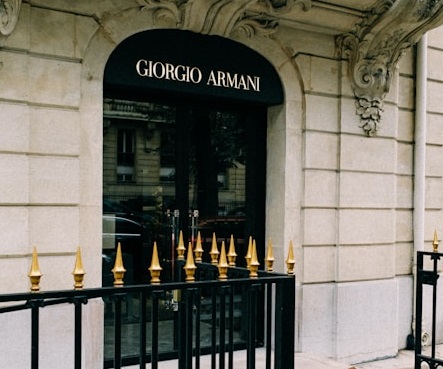
Giorgio Armani has died, and with him goes not just a designer, but an entire theory of being. To say he created a fashion house is to miss the point entirely. Armani was an architect who worked in cloth, and his subject was the modern individual. His name became a byword for a certain kind of restrained elegance, but the true nature of his work was far more radical. It was a quiet, determined revolution, conducted not with slogans, but with seams. He dismantled the uniform of the 20th-century man and, in doing so, drafted the blueprint for a new kind of self-possession.
His empire was vast, encompassing everything from hotels to high-end floristry, but its foundations were laid with a single, deceptively simple object: the deconstructed jacket. This was his great thesis, and it changed everything.
The Unmaking of the Jacket
Before Armani, the man’s suit was a piece of social armour. It was rigid, padded, and structured to impose a shape upon the wearer. It projected an image of unyielding, traditional masculinity. Armani looked at this uniform and began to subtract.
He pulled the lining out. He removed the stiff horsehair interfacing and the aggressive shoulder pads. He switched traditional wools for fluid materials like linen, fabrics that had previously been considered too informal for serious tailoring. The result was a jacket that did not command the body, but collaborated with it. It slouched. It moved. It felt less like a uniform and more like a second skin.
Perhaps the most telling detail is the sensory one. To put on an Armani jacket from that era was to experience a new kind of physical freedom. The fabric was light against the back; the shoulders followed your own. This was not a revolution of aesthetics alone; it was a revolution of psychology. The man in the Armani suit was no longer propped up by his clothes. His confidence had to come from within. He was relaxed, at ease, his power implied rather than declared.
This new man found his global avatar in 1980, with the release of American Gigolo. Richard Gere, as Julian Kaye, moved through the film in a haze of muted, monochromatic Armani. He was a catalogue of the designer’s ideas. His shirt collars were smaller, his lapels slimmer. Placed against the other characters in their loud, geometrically sharp clothes, he looked like he had arrived from the future. The film turned a niche Italian label into a global phenomenon, but its true cultural work was in providing a visual manifesto for this new, softer, more introspective masculinity.
An Architecture for Living
Armani’s method was, in a sense, profoundly architectural. If you think of the great modernist architects like Mies van der Rohe, their genius was in stripping away ornamentation to reveal the essential structure. Their belief was that form should follow function, that beauty was inherent in clean lines and honest materials. Armani applied this same doctrine to the human body. He once said that his mother’s advice was his creed: “If you want to create beauty, do only what is necessary, and no more.” The idea of "less is more" was not a slogan; it was a working principle.
This explains his famous colour palette. The shades of grey, beige, and navy - the colour that would become known as ‘greige’ - were not a lack of imagination. They were a deliberate choice to create a canvas. In a world of increasingly loud fashion, Armani’s clothes were quiet. They did not shout for attention. This quietness was a form of confidence. It suggested that the wearer’s personality, not their clothing, should be the focus.
His work was a constant refinement of this single, powerful idea. He scorned the easy win of a dramatic dress with a plunging neckline. “It is much more difficult to create a jacket,” he insisted, positioning himself as a master of structure and form, a craftsman in a field he saw as increasingly reliant on cheap effects. He was building a vocabulary of style that was intended to last, not just to catch the eye for a season.
The Armani Woman and the Inversion of Power
When he turned his attention to womenswear, he did not simply create feminine versions of his men's clothes. Instead, he translated the language of his tailoring. He gave women the power suit.
This was not, as it might seem, an attempt to make women look like men. It was a far more subtle act of appropriation. He took the elements that signified power in the male wardrobe - the tailored shoulder, the elegant drape of a trouser - and repurposed them. The Armani woman’s suit was fluid and graceful, but it also occupied space with an unapologetic authority. It was the perfect uniform for a generation of women entering the corporate world, giving them a way to project power without sacrificing their femininity.
Look at the actresses who became his ambassadors: Jodie Foster, Michelle Pfeiffer, Sophia Loren. They all possessed a kind of intelligent, self-contained strength. Armani’s clothes did not create this quality, but they amplified it. He understood that for these women, as for his new man, elegance was a form of intelligence made visible.
The Empire of Control
The relentless expansion of the Armani brand - from Emporio Armani to Armani Casa - was not mere commercial ambition. It was the logical extension of his worldview. If one could apply a philosophy of quiet, functional elegance to a jacket, why not to a chair, a hotel room, or a restaurant? He was curating a complete aesthetic universe, a world in which every object adhered to his strict principles of design.
This totality was only possible because of his legendary control. He famously approved everything that bore his name, maintaining a level of personal oversight that is almost unthinkable in a modern global corporation. “In my work, everything depends on me,” he stated, “and this, I think, is visible.” This was not the statement of an egomaniac, but of an architect who understands that a building’s integrity depends on the coherence of its every element. The Armani empire was his grand, unified design.
His legacy, I think, will not be found in a museum retrospective of his most famous outfits. It is out in the world, in the way a modern CEO wears a suit without a tie, in the very idea that comfort and elegance are not mutually exclusive. In an age of disposable trends and deafening visual noise, Armani’s central idea - that true style is a quiet confidence in oneself - feels more necessary than ever. He did not just dress us. He gave us a new way to stand, to move, and to be.