By Anna Zhila
So, they’ve given Jane a bridge.
It happened in Paris this week. A grey, typically Parisian affair, where the dampness in the air feels like it’s part of the architecture. They gathered on the banks of the Canal Saint-Martin - that stretch of water that used to be industrial and gritty and is now the spiritual home of the expensive flat white - and they unveiled the plaque. The "Passerelle Jane-Birkin."
It’s a nice gesture. Truly. It’s sweet. But let’s not kid ourselves that the city planners have been out there pouring concrete and welding steel in her honour. This isn't a new bridge. It’s the old Customs Bridge, the "Passerelle de la Douane," which has been arching its iron back over the water since 1860, back when Napoleon III was trying to make Paris look like an imperial capital rather than a medieval warren.
The socialists in the town hall of the 10th arrondissement decided last summer that "Customs Bridge" was a bit dry. A bit bureaucratic. And since Jane left us in July 2023, leaving a gaping hole in the city’s sense of cool, they decided to swap the nameplates.
I find myself torn about this. On one hand, it’s lazy. It’s the municipal equivalent of re-gifting a candle. You take something that’s been sitting there for 160 years, dust it off, slap a new label on it, and call it a tribute.
But on the other hand? It fits. God, it fits.
Jane Birkin wasn't about shiny new things. She was about the lived-in, the battered, the repurposed. She was the woman who carried a wicker basket she bought in a market in London for five quid and made it look more valuable than the £20,000 leather bags Hermes eventually named after her. She liked things with a history. She liked things that creaked a bit.
So, an old, iron footbridge that lets you cross from one side of the canal to the other? A bridge that offers a view of the Temple lock and that weird, mysterious portal where the canal disappears underground? That feels right. It feels like her.
The Family Business of Grief
The opening ceremony was, by all accounts, a masterclass in the specific, messy charm of the Birkin-Gainsbourg clan.
They were there, the daughters. Charlotte Gainsbourg and Lou Doillon. Two women who have spent their entire lives navigating the impossible weight of their parents' mythology. They looked exactly as you’d expect - chic, slightly dishevelled, wearing their grief like a very expensive coat.
Charlotte, who has always been the keeper of the flame, the one who turned her father’s house on Rue de Verneuil into a museum because she couldn't bear to touch his cigarette butts, was hopeful. She looked at the bridge and suggested that it might become a place for lovers. "I hope they kiss here," she said. It was a lovely sentiment. A bit romantic. A bit cinematic.
But then Lou stepped up. And Lou, bless her, brought the reality check.
She told a story about her son. Apparently, the kid asked her, "Is your mother still dead?"
And Lou replied, "Yes. But today, she becomes a bridge."
I laughed out loud when I read that. It’s the kind of dark, absurd humour that Jane would have absolutely adored. It cuts through the syrup. It acknowledges the sheer weirdness of legacy. One day you’re a person, breathing and smoking and laughing, and the next day you’re a piece of public infrastructure. You’re a waypoint on Google Maps. "Turn left at Jane Birkin."
It makes you wonder what she would have made of it. She was always so self-deprecating. She spent fifty years apologizing for her accent, for her voice, for her luck. She’d probably have stood on that bridge, looked at the plaque, and laughed that throaty, infectious laugh and wondered why they didn't name a pub after her instead.
The Geography of a Muse
The location is important. The Canal Saint-Martin isn't the Seine. It’s not the grand, tourist-heavy waterway where the Bateaux Mouches churn up the water and blare multilingual commentary at bored Americans.
The Seine is for monuments. The Canal is for life.
It’s where people sit on the edge with cheap wine and dangle their legs. It’s where the students go. It’s where the graffiti is actually good. It flows through the 10th arrondissement, which has become the beating heart of "Bobo" (bourgeois-bohemian) Paris.
Jane was the queen of the Bobos before the term even existed. She invented that specific brand of nonchalance. The white t-shirt, the jeans, the Converse, the hair that looked like she’d just rolled out of bed but somehow fell perfectly.
By placing her here, the city is claiming her for the people, not the tourists. They are saying she belongs to the everyday fabric of the city, not the museum pieces.
It’s a stark contrast to what they did for Serge.
Poor Serge. Or maybe, lucky Serge, depending on how you look at it. They named a metro station after him. "Serge Gainsbourg." It sounds grand, doesn't it? A station. A hub.
But have you seen where it is? It’s in Les Lilas. It’s basically the end of the line. It’s a place where, let’s be honest, nobody goes unless they live there or they’re lost. It’s subterranean. It’s dark. It’s a hole in the ground.
There is a biting irony there. Serge, the man of the night, the man of smoke-filled rooms and dark studios, gets a tunnel. Jane, the creature of light, of open shirts and sunflowers, gets a bridge over water, under the open sky.
The city, consciously or not, has separated them again. He is the underground; she is the air. He is the foundation; she is the connection.
The "English" Problem
I’ve been thinking about why the French loved her so much. Why they are naming bridges after an English rose who never, in fifty years, managed to master the gender of French nouns.
Usually, the French are protective of their culture. They have an academy that polices the language. They have quotas for radio. They don't take kindly to outsiders coming in and becoming national treasures.
But Jane was different. She was the "Expat Paradox."
She represented a freedom that French women in the late 60s and 70s were desperate for but couldn't quite access within their own bourgeois structures. She was wild, but she was polite. She was scandalous - that song, the heavy breathing, the nudity - but she did it with a smile that suggested it was all just a bit of a lark.
She allowed the French to feel cool by association. By adopting her, they adopted Swinging London, but they refined it. They took the chaos of the King’s Road and gave it a glass of red wine.
And she stayed. That’s the key. She didn't just come for the glory years and then retreat to a mansion in Surrey. She stayed through the heartbreak. She stayed through the death of her daughter Kate Barry (a tragedy that broke her, visibly). She stayed through her own illness. She marched in the streets for immigrants, for democracy in Myanmar, for the planet.
She became a "citoyenne." A citizen.
This bridge isn't just about the singer or the actress or the woman who inspired a handbag. It’s about the immigrant who made a home.
The Bag vs. The Bridge
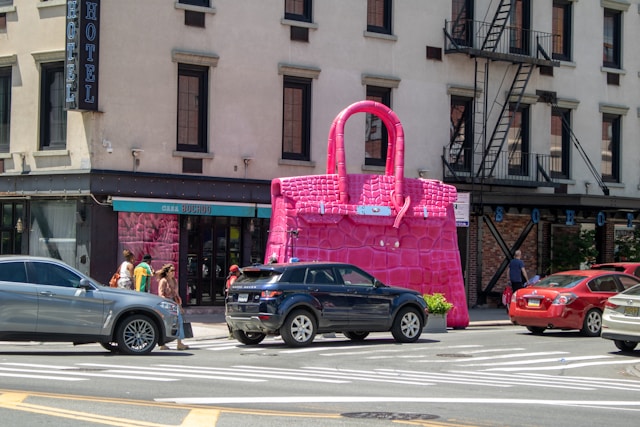
We have to talk about the bag. You can’t write about Jane Birkin without mentioning the Hermes Birkin. It is the albatross around her legacy’s neck.
It’s ironic, isn't it? She was a socialist at heart. She was a woman who lived simply, despite the fame. And yet, her name is synonymous with the ultimate symbol of exclusionary capitalism. A bag you can’t buy. A bag that costs more than a car. A bag that people keep in vaults.
She hated that, in a way. She used to put stickers on hers. She let her cat sleep in it. She stomped on it. She tried to de-sacralize the object, to remind people it was just a sack to put your junk in.
Naming a bridge after her feels like a corrective. A bridge is the opposite of a Birkin bag.
A Birkin bag is for the 0.01%. It is a wall. It says, "I have this, and you don't."
A bridge is for everyone. It is public property. You don't need a waiting list to walk across the Passerelle Jane-Birkin. You don't need to know a guy who knows a guy. You just walk.
It connects the Left Bank to the Right (metaphorically, if not geographically in this specific spot). It connects the past to the present.
I like to think she would have preferred the bridge. It’s useful. It gets you somewhere. It doesn't just sit there looking pretty; it works.
The Persistence of Memory
I remember seeing her once, years ago, at a protest in Paris. I forget what it was for - maybe the sans-papiers (undocumented immigrants). She wasn't at the front holding a microphone. She was in the crowd. She looked tired. She was wearing a oversized men’s coat and those battered Converse.
People were coming up to her, not to ask for selfies (this was before the plague of the smartphone took over completely), but just to touch her arm. To say "Merci, Jane."
Not "Madame Birkin." Just Jane.
She had that quality. She dissolved the barrier between the star and the public. She felt like a friend you hadn't seen in a while.
When she died, the grief in Paris was palpable. It wasn't the hysterical mourning of a pop star’s death. It was quieter. It felt like the city had lost a favourite aunt. The one who let you smoke out of the window and told you stories about the bad old days.
Renaming this bridge is an attempt to keep that presence alive. To keep her in the geography of the city.
Charlotte was right. People will kiss there. They will also argue there. They will smoke cigarettes there. They will probably spray terrible graffiti on the railing. They will stop to look at the water and wonder what they’re doing with their lives.
And that is the perfect tribute. A statue is cold. A statue is dead. A bridge is a stage for life to happen on.
The View from the Parapet
So, if you find yourself in the 10th arrondissement, go find it. It’s near the Rue de Lancry.
Don't expect fireworks. It’s just a metal footbridge. It rattles a bit when people run across it. The paint might be peeling slightly.
Stand in the middle. Look down at the green, murky water of the canal. Look at the barges struggling through the locks. Look at the kids drinking beer on the quay.
It’s not the glamour of the Cannes Film Festival. It’s not the polished perfection of a studio recording. It’s messy, urban reality.
It is, in other words, exactly where she belongs.
"Is she still dead?" Lou’s son asked.
Technically, yes. But as long as people are walking over that water, carrying their wicker baskets and their broken hearts, crossing from one side of the city to the other, she’s still part of the flow.
She’s a bridge. And honestly, that’s a much better legacy than a handbag.