By Yulia Tulegenova
September is the month London stops performing for visitors and starts programming for itself. The summer blockbusters have done their work, the crowds have thinned, and the institutions bring out the shows they actually want to be judged on. This year the shift is sharper than usual, because one object arriving at the British Museum has rearranged the entire autumn conversation.
The Bayeux Tapestry comes back
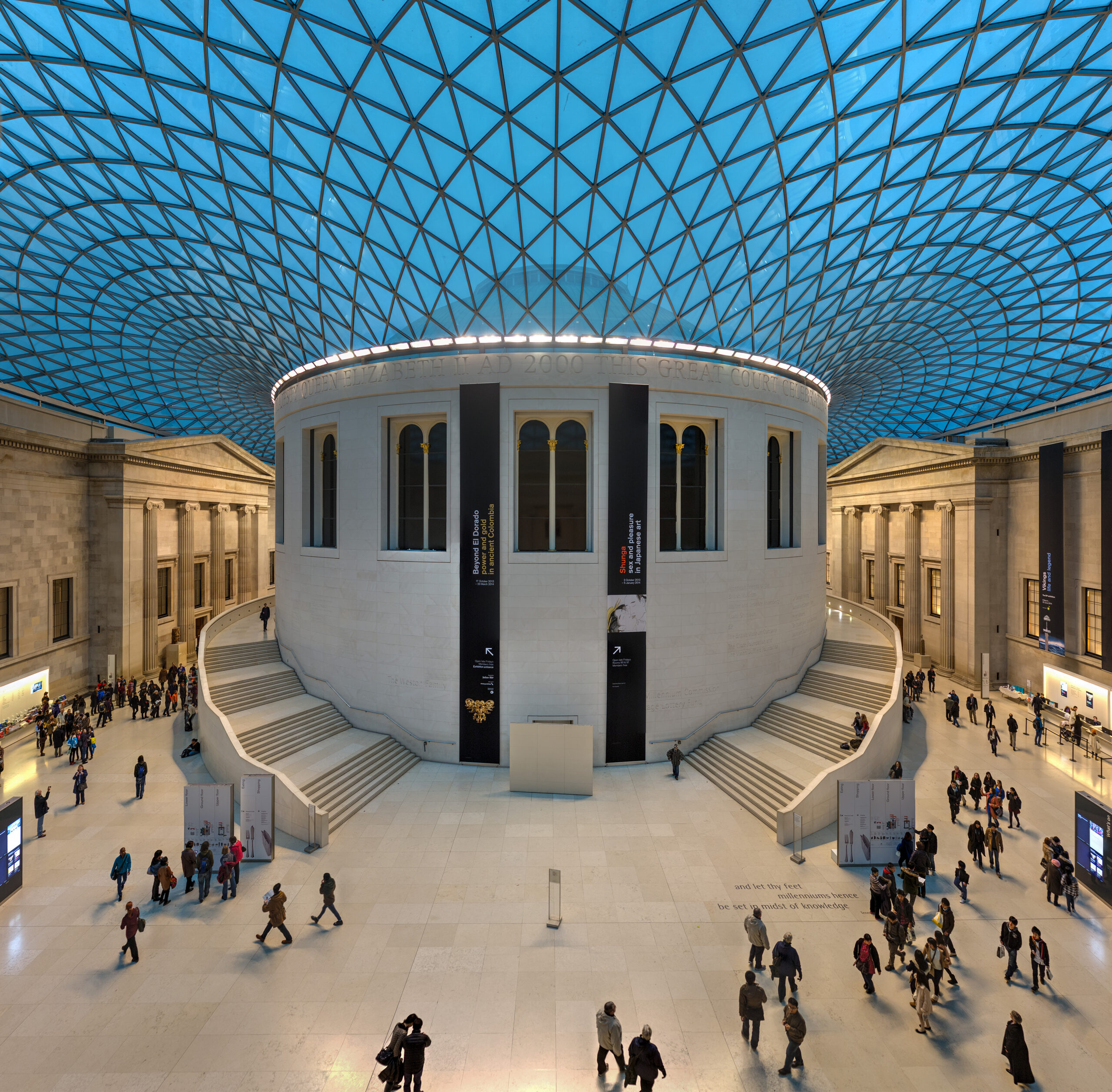
From 10 September the Bayeux Tapestry is on display at the British Museum. It is the first time in nearly a thousand years that the embroidery has been in England, and the loan has been talked about for so long that it is worth stating the plain fact: the thing itself is here, and it is finite.
What makes the tapestry unusual as a museum object is that it resists the way we normally look at art. It is seventy metres of continuous narrative, closer to a strip of film than to a picture, and it rewards walking rather than standing. Visitors who treat it as a single masterpiece to be photographed will get very little. Visitors who read it as a story told by people with a position to defend will get a great deal, including the uncomfortable recognition that this is a conquest narrative made for the conquerors.
Expect the museum to be busier than at any point in recent memory, and expect timed entry to be the only sane way in. If your September has room for one thing, this is the one.
Design takes the streets
The London Design Festival returns for its twenty-fourth edition from 12 to 20 September, spread across eleven official design districts including Bankside, Chelsea, Mayfair, Shoreditch and Soho. The festival has grown into something closer to a civic condition than an event: for nine days, installations and commissions appear in courtyards, shopfronts and museum atria across the city, most of them free.
The district structure is the key to using it well. Trying to see the festival as a whole produces exhaustion and a phone full of half-remembered installations. Picking one district and walking it properly produces an afternoon that stays with you. Bankside and Shoreditch reward the visitor interested in materials and process; Mayfair leans toward the commercial galleries and the luxury houses, which is its own kind of anthropology.
Running the length of the month, Totally Thames takes the river as its subject across a forty-two mile stretch, with installations, races, walks and talks. It is the least fashionable major festival in London and one of the most genuinely local.
The autumn galleries open their hands
Three institutional openings anchor the month.
Nature & Us at the Natural History Museum
The new Nature & Us gallery opens on 16 September and is free. It sets out to examine the relationship between people and the natural world rather than to display the natural world as spectacle, which is a harder brief and a more honest one for a museum whose collections were assembled during the empire that shaped that relationship.
Modern Painting at The Courtauld
From 18 September The Courtauld shows Modern Painting from the Courtauld and Reuben Collections, tickets at fourteen pounds. The Courtauld remains the best-proportioned gallery in London: large enough to hold major work, small enough that you leave having actually looked at it.
Astronomy Photographer of the Year
The ZWO Astronomy Photographer of the Year exhibition opens at the National Maritime Museum on 18 September, tickets twelve pounds. It is the most reliably popular photography show in the capital, and the reason is not technical. The images work because they are pictures of distance, and distance is one of the few subjects that still humbles a room full of people.
Where the artists are
The commercial and mid-scale programme is unusually strong this month, and it is where the September conversation will actually happen.
At the Serpentine, Amar Kanwar presents a major exhibition of films and installations built around displacement, memory and nationalism. Kanwar works slowly and asks his audience to do the same; the pieces do not resolve into arguments, and that refusal is the point.
At the Design Museum, thirty years of Es Devlin's work goes on show. Devlin occupies an odd position in British culture, celebrated by the theatre and music worlds long before the art world caught up, and a career survey is the right form for a practice that has always been about scale and duration rather than the single object.
Camden Art Centre gives Liz Larner her first UK exhibition, bringing together sculpture, ecology and material process. Victoria Miro marks the tenth anniversary of Hospital Rooms with Host/Guest, a project that has spent a decade putting serious contemporary art into mental health units and has a stronger claim than most to having changed something.
Frieze Sculpture opens in Regent's Park on 16 September and runs to 1 November, free and outdoors, and functions as the long warm-up to Frieze Week in October.
How to actually use the month
September in London punishes the completist. There are more openings in these four weeks than any person can absorb, and the standard response, which is to try, produces a month of queues and no memory of anything.
A better shape: one ticketed institutional show booked in advance, one design district walked on foot, one gallery you have never been to, and the river. The Bayeux Tapestry will absorb an afternoon on its own and deserves to. Frieze Sculpture is free, outdoors and open for six weeks, so it does not need to compete for a slot.
The month also has a practical advantage that Londoners tend to forget. Institutions open their autumn programmes in September and the crowds do not arrive in force until October, when the fairs bring the international audience. For roughly three weeks the best shows in the city are quiet. That window is the real gift of the month, and it closes on schedule.