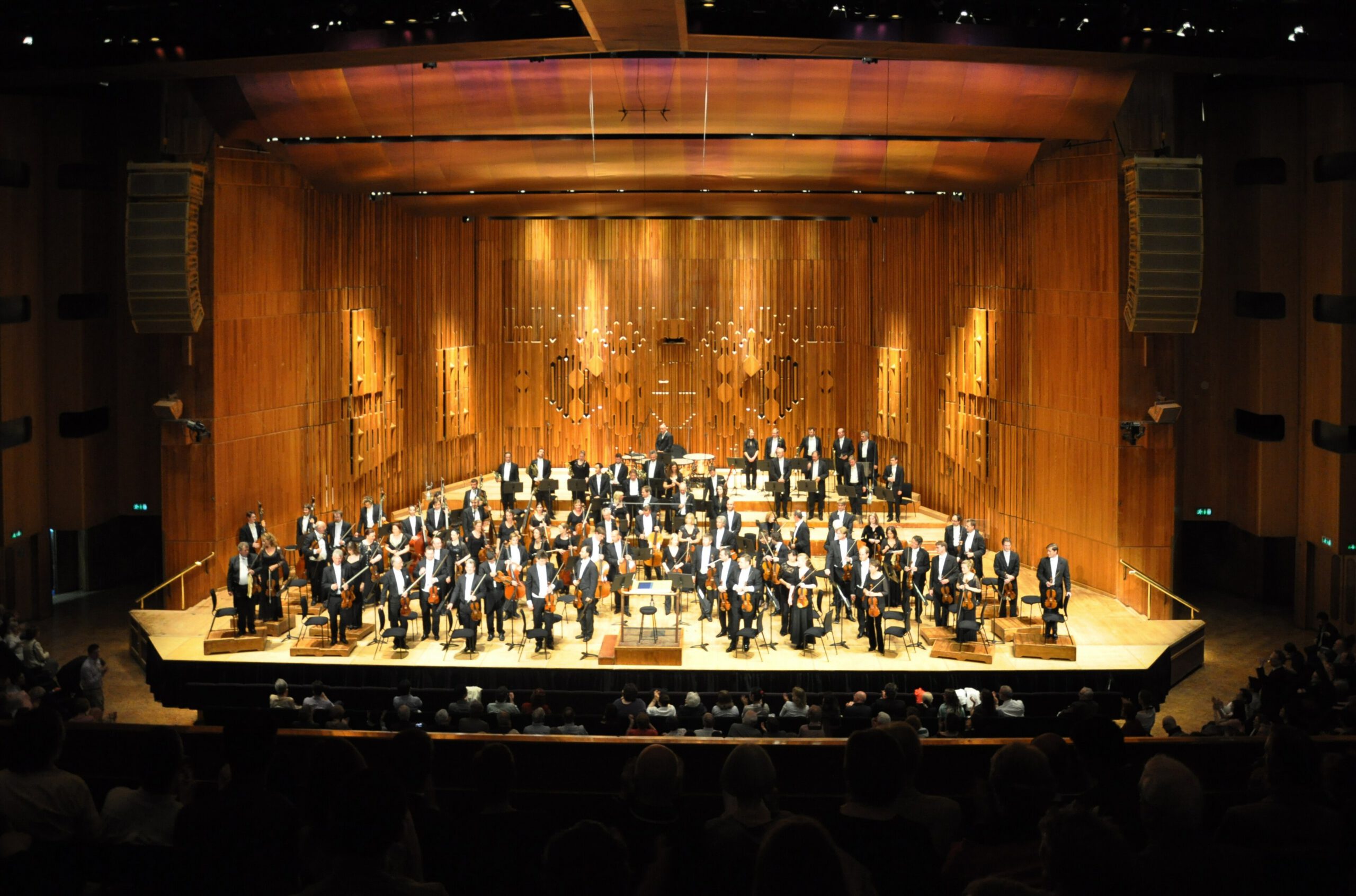
The arrival of a new chief conductor at a major symphony orchestra is always a moment of recalibration, a shifting of tectonic plates within a city's cultural landscape. When Sir Antonio Pappano officially took up the mantle as Chief Conductor of the London Symphony Orchestra (LSO) in September 2024, the anticipation was palpable. Pappano, a figure synonymous with the dramatic sweep and vocal primacy of the Royal Opera House for over two decades, has traded the subterranean depths of the Covent Garden pit for the exposed acoustics of the Barbican Hall. The result, as demonstrated by the LSO’s fiercely ambitious winter programming, is a profound injection of theatricality into the British symphonic tradition.
Pappano’s relationship with the LSO is not a sudden courtship but a slow-burning romance that dates back nearly three decades. Recalling his debut with the ensemble in 1996, Pappano noted, "I'll never forget putting down the first downbeat, and the Orchestra just exploding with activity and panache and derring-do. I thought I'd just gotten into a Ferrari and pushed the gas pedal down." That same high-octane response was emphatically present during the orchestra's December 2024 performances, a series of concerts that expertly balanced native melancholia with exuberant, jazz-inflected virtuosity.
English Melancholy and Post-War Defiance
The centrepiece of the LSO’s December schedule was a profound exploration of British repertoire, performed on 15 December. Pappano, who has spoken passionately about the need to champion the music he personally loves, curated a programme that plunged into the psychological depths of early-to-mid twentieth-century English composition: Arnold Bax’s Tintagel, Edward Elgar’s Cello Concerto, and Ralph Vaughan Williams’s Symphony No. 9.
The concert opened with Bax’s Tintagel, a symphonic poem that is as much a psychological portrait of the composer's tumultuous personal life as it is a depiction of the rugged Cornish coastline. Under Pappano’s meticulous direction, the LSO’s brass section rendered the crashing waves of the Atlantic with terrifying clarity, while the strings brought out the Arthurian romanticism woven through the score. The sheer volume and spatial depth achieved in the Barbican Hall served as an immediate reminder of the orchestra's collective muscle.
Yet, it was Elgar’s Cello Concerto that anchored the evening. Composed in the aftermath of the First World War, the concerto is a work of mourning, stripping away the imperial pomp of Elgar’s earlier years to reveal an artist grappling with profound disillusionment. Taking the soloist spot was the LSO’s own Principal Cello, David Cohen. Recognised as one of the most intelligent and technically agile cellists of his generation, Cohen’s interpretation was devoid of the excessive sentimentality that can sometimes mar performances of this canonical work.
Prior to the performance, Cohen had spent time at the Royal College of Music Library, examining Elgar’s original manuscript. This scholarly dedication translated into a reading of startling intimacy. Cohen leaned into the concerto’s stark, wandering opening chords with a raw, almost conversational tone. The dialogue between the soloist and the LSO was telepathic - a benefit of Cohen’s permanent position within the orchestra’s ranks. Pappano guided the ensemble with a remarkable sensitivity, allowing the woodwinds to weave through Cohen’s phrasing without ever overpowering the cello's dark, woody resonance. It was a performance that highlighted Elgar’s ability to merge grand orchestral architecture with the vulnerability of personal grief.
Vaughan Williams and the Enigmatic Ninth
The second half of the 15 December concert was dedicated to Vaughan Williams’s Symphony No. 9 in E minor. Premiered in 1958, just months before the composer’s death, the Ninth is often misunderstood. It eschews the pastoral tranquility of his earlier symphonies in favour of a restless, searching, and at times brutal sonic landscape. Vaughan Williams incorporated an unusual instrumentation for this work, notably a flugelhorn and a trio of saxophones, instruments more commonly associated with brass bands or jazz ensembles than the traditional symphony orchestra.
Pappano and the LSO embraced the strangeness of the score. The saxophones, played with a cutting, reedy precision, added a layer of modern alienation to the orchestral texture, while the flugelhorn solos hovered over the ensemble like a solitary voice in a desolate landscape. Pappano’s background in opera paid dividends here; he paced the symphony’s sprawling structure with an acute sense of narrative arc, building the dissonant climaxes with an inexorable, terrifying momentum. The performance proved that the LSO, guided by a conductor who understands the architecture of drama, is peerless in navigating the complex emotional terrain of modern British music. It sits comfortably alongside the very best Proms 2024 Season of Music in the UK highlights.
Syncopation and Swing: A Departure from Tradition
If the mid-December concert was an exercise in solemnity and reflection, the LSO’s final performances of 2024 were an explosion of rhythmic joy. On 18 and 19 December, Pappano led the orchestra in a "Christmas Swing" programme that radically departed from the standard festive fare of Handel’s Messiah or carol sing-alongs. Instead, the Barbican was transformed into a sophisticated jazz club, featuring German pianist Frank Dupree, the LSO’s Principal Clarinet Sérgio Pires, and drummer Obi Jenne.
The decision to programme jazz-oriented classical works is fraught with risk for a traditional symphony orchestra. The rhythmic flexibility and laid-back pulse required for swing can often feel forced when executed by classically trained musicians. However, Pappano has long maintained that "The LSO has an innate energy, an ambition, and a desire to conquer any challenge. Each musician on their own represents excellence, but together the combined efforts of each musician, their emotional and intellectual intelligence, is extraordinary."
This collective intelligence was fully deployed in Nikolai Kapustin’s Piano Concerto No. 4. Kapustin, a Russian composer who seamlessly fused the rigid structures of classical form with the improvisatory language of jazz, demands a pianist of superhuman dexterity. Frank Dupree proved to be the ideal interpreter. Backed by the explosive rhythmic drive of drummer Obi Jenne, Dupree navigated Kapustin’s fiendishly difficult score with an infectious, freewheeling energy. The LSO, far from being rigid, swung hard, matching Dupree’s virtuosity with punchy brass interjections and lush, Hollywood-esque string sweeps.
Bernstein and the Ellington Nutcracker
The swing programme continued with Leonard Bernstein’s Prelude, Fugue and Riffs, a seminal work of Third Stream music that explicitly blurs the lines between the concert hall and the dance hall. Written originally for Woody Herman’s jazz band, the piece is a demanding workout for the solo clarinet. Sérgio Pires, stepping out of the orchestral texture, delivered a masterclass in jazz articulation. His tone was brilliant and edgy, entirely distinct from the smooth, homogeneous sound expected in the classical repertoire. Pappano, conducting with visible delight, drove the syncopated brass and percussion to a fever pitch, proving that the LSO can groove as convincingly as any big band.
The evening concluded with a brilliant subversion of a Christmas staple: Duke Ellington and Billy Strayhorn’s reimagining of Tchaikovsky’s The Nutcracker Suite. In the hands of Ellington and Strayhorn, the "Dance of the Sugar Plum Fairy" transforms into the sultry "Sugar Rum Cherry," and the "Waltz of the Flowers" becomes the brass-heavy "Danse of the Floreadores." The LSO embraced the witty, urbane orchestrations, treating the jazz legends' arrangements with the same artistic seriousness as the Tchaikovsky original. It was a sophisticated, triumphant end to a transitional year, reflecting a modern Music scene that refuses to be boxed into genre constraints.
Forging a Personality for the Future
As Sir Antonio Pappano settles into his tenure, the early indications point towards a golden era for the London Symphony Orchestra. The transition from the operatic stage to the symphonic platform has clearly energised him. While he has admitted that his schedule is now "much more hectic" without the permanent anchor of an opera house, his ambition remains crystalline. He is not interested in merely being a "decent conductor conducting a great orchestra"; he is determined to "forge a personality" for the ensemble that is distinctly its own.
The winter of 2024 has shown what that personality looks like: it is fiercely intelligent, technically immaculate, and entirely unafraid of crossing stylistic boundaries. By elevating the orchestra's own principals - like David Cohen and Sérgio Pires - to solo status, Pappano is fostering an internal culture of mutual respect and extreme artistic trust. And by juxtaposing the dark psychological landscapes of Vaughan Williams with the irrepressible swing of Kapustin and Bernstein, he is proving that the LSO remains, arguably, the most versatile symphony orchestra in the world.
The Ferrari is out of the garage, and Pappano has his foot firmly on the pedal.