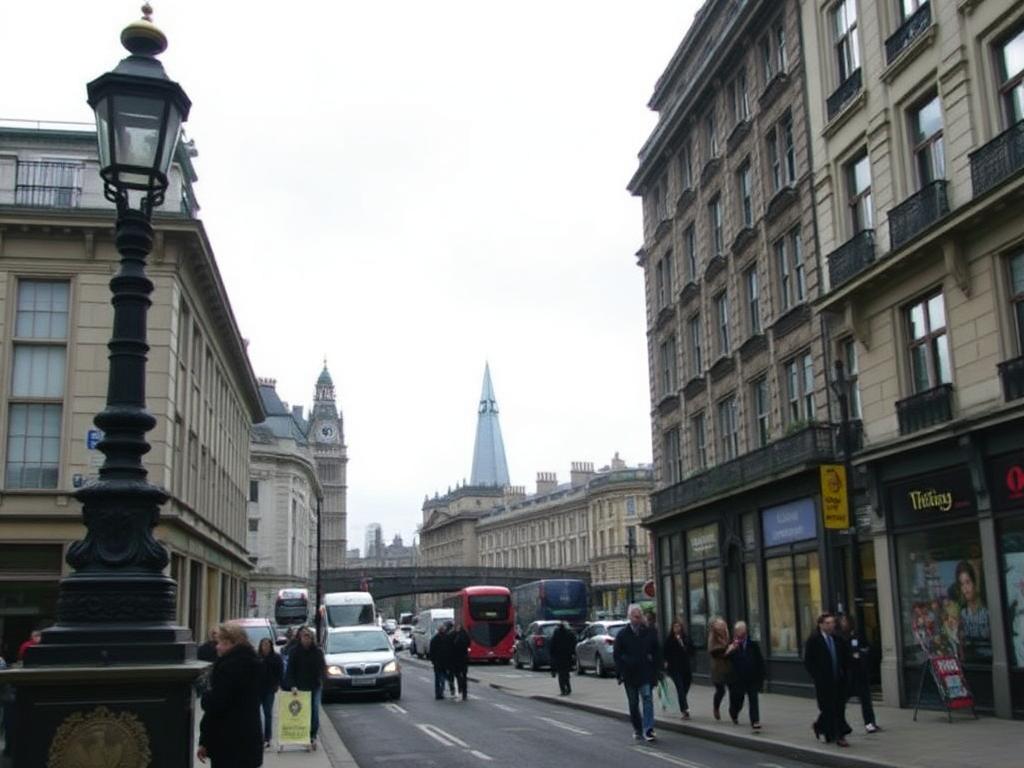
To truly comprehend London is not merely to see it, but to listen to its profound and dissonant symphony. It is a city that exists as a cultural palimpsest, where centuries of history, rebellion, and global congregation are layered one upon another, each new inscription leaving traces of the last. This is not a metropolis with a single, definable culture, but a living organism in a constant, dynamic state of self-creation, a place where identity is perpetually forged in the crucible of its own contradictions. There is a tangible energy, an almost sentient hum of invention that permeates its streets, from the hallowed halls of its institutions to the spray-painted brick of its back alleys. ArtCulture.UK will tell you about this unending conversation between past and present, a narrative that defines the very soul of the British capital.
The Bedrock of Heritage
London’s cultural landscape is anchored by a formidable weight of heritage. This is the city of ceremony and Crown, of institutions so deeply embedded in the national psyche they function as the nation’s cultural bedrock. To walk through the corridors of the Victoria and Albert Museum is to be humbled not just by the artefacts, but by the Victorian ambition to catalogue the world’s beauty and ingenuity. The British Museum acts as a complex and often contested archive of human civilisation, its very existence prompting vital conversations about ownership and history. This is the formal, establishment culture, the grand narrative of Britain projected onto a global stage. It is found in the hushed reverence of a Shakespearean soliloquy at The Globe, and in the flawless execution of a ballet at the Royal Opera House. The West End theatre district, a dazzling constellation of historic playhouses, continues to be a global benchmark for live performance, a place where dramatic tradition is both preserved and, on its best nights, thrillingly reinvented. This heritage is not a static exhibit; it is a gravitational force, providing the context and the canon against which all of London’s other cultural expressions must react.
The Rebellious Counter-Rhythm
For every established institution, London has cultivated a rebellious and defiant counterpoint. The city’s true cultural dynamism is born from this friction. It was on the King’s Road that Punk erupted in a blaze of torn mohair and nihilistic fury, with Vivienne Westwood providing the sartorial vocabulary for a generation’s discontent. Decades later, the anonymous figure of Banksy would turn the city’s walls into a satirical canvas, his stencils challenging authority and commercialism with a wit that has since been absorbed, ironically, by the very art market he critiques. This is London’s cyclical magic: the subculture of today inevitably informs the mainstream of tomorrow. The raw, urgent pulse of Grime music, which emerged from the council estates of East London in the early 2000s, is now a globally celebrated art form, its pioneers headlining the same festivals that once ignored them. This rebellious spirit is the city’s engine of renewal, a vital force that prevents its heritage from calcifying into irrelevance. It is found in the independent galleries of Peckham and Deptford, in the experimental programming of the Barbican, and in the enduring spirit of Camden Market, which continues to trade on a currency of alternative identity.
A Global Confluence of Worlds
London's modern character is inextricably linked to its status as a global crossroads. For centuries, waves of migration have shaped its neighbourhoods, infused its language, and revolutionised its palate. To speak of London culture without acknowledging this is to miss the point entirely. The city’s cultural diversity is not a recent development or a superficial overlay; it is the fundamental texture of its daily life. It is the joyous, deafening sound of the Notting Hill Carnival, a magnificent Caribbean celebration that floods the streets of West London with steel pans, sequins, and the irresistible scent of jerk chicken. It is the vibrant retail theatre of Southall’s Broadway, known as Little India, and the culinary pilgrimage site that is Brick Lane, where Bengali curry houses sit alongside vintage boutiques and Jewish bagel shops. This constant influx of global perspectives ensures the city never settles. It creates a hybrid culture where a traditional London pub might host a Nigerian supper club, where Polish delicatessens thrive next to Turkish barbers, and where more than 300 languages are spoken. This is London’s greatest strength: its ability to absorb the world and, in doing so, to ceaselessly remake itself.
The Currency of Creativity
In the 21st century, creativity is not just London's cultural lifeblood; it is its most valuable commodity. The city is a world-leading hub for the creative industries, a magnet for talent in design, fashion, architecture, and media. The London art scene is a formidable ecosystem, stretching from the blockbuster exhibitions at the Tate Modern - a power station reborn as a cathedral of contemporary art - to the commercial prowess of the galleries in Mayfair. Institutions like Central Saint Martins and the Royal College of Art act as incubators for the next generation of global designers, ensuring the city’s reputation for sartorial innovation remains unchallenged during London Fashion Week. This creative energy is physically inscribed onto the city’s skyline. The sleek, controversial shard of glass that is The Shard, Renzo Piano’s audacious exclamation mark, and the triumphant regeneration of industrial behemoths like Battersea Power Station are architectural statements of intent. They speak of a city that sees its future not in finance alone, but in the power of ideas and aesthetics. This is culture as commerce, and commerce as culture, a feedback loop that fuels London's global identity.
A Vernacular of Villages
To truly know London is to understand that it is not a single, monolithic entity, but a sprawling patchwork of distinct villages, each with its own vernacular and rhythm. The experience of the city changes profoundly as you cross from one postcode to the next. There is the rarefied, literary quiet of Hampstead, with its Heath-side walks and intellectual ghosts. Contrast this with the vibrant, unapologetic energy of Brixton, its market a testament to its Afro-Caribbean roots and its more recent transformation into a culinary and nightlife hotspot. There is the manicured bohemia of Primrose Hill, the gritty artistic ferment of Hackney Wick, and the serene, riverside elegance of Richmond. Even the City of London, the square mile of global finance, possesses its own unique culture - a weekday world of austere ambition and historic pubs hidden in medieval alleyways, which falls silent at the weekend. This granular, neighbourhood-level identity is essential to the London experience. It provides a sense of belonging and community within the vastness of the metropolis and ensures that for all its global projection, London remains a city of intimate, human-scale discoveries.
The story of London’s culture is, therefore, a story with no final chapter. It is a brilliant, chaotic, and unending process of alchemy. It takes the lead of its history, the grit of its streets, the gold of global talent, and the fire of its rebellious heart, and transmutes them into something constantly new, perpetually challenging, and utterly unique. Its identity is not a static portrait to be hung in a gallery, but a live, improvisational performance played out daily on the greatest stage on earth.