By Anna Zhila
We have a problem with how we think about art theft. It’s the movies, isn’t it? We’ve been fed this diet of laser grids, pressure-sensitive floors, and men in velvet tuxedos sipping martinis while they plan to lift a Fabergé egg. We expect elegance. We expect a certain calibre of criminal that matches the calibre of the art.
But look at what happened at the Louvre last month. Really look at it.
There were no lasers. There was no impossible acrobatic descent from the ceiling. It was four blokes in high-vis vests with an angle grinder and a stolen lift truck. It wasn’t a ballet; it was a construction site accident waiting to happen. And that, I think, is what makes it so much more unsettling. The barrier between the world’s most precious heritage and a couple of guys with hardware store tools is thinner than we’d like to admit.
The Smash, The Grab, and The Drop
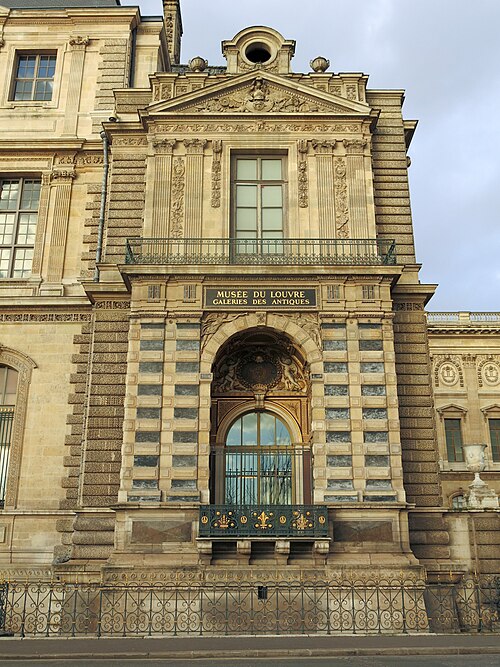
It’s Sunday, October 19. Early morning, or late night, depending on how you view the world. The thieves roll up to the Apollo Gallery. They’ve got this lift truck - stolen days before, probably sitting in some nondescript lot gathering dust - and they just drive it right up to the façade. To make it look "official," they toss out a few orange cones.
That’s the disguise. Orange cones.
It works, though. They go up, grind through the window, and smash two display cases. This isn't delicate work. They’re snatching history by the handful. An emerald necklace Napoleon gave to his second wife. A sapphire set worn by Queen Marie-Amélie. Items worth, theoretically, over $100 million.
But then, the cracks in the "mastermind" facade start to show. In the rush - four minutes, in and out - they drop the imperial crown of Empress Eugénie.
Just pause on that for a second.
This isn't a bag of cash falling off a trolley. This is a crown with 1,354 diamonds and 56 emeralds. It tumbles two stories and lands in a dry moat. A source told me there’s bystander video of the thieves looking down from their lift, just staring at it. You can almost feel the panic radiating off them. Do we go down? Is there time?
They leave it. They try to torch the lift truck with a handheld blowtorch - again, amateur hour - get spooked by a security guard, and flee on scooters.
Yamaha TMAX scooters. It’s the getaway vehicle of choice for every drug runner and purse snatcher in Paris. And that’s the first clue that we aren’t dealing with the Pink Panthers or some high-end international syndicate. We’re dealing with local grit.
The Grind of the Chase
I’ve spent years watching how the French police operate. There’s a misconception that the Brigade de Recherche et d’Intervention (the BRI) and the Brigade de Répression du Banditisme (the BRB) are these all-seeing, tech-heavy wizards.
They’re good, don’t get me wrong. But their work isn’t magic. It’s tedious. It’s sitting in a car for fourteen hours peeing into a bottle. It’s drinking stale coffee and hoping the guy you’re following doesn’t decide to run a red light and force you to blow your cover.
After the heist, the BRI surveillance teams were deployed to Seine-Saint-Denis. Now, if you know Paris, you know this isn’t the postcard version. It’s complicated. Tight-knit. Diverse. It’s the kind of place where a strange car parked on the corner gets noticed in about five minutes. For the BRI, blending in here is an art form in itself.
They picked up a trail. A 34-year-old Algerian national.
For four days, they just watched him. This is the part of police work that drives people mad. You have a suspect. You’re pretty sure he’s good for it. But you wait. You want the network. You want the fence. You want the jewels.
On Saturday, October 25, the suspect hits the highway. He’s heading for Charles de Gaulle Airport.
This is the nightmare scenario for any tail team. The highway is fast, and there’s nowhere to hide. The BRI had to play "leapfrog" - switching cars constantly so the suspect wouldn't notice the same set of headlights in his rear-view mirror for too long. It’s a choreography that requires incredible discipline. One mistake, one car staying too close for two minutes too long, and the guy spooks.
The radio chatter must have been frantic. "Target is taking the exit." "Switch, switch."
The team leader asks the question everyone is thinking: If he walks into the terminal, do we take him?
The command comes back: Let him go as far as you can.
This is a gamble. A massive one. If he gets on a plane, he’s gone. Jurisdiction becomes a nightmare. But if you arrest him too early, you might miss the jewels in his checked luggage.
He buys a ticket to Algiers. He goes through security. He’s at the gate. It’s 8 p.m. The tension must have been unbearable. Finally, the order drops. Take him.
They grab him. They search the bags.
Nothing. No diamonds. No sapphires. Just clothes.
The Unsexy Truth of Forensics
So how did they find him in the first place? Was it a brilliant deduction? A reliable informant whispering in a smoke-filled café?
No. It was DNA on a scooter.
The thieves fled on scooters, remember? They dumped them and switched to cars. Police found one of the scooters. They swabbed it. They ran it through the database. The 34-year-old was already in the system.
That’s the reality of modern crime-fighting. It’s not Sherlock Holmes; it’s data entry.
The same goes for the second suspect, a 39-year-old unlicensed taxi driver. They found his DNA on the angle grinder left at the Louvre.
Think about that. You’re robbing the most famous museum on earth, and you leave your tools behind? With your DNA on them? It beggars belief. This guy wasn’t a ghost. He was a known entity. Police knew him for aggravated theft and - get this - ramming a car into an ATM to get the cash.
That’s the level of sophistication we’re talking about here. These aren’t art connoisseurs stealing for a private collector in a mountain fortress. These are guys who smash cash machines with sedans. They just decided to aim higher.
The Closing of the Net
Once they had the Algerian at the airport, the clock started ticking for the others. The taxi driver was already under surveillance. The police knew that as soon as news of the airport arrest broke, the taxi driver might run.
They scooped him up immediately.
And then, the dominoes started to wobble. Prosecutors say the two men made "partial" admissions. I’ve been around enough interrogations to know what that usually looks like. It’s rarely a full confession. It’s usually panic. It’s, "I wasn't the ringleader, I just drove the van," or "I didn't know what was in the bag." They’re trying to explain away the DNA.
But those admissions, combined with phone data, gave the BRB what they needed. They cast a wide net. They arrested a bunch of people in Paris and Seine-Saint-Denis - the usual shake-down. Most were released, but they kept two more. A 37-year-old believed to be the third robber, and a 38-year-old woman.
So, they have three of the four alleged robbers. They have the DNA. They have the tools.
But they don’t have the jewels.
The Lingering Question
This is the part that keeps me up at night. Where are they?
History gives us two versions of this story.
Version One: The Jack Murphy style. In 1964, Murphy stole the Star of India from a New York museum. He was caught quickly - just like these guys. He cut a deal: return the gems for a lighter sentence. The jewels were found in a locker in Miami. It was clean.
Version Two: The jewels are already gone.
You see, stolen art is hard to sell. Everyone knows what it looks like. But stolen gems? Gems can be popped out of their settings in ten minutes with a pair of pliers. Gold can be melted down in a basement.
If these thieves were as clumsy as they seem - dropping crowns, leaving DNA-covered tools - maybe they didn’t have a fence lined up. Maybe they panicked.
But if they were just hired muscle for someone else? Someone smart? Then those diamonds are already being recut in Antwerp or Tel Aviv or Mumbai. They’re being turned from "The Queen’s Necklace" into a thousand engagement rings that no one will ever know were part of French history.
The fact that the suspects were caught so fast suggests they weren't prepared for the heat. It suggests they were local operators punching above their weight. And local operators usually don't have the connections to move $100 million in recognizable heritage stones without getting burned.
That gives me a sliver of hope. It’s possible the jewels are sitting in a plastic bag, buried in a garden in Seine-Saint-Denis, or shoved into a ventilation duct in a garage, waiting for the heat to die down.
The Illusion of Safety
I went to the Louvre a few days after the story broke. I stood outside the Apollo Gallery. The tourists were still there, taking selfies, eating ice cream. Life moves on instantly.
But looking at that façade, I couldn't shake the image of the orange cones.
We rely so much on the aura of authority to protect these places. We assume they are impregnable because they feel important. We assume the people who would dare to rob them must be geniuses.
The reality is far more grounding. The Louvre is just a building. The glass is just glass. And if you have a high-vis vest and enough confidence, you can drive a truck right up to it.
The police did their job here. The BRI and BRB worked the grind, followed the procedures, and caught the bad guys. It’s a win for the system. But it’s a loss for the mystique.
We’re not living in a movie. The villains aren’t suave. The heroes aren’t super-spies. And the crown jewels of France might just be lost because a couple of guys with an angle grinder got lucky for seven minutes.
Let’s hope they’re just as clumsy with the hiding place as they were with the getaway.