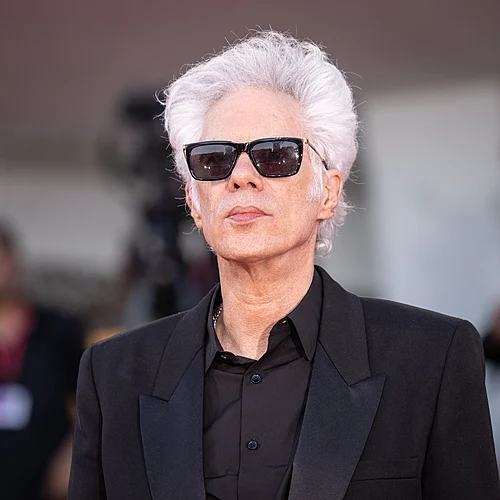
By Yulia Tulegenova
The PR emails have been clogging up my inbox all week.
Jim Jarmusch has a new film out on the 26th of February. Father Mother Sister Brother. The press notes are exactly what you would expect. They use all the usual words. Cult hero. Independent icon. Master of the slow burn.
Look, the man is obviously a legend. Nobody is arguing with that. But reading these glossy studio announcements, you’d think he’s never made a difficult or frustrating piece of work in his life. You’d think every single thing he touches turns into pure cinematic gold.
It’s exhausting. We do this every time he releases something new.
The film industry has this terrible habit of putting older directors in a glass case. We treat them like fragile museum exhibits instead of working artists who still mess up, try weird things, and occasionally miss the mark completely.
Father Mother Sister Brother is being billed as a family drama. Which is deeply weird.
Jarmusch doesn't really do traditional families. His characters are usually drifters who accidentally end up sharing a stolen car or a bad cup of coffee. Actual, biological relatives sitting in a room together? That might be entirely new territory for him.
The setup is familiar enough, though. It’s three separate stories loosely tied together. A triptych, if you want to use the festival terminology. Basically, it’s three short films stapled together. You’ve got Adam Driver and Tom Waits in one. Cate Blanchett, Vicky Krieps, and Charlotte Rampling in another. It sounds like a great dinner party.
But what does a Jarmusch family drama actually look like on the screen?
Are they going to yell at each other? Cry? Probably not. They’ll likely just stare out of windows and talk about obscure 1970s punk bands while avoiding eye contact.
Because of the new release, we are currently suffering through the inevitable wave of retrospective listicles. The top five essential Jarmusch films. The mandatory viewing guides for beginners. I read one yesterday that completely stripped all the dirt and humor out of his work. They made it sound like university homework.
Watching his back catalogue isn't a neat, clean experience. It’s a bit like sorting through that one drawer of tangled cables we all have in the kitchen. You know the one.
You pull out a massive, knotted bundle of wire. Most of it is completely useless for anything you actually own today. There's a charger for a phone you lost in 2008. There's a random SCART lead you keep purely out of stubborn nostalgia, even though it takes up too much space. But then, right at the bottom, covered in dust, you find that one specific lead that perfectly charges the thing you care about right now.
You have to dig around to find the good stuff.
If you are actually going to go back and watch his old films before the new one drops, you have to start in the eighties. You just have to.
Down by Law came out in 1986.
It’s Tom Waits, John Lurie, and Roberto Benigni stuck in a jail cell in New Orleans.
The official critical line on this film is always about the brilliant, moody black-and-white photography. Critics love talking about the framing and the lighting.
The reality is much simpler than that. It’s just very funny.
It’s three deeply irritating men annoying each other in a tiny room. They don't have sweeping character arcs. We never really find out the deep psychological reasons why they ended up in jail. Jarmusch clearly couldn't care less about their backstories. He just wants to put them in a confined space, watch them bicker, and then film them running around a miserable, damp swamp.
You can practically smell the stagnant water and the cheap cigarettes. It works because it doesn't try to mean anything profound. It’s just a hangout movie with terrible sleeping arrangements.
Then you skip forward to the late nineties.
Ghost Dog: The Way of the Samurai.
This is the one that completely baffled people when it came out in 1999. Forest Whitaker plays a mafia hitman who lives on a roof in a crumbling American city. He breeds pigeons. He strictly follows an ancient Japanese warrior code. He gets his orders from a local Italian mobster via carrier pigeon.
At first, I thought the whole concept was just a massive indulgence. An excuse for Jarmusch to show off his weird reading list and his record collection.
Actually, let me rethink that. It totally is an indulgence.
But it’s a brilliant one.
On paper, it sounds utterly ridiculous. If anyone else directed it, it would be a terrible late-night action parody. But Whitaker plays the hitman with such heavy, exhausted sincerity that you completely buy it. He moves slowly. He looks tired.
And the Italian mobsters he works for aren't glamorous mafia types. They are pathetic. They are old men in cheap tracksuits who can barely pay their rent, sitting around a miserable social club. The contrast between Whitaker’s weird, solitary nobility and the sheer grubby uselessness of the gangsters is what makes it stick in your head. Plus, the RZA soundtrack does a lot of the heavy lifting.
But then you get to the difficult stuff.
The Limits of Control from 2009.
This is the film the hardcore Jarmusch fans always defend at dinner parties when they want to sound clever.
A totally nameless guy wanders around Spain in sharp suits. He meets various weirdos. They hand him matchboxes. He opens the matchboxes, reads a tiny piece of paper with a cryptic message on it, and then literally eats the paper. That is basically the entire plot.
Does anyone actually enjoy putting this on after a long day at the office? I highly doubt it.
It is incredibly, almost aggressively slow. It actively refuses to explain anything to the audience. You sit there waiting for a thriller plot to kick in, and it simply never arrives.
I remember sitting in a tiny, overly warm Soho screening room when this first came out. About forty minutes in, I was genuinely ready to walk out. I thought the man was just taking the mick out of all of us. Playing a massive prank on the film critics.
I only stayed because I was trapped in the middle of a row and didn't want to step on anyone's feet.
I'm kind of glad I got trapped, though. Because eventually, the film forces you to give up. You stop trying to solve the puzzle because you realise there is no puzzle. It’s just about the texture of the locations and the strange faces of the actors. If you treat it like staring out of a train window for two hours, it sort of washes over you. It’s a completely maddening film, but I respect the sheer stubbornness of it.
Which brings us to the vampires.
Only Lovers Left Alive from 2013.
Tom Hiddleston and Tilda Swinton playing married vampires who have been alive for centuries. He lives in a ruined house in Detroit. She lives in Tangier.
Vampires are usually so tedious on screen. It’s either shiny teenage romance or cheap, messy bloodbaths. Jarmusch made them depressed, exhausted hoarders.
They collect old electric guitars and rare books. They wear sunglasses indoors. They complain endlessly about how modern humans have ruined the water supply and the culture.
This might actually be his most honest film.
It’s not really about drinking blood. It’s about getting older and feeling incredibly tired of how noisy and stupid the world has become. Adam hides in his dirty house making depressing drone music. Eve buys nice clothes and reads poetry. They just want everyone to leave them alone so they can listen to their records in peace.
It makes you wonder if that's exactly how Jarmusch feels when he has to leave his house to do these massive press tours. Just a tired guy surrounded by noise, wishing he was back in his own living room.
The arrival of Mia Wasikowska as the annoying younger sister ruins their quiet life. She drinks the wrong blood. She makes a mess. She is basically a stand-in for every irritating, chaotic thing that ruins a quiet weekend.
So, we arrive back at Father Mother Sister Brother.
The new film drops next week.
The advance word says it’s a quiet look at the failures of communication between parents and children. A brother and sister visit an estranged dad who has a dark secret. Two other sisters go to have a very tense cup of tea with their demanding mother. A different brother and sister dig through old memories left by their dead parents.
It sounds very neat. Very structured.
Maybe too neat?
Family life is inherently messy. It’s loud. It’s full of overlapping arguments and dirty dishes left in the sink. Jarmusch has spent forty years making films about cool, detached people who speak in measured, poetic sentences.
Can he actually do messy? Can he do the genuine, ugly friction of people who share a bloodline and resent each other for it?
We’ll see.
It could be brilliant. It could be a sudden, sharp look at domestic life from a guy who usually points his camera at the street.
Or, it could just be another batch of highly styled, incredibly famous actors staring blankly at the wallpaper while reading slightly obscure dialogue.
The thing is, I'll go and watch it anyway.
We all will.
Even when he completely misses the mark, even when his films test your patience to the absolute limit, he is at least trying to make something that doesn't look or feel like everything else playing at the local multiplex. He still shoots on real film. He still casts weird musicians in serious roles. He still refuses to rush the edit.
In an industry that feels increasingly like a factory assembly line, that kind of stubborn, awkward independence is rare.
You don't have to love every single film he makes. I certainly don't. Half of them I'll happily never watch again.
But you still dig through the drawer of tangled cables. Because when he gets it right, he perfectly connects to a feeling of late-night, melancholic isolation that nobody else can quite capture.
Let's just hope Father Mother Sister Brother is the right cable, and not just another piece of useless wire taking up space.