By Yulia Tulegenova
By Yulia Tulegenova
Disney and Lucasfilm gambled their theatrical return on a television spin-off. It’s a beautifully marketed, highly anticipated misfire.
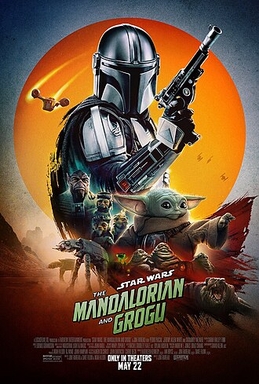
Six years ago, Star Wars retreated from movie theatres after the catastrophic The Rise of Skywalker. The studio licked its wounds, canceled ambitious projects, and pivoted entirely to Disney+. The Mandalorian was the golden child of this era, a tight, space-western hit that captivated the globe with a stoic mercenary and an impossibly adorable animatronic puppet. But on May 22, 2026, Disney reversed course, bringing Din Djarin and Baby Yoda to the big screen with The Mandalorian and Grogu.
The result? A visually uninspired, narratively pointless two-hour television episode masquerading as a blockbuster.
Directed by Jon Favreau, the film finds the titular Mandalorian (Pedro Pascal, mostly in voiceover, with Brendan Wayne and Lateef Crowder under the armor) officially working for the New Republic. Alongside Grogu, he’s hunting down Imperial remnants attempting to rebuild their regime. The mission is coordinated by a seasoned colonel, played by Sigourney Weaver, who literally carries a physical deck of cards featuring wanted war criminals.
The plot kicks into gear when the duo negotiates with Hutt gangsters, trading their services for information on a high-ranking Imperial. The catch is extracting a hostage: Rotta the Hutt, heir to the late Jabba. It’s a fetch quest. Pure and simple. This might make for a thrilling mid-season arc on streaming, but stretched across a 132-minute theatrical runtime, the thinness of the narrative is agonizingly obvious.
It feels less like an epic cinematic return and more like a desperate attempt by Lucasfilm to justify its existence at the box office.
The real tragedy of The Mandalorian and Grogu isn’t just that the story is dull; it’s that the film looks surprisingly cheap. Despite an astronomical budget, the movie is plagued by the very technology that initially made the series famous: the Volume. The Unreal Engine-powered virtual sets, which once felt revolutionary, now look flat, lifeless, and claustrophobic on a cinema screen. The lighting is murky, and the physics of the CGI action sequences often lack weight.
You find yourself longing for the tactile, lived-in grit of the original trilogy, or even the practical mastery of Andor.
Even the score falters. Ludwig Göransson’s iconic, Emmy-winning theme for the show is sidelined in favor of heavy, synthesizer-driven tracks that feel aggressively out of place. It sounds more like a Daft Punk outtake from Tron: Legacy than a Star Wars film.
Then there are the bizarre cameos. Martin Scorsese appears as a beleaguered sandwich vendor. Sigourney Weaver barks orders like a caricature of her Aliens persona. The film aggressively winks at the audience, throwing in neon-soaked, cyber-punk aesthetics straight out of Blade Runner, and blatant visual quotes from Apocalypse Now. These aren’t clever homages; they’re jarring distractions that pull you entirely out of the Star Wars universe.
The box office reflects this creative exhaustion. While the film managed a decent $95 million to $100 million domestic opening over the four-day Memorial Day weekend, it suffered a brutal 70 percent drop in its second weekend. Astoundingly, it is currently being outgrossed on dailies by a low-budget indie horror film called Obsession. For a franchise that requires a global gross of $500 million to $600 million just to break even, this is a terrible sign.
There is a famous story about the first season of The Mandalorian. Director Werner Herzog, who played a villain, reportedly yelled at Jon Favreau and Dave Filoni when they considered replacing the physical Grogu puppet with CGI. He called them cowards and demanded they use the practical puppet. They listened, and Baby Yoda became a global phenomenon.
Watching The Mandalorian and Grogu, one wishes Herzog had been on set to yell at them again.
This movie needed someone to tell them that you cannot just stretch a television arc, coat it in mediocre digital effects, and charge $20 a ticket. It needed someone to remind them that Star Wars, at its best, is about mythic storytelling, practical magic, and emotional stakes. Right now, this franchise is running purely on nostalgia. And as the box office is proving, nostalgia is a rapidly depleting fuel source.
May the Force be with Lucasfilm. They are going to need it.