The significance of Stonehenge
Stonehenge stands as one of the most revered prehistoric monuments in the world, its enigmatic stone circle drawing millions of visitors each year. A UNESCO World Heritage site, it embodies a profound cultural and spiritual legacy, symbolising both the ingenuity and mysticism of ancient civilisations. Beyond its historical significance, the site has become a focal point for contemporary debates surrounding environmental activism, public protest, and the delicate balance between heritage preservation and modern advocacy.
Protest or provocation?
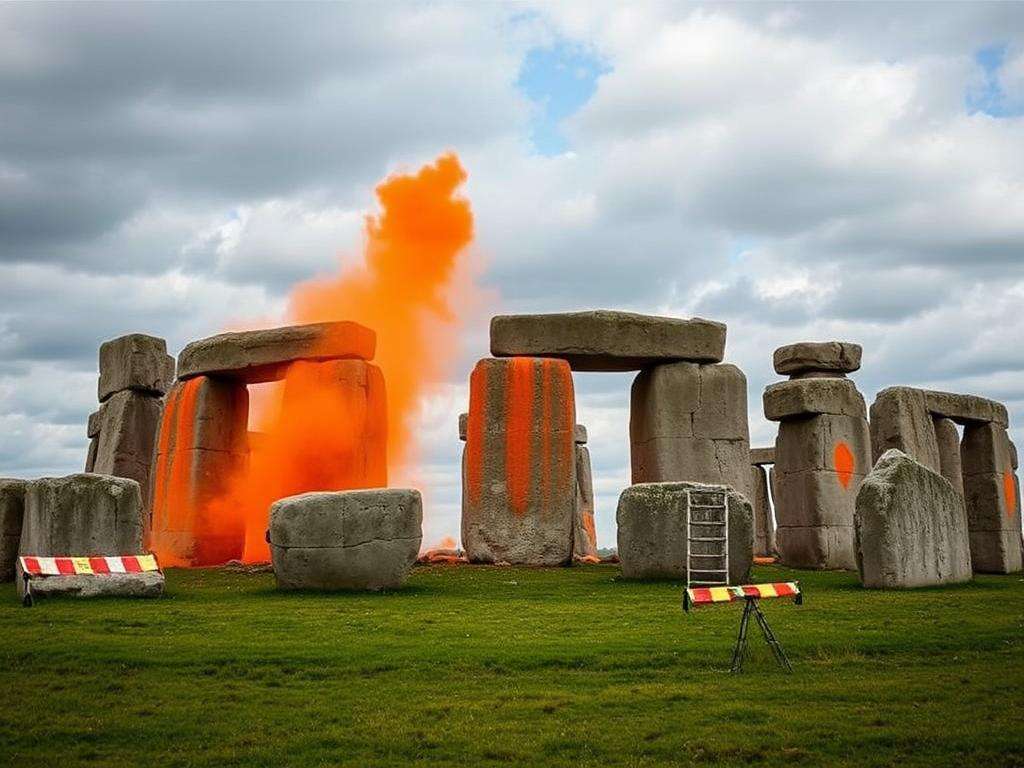
The recent Just Stop Oil demonstration at Stonehenge, which saw the revered site doused in orange powder, has ignited widespread controversy. Environmental activism has long been associated with bold and disruptive tactics, yet targeting a millennia-old monument has led to fierce public backlash. Rajan Naidu and Niamh Lynch, charged with damaging an ancient protected monument and causing public nuisance, have denied any wrongdoing. Their trial, set for October, will determine whether their actions were justified expressions of protest or acts of vandalism against cultural heritage.
Cultural heritage under threat
Preserving historical sites is a responsibility shared across generations, yet the increasing frequency of protests at landmarks raises questions about the vulnerability of these treasured spaces. Stonehenge, already subject to natural erosion and visitor impact, faces an added threat from direct activist interventions. While the urgency of climate change is undeniable, the methods employed to draw attention to the crisis remain highly contested. Can the fight for environmental justice coexist with the need to safeguard irreplaceable heritage?
The legacy of protest
From the Suffragettes to modern climate activists, disruptive demonstrations have played a pivotal role in shaping societal change. Yet, there exists a fine line between raising awareness and alienating public support. Historical precedents suggest that while radical actions often amplify movements, they also risk overshadowing the very message they seek to promote. The case against Just Stop Oil protesters will set a precedent for future activism - determining whether defacing cultural landmarks is an acceptable means of civil disobedience or a step too far in the fight for a sustainable future.
A delicate balance
As society grapples with environmental urgency, the ethical dilemmas surrounding protest methods become ever more pressing. The upcoming trial will serve as a litmus test for the intersection of activism, legality, and cultural preservation. Should protest movements be granted greater latitude in the name of a larger cause, or must there be clearer boundaries to protect historical sites from becoming collateral damage? These questions linger as the fate of Stonehenge - and those who targeted it - remains in the hands of the courts.