In an era defined by aggressive literary consumption - where digital platforms gamify reading through annual quotas, algorithmic recommendations prioritize narrative velocity, and tech startups peddle fifteen-minute summaries of complex treatises - the act of reading slowly has taken on an air of quiet radicalism. Yet, even within the most contrarian circles of slow reading, the Marshall McLuhan/Finnegans Wake Reading Club operates on a temporal scale that borders on the geological. On October 3, 2023, the California-based group convened to read the final page of James Joyce’s notoriously impenetrable masterwork, Finnegans Wake. They had been reading the same book, page by page, since 1995.
It took Joyce seventeen years to write his final novel, a sprawling, hallucinatory plunge into the architecture of the human unconscious, published in 1939. It took this reading group twenty-eight years to finish it. Their quarter-century odyssey through the text provides a stark counter-narrative to how contemporary culture engages with difficult art. Instead of treating the novel as a puzzle to be solved or a cultural milestone to be logged, the group approached it as an environment to be inhabited.
The Mechanics of a 28-Year Marathon
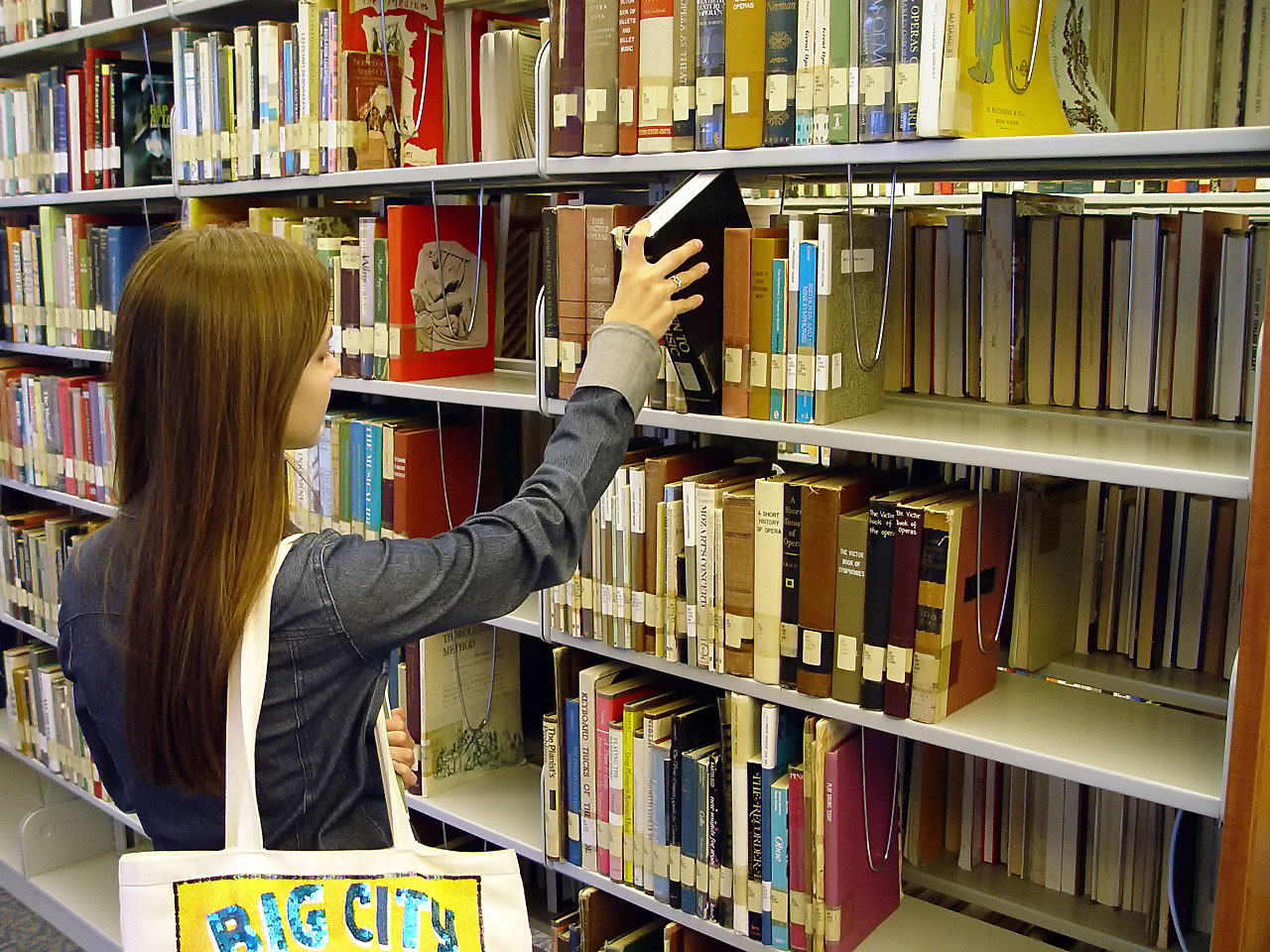
The reading club was founded in 1995 by Gerry Fialka, a Los Angeles-based experimental filmmaker and cultural provocateur. For decades, the group gathered monthly at the Venice branch of the Los Angeles Public Library. When the COVID-19 pandemic fractured physical communities, the group migrated their sessions to Zoom, inadvertently opening their highly localized literary dissection to an international cohort of Joycean enthusiasts and curious laypeople.
The structural premise of the meetings has always been deceptively simple, yet rigorously enforced: the group reads one or two pages of the text aloud, followed by a two-hour discussion. This glacial pacing is an absolute necessity. Finnegans Wake does not yield to traditional reading strategies; skimming its pages is an exercise in futility. The novel is written in a dense, pun-laden idioglossia - a synthetic language of Joyce’s own invention that aggressively cannibalizes dozens of world languages, historical references, theological debates, and Irish pub slang.
Consider the famous hundred-letter "thunderwords" scattered throughout the text, designed to represent the technological and spiritual falls of humanity. These are not mere typographical stunts, but densely layered historical compression algorithms. To read them requires patience, vocalization, and a willingness to sound foolish. Fialka has never framed the project as an academic seminar. There are no prerequisites for attendance, and no prior fluency in Joyce or literary theory is required. The meetings operate on a democratic principle of collective unravelling. As Fialka described the sheer visceral disorientation of engaging with Joyce's prose to Mental Floss, the experience is "almost like tripping on acid." It requires a surrender of conventional narrative expectations. The reader must abandon the desire for linear plot and character development, submitting instead to the rhythmic, associative logic of a dream.
Intersecting Joyce and McLuhan
What separates Fialka’s group from traditional Joyce reading circles is its foundational reliance on the theories of Marshall McLuhan, the Canadian media theorist who famously coined the phrases "the medium is the message" and "the global village." McLuhan himself was a profound, if idiosyncratic, scholar of Joyce. He frequently mined Finnegans Wake for insights into how human communication technologies shape human consciousness, viewing Joyce not merely as a novelist, but as a media ecologist who foresaw the psychic fragmentation of the electronic age.
In his seminal texts, such as The Gutenberg Galaxy and Understanding Media, McLuhan argued that the transition from print culture to electronic culture was fundamentally altering human perception. He saw Finnegans Wake as a working model of this new, simultaneous world. Where print forces a linear, sequential mode of thought, the Wake demands a simultaneous, multi-sensory awareness - what McLuhan likened to the acoustic space of tribal societies, resurrected in the electronic age. Fialka’s group actively embraces this friction.
For McLuhan, the kaleidoscopic, non-linear structure of the Wake mirrored the sensory overload of modern media environments. Fialka’s group uses this framework to decode the text, treating Joyce’s linguistic inventions as probes into the hidden psychic effects of human inventions. As Fialka noted in an interview with Bold Journey, McLuhan characterized his own analytical method as "applied Joyce." By reading the novel through a McLuhanesque lens, the club bridges the gap between modernist literature and contemporary media theory, uncovering the paradoxical exuberance of being through language.
This theoretical underpinning fundamentally shifts the objective of the reading group. The goal is not to definitively "understand" what Joyce meant in any given sentence - a largely impossible task that has occupied literary scholars for nearly a century. Instead, the text serves as a sounding board, a complex mechanism that generates meaning through the collective friction of the group's discussion. In this sense, the 28-year timeline was not a result of difficulty, but of design. To read the text faster would be to miss the collateral insights it provokes.
The Architecture of the Night
To understand the magnitude of the group's achievement, one must grapple with the sheer hostility of Finnegans Wake toward the casual reader. If Joyce's previous masterpiece, Ulysses, mapped the waking life of a city over a single day, the Wake maps the nocturnal architecture of a sleeping mind. It abandons the waking world's adherence to time, space, and identity. Characters morph seamlessly into landscapes; historical figures blur into mythological archetypes; languages collide and fuse within single, portmanteau-heavy words.
Joyce reportedly told his patron, Harriet Shaw Weaver, that he was attempting to build a narrative out of the "night-maze" of the human unconscious. The resulting book is a literary ouroboros, a cyclical text designed to defy the very concept of an ending. The opening sentence of the novel begins mid-phrase, lacking a capitalized first letter. The final sentence of the novel - which the Venice reading group finally confronted in October 2023 - is left notoriously unresolved, trailing off without a period: "A way a lone a last a loved a long the"
To complete the thought, the reader must physically turn back to the first page of the book, which seamlessly catches the dangling syntax: "riverrun, past Eve and Adam's, from swerve of shore to bend of bay, brings us by a commodius vicus of recirculation back to Howth Castle and Environs."
The Anti-Climax of Completion
Given the monumental time investment - a period during which the internet fundamentally rewired global communication, analog media gave way to digital ubiquity, and multiple generations came of age - one might expect the final meeting to be marked by profound revelation or intense emotional catharsis. Yet, true to the subversive nature of the project, the conclusion was decidedly unsentimental.
When speaking to The Guardian about reaching the end of the 628-page labyrinth after nearly three decades, Fialka was refreshingly blunt about the emotional reality of the milestone. "I don't want to lie, it wasn't like I saw God," he said. "It wasn't a big deal."
This reaction perfectly encapsulates the ethos of the Marshall McLuhan/Finnegans Wake Reading Club. If reading the book was merely a task to be completed, the final page would have represented a triumphant liberation. But because the project was always about the process - the monthly ritual of gathering, reading aloud, and using Joyce's linguistic chaos to make sense of the modern world - the ending itself was almost irrelevant. The value was generated in the two-hour conversations that spanned twenty-eight years, not in the crossing of a finish line.
ReJoycing: The Perpetual Cycle
Because Finnegans Wake is structurally infinite, the concept of finishing it is ultimately an illusion. The text is designed to trap the reader in a perpetual cycle of recirculation, mirroring the historical cycles of Giambattista Vico that Joyce used as a structural framework for the novel. Recognizing this, the reading group did the only logical thing one can do upon reaching the final, fragmented sentence of the Wake: they turned back to page one and started again.
There was no hiatus, no consideration of moving on to Proust or Pynchon. The commitment to the text remains absolute. As Fialka stated definitively in an interview with Engoo, "There is no next book. We're only reading one book. Forever."
In a cultural landscape obsessed with novelty and completion, the group’s decision to immediately re-enter the labyrinth represents a profound commitment to the literature they champion. It is an acknowledgment that a text as dense as the Wake changes entirely upon a second reading. The readers themselves have changed; the cultural context in which they are reading has shifted dramatically since 1995. A sentence decoded in a Los Angeles library in the mid-90s will resonate entirely differently when dissected over Zoom in the late 2020s.
Furthermore, Fialka continues to expand the scope of his Joycean investigations beyond the reading group. He regularly hosts a workshop titled "Dream Awake," which posits that Joyce's literary techniques effectively invented experimental cinema long before the technology existed to capture it. By forcing the reader to synthesize disparate, rapid-fire imagery and linguistic associations, Joyce was "dreaming awake," anticipating the montage techniques that would later define avant-garde film.
The Value of Durational Art
The 28-year journey of the Marshall McLuhan/Finnegans Wake Reading Club forces a reevaluation of how we interact with the cultural artifacts we deem "difficult." We are conditioned to view challenging art as an adversary to be conquered. The contemporary impulse is to master a text, extract its core themes, synthesize its meaning, and move on.
But Joyce did not write Finnegans Wake to be mastered. He wrote it to be lived in. By stretching their reading over twenty-eight years, Fialka and his group matched the durational weight of the text with their own durational commitment. They transformed a solitary act of reading into a decades-long piece of performance art, a sustained communal meditation on language, media, and consciousness.
Their endeavor stands as a quiet rebellion against the optimization of culture. It suggests that some mysteries are not meant to be solved, some texts are not meant to be conquered, and some journeys are valuable precisely because they never truly end. The Marshall McLuhan/Finnegans Wake Reading Club serves as a necessary reminder that the most rewarding cultural engagements often require us to abandon our obsession with efficiency. In a world rushing relentlessly toward the next conclusion, there is a profound elegance in choosing, deliberately and collectively, to loop back to the beginning.