To understand the origin of London is to understand the nature of survival. Before it was a global financial powerhouse, before it was the sprawling heart of the British Empire, and even before the Romans laid its first stone walls, London was a muddy, wide bend in a tidal river. For centuries, the question of how this specific bend became the world's most enduring metropolis - and where it acquired its name - has puzzled historians, archaeologists, and linguists alike.
The story of London’s name is not a simple linear progression. It is a narrative of false starts, mythical kings, abandoned trading ports, and violent conquests. From the bustling Roman port of Londinium to the Anglo-Saxon emporium of Lundenwic, and eventually the fortress of Lundenburh, the evolution of the city's name reflects the turbulent history of the island itself. It is a tale of how geography dictates destiny, and how the words we use to define our spaces carry the weight of empires long turned to dust.
The Pre-Roman Echoes: A City Without a Name
It is a common misconception that the Romans arrived in Britain in 43 AD to find an empty marshland where London now stands. While there was no urban center comparable to Rome, the Thames Valley was far from deserted. The indigenous Brittonic tribes, including the Catuvellauni and Trinovantes, inhabited the region, farming and utilizing the river for transport. However, they did not have a central, organized city at the site of modern London.
The most fascinating aspect of London’s etymology is that the root of its name likely predates the Romans, and even the Celtic languages themselves. For decades, linguists debated the Celtic roots of the word, proposing derivations such as londinos (meaning "the fierce one") or llyn-din (meaning "lake fort"). These theories have largely been dismissed by modern scholarship due to inconsistencies in phonological evolution.
Instead, the most compelling theory comes from linguist Richard Coates, who in 1998 proposed that the name derives from a pre-Celtic, Old European word: Plowonida. In this ancient linguistic construct, the word translates roughly to "a wide, flowing river," or a settlement on a river too broad to ford. When the Celtic-speaking Britons arrived, they adapted this to Lowonidonjon, which eventually morphed into the name the Romans would encounter. It is a poetic origin: London was not named for a king or a god, but for the untamed, sprawling water that made its existence possible.
The Roman Anchor: Londinium and the First Global Market
When Emperor Claudius’s legions established a permanent bridgehead on the north bank of the Thames in 43 AD, they required a logistical hub. They built a bridge across the river's narrowest tidal point, establishing a settlement they called Londinium. This was a direct Latinization of the existing Brittonic name.
Within a mere two decades, Londinium transformed from a military outpost into a thriving commercial center. It was a cosmopolitan frontier town, drawing merchants from across the Mediterranean and Gaul. The earliest written record of the city comes not from a grand monument, but from a mundane commercial document: a wooden writing tablet discovered in the Walbrook valley, dated between 65 and 80 AD, bearing the address "Londinio."
The Roman historian Tacitus, writing in his Annals (Book 14, Chapter 33) around 115 AD, provided the first historical description of the city as it stood during the Boudican revolt of 60 AD. He noted that while Londinium was "undistinguished by the name of a colony," it was nonetheless "much frequented by a number of merchants and trading vessels." This lack of formal colonia status did not hinder its economic supremacy, though it made it vulnerable. When Boudica, queen of the Iceni, rebelled against Roman rule, she ordered the city razed to the ground. A thick layer of red ash - the oxidized remnants of Roman timber buildings - still lies beneath the modern City of London, a stark archaeological marker of this early devastation.
Rebuilt and heavily fortified, Londinium became the capital of the Roman province of Britannia. It boasted a basilica larger than St. Paul’s Cathedral, an amphitheater, and a defensive wall - portions of which still define the boundaries of the financial district today. Yet, when the Roman Empire withdrew its legions in the early 5th century to defend its collapsing European borders, Londinium did not endure. The infrastructure crumbled, the economy collapsed, and the great Roman walls enclosed little more than ruins and ghosts.
The Anglo-Saxon Shift: From Lundenwic to Lundenburh
For centuries, historians were baffled by the "Dark Ages" of London. Historical texts suggested a thriving Anglo-Saxon city, yet excavations within the old Roman walls yielded almost no artifacts from the 5th to the 8th centuries. Where had the people gone?
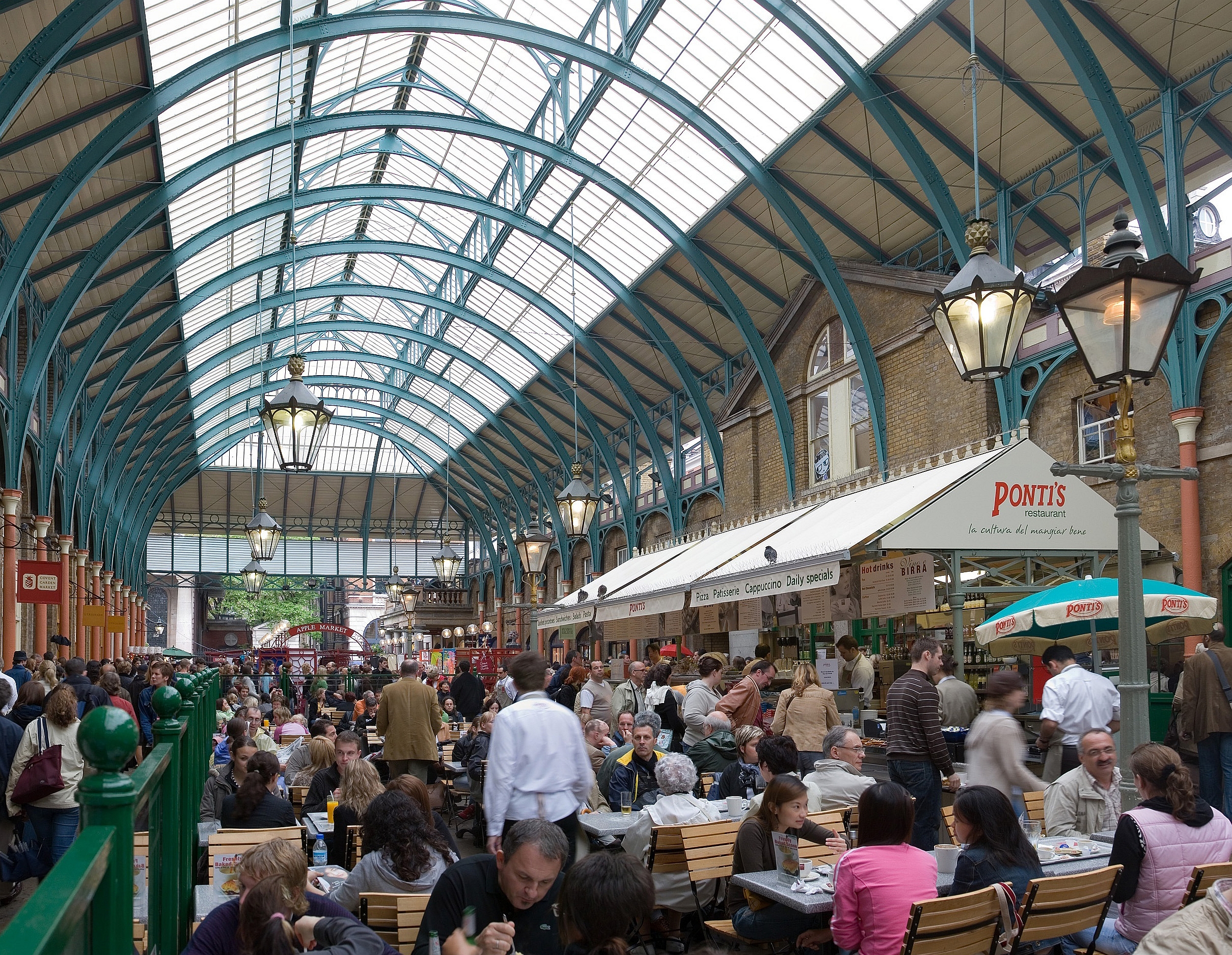
The mystery was finally solved in the 1980s by archaeologists who realized that the Anglo-Saxons had not resettled the Roman city at all. Instead, they had built a completely new settlement about a mile to the west, stretching along the Strand to modern-day Covent Garden. They called this new town Lundenwic - meaning "London trading town."
Lundenwic was a vast, sprawling emporium. Unfettered by ancient stone walls, it sprawled along the riverbank, functioning as an international port. The Venerable Bede, writing his Ecclesiastical History of the English People in 731 AD, perfectly captured the essence of this settlement, describing the city as a "mart of many nations resorting to it by sea and land." It was a place of immense wealth, dealing in slaves, wool, and luxury goods from the continent.
However, this open, undefended wealth proved irresistible to a new wave of invaders: the Vikings. Throughout the 830s and 840s, Danish raiders repeatedly sacked Lundenwic. The devastating raid of 851 decimated the settlement, forcing the Anglo-Saxons to abandon their prosperous port.
Survival dictated a return to the past. In 886 AD, King Alfred the Great of Wessex marched his forces back into the ruined shell of Roman Londinium. Recognizing the strategic brilliance of the ancient defenses, Alfred repaired the Roman walls, recut the defensive ditches, and laid out a new street grid. He renamed this refortified city Lundenburh - "London Fort." By retreating behind Roman stone, Alfred secured the future of the city. Lundenwic was abandoned to the elements, its name mutating over centuries into Ealdwic ("old settlement"), which survives today as the London district of Aldwych.
The Myth of King Lud and the Resilience of a Name
As the city grew in power and prestige throughout the Middle Ages, its origins became clouded by folklore and political propaganda. In the 12th century, the cleric Geoffrey of Monmouth wrote the Historia Regum Britanniae (History of the Kings of Britain), a wildly popular, largely fabricated account of British history. Geoffrey claimed that London was founded by Brutus of Troy as "Troia Nova" (New Troy), and later rebuilt by a mythical Celtic king named Lud, who renamed it Caer Lud (Lud's Fortress).
For centuries, this pseudohistory was accepted as fact. It provided the burgeoning capital with an appropriately majestic and ancient pedigree, linking the British monarchy to the heroes of antiquity. Today, the ghost of King Lud remains stamped upon the city’s geography, most notably in the name of Ludgate. Modern linguistics and archaeology have comprehensively dismantled Geoffrey’s mythology, but the desire to weave a grand origin story for culture and national identity remains a testament to the city's psychological hold over the British imagination.
The Linguistic Evolution to the Modern Era
The transition from Lundenburh to the modern "London" was a gradual process of phonetic softening and linguistic standardization. Following the Norman Conquest of 1066, the French-speaking elite and Latin-writing clerics found the heavy Germanic syllables of the Anglo-Saxons cumbersome. Through a process of linguistic syncope and the influence of the Great Vowel Shift, the name shed its suffixes. The Old English Lunden smoothed out, finalizing its spelling in the emerging standard English of the Chancery and the printing presses of William Caxton in the 15th century.
It is remarkable that the core of the name survived at all. Through Celtic migrations, Roman imperialism, Anglo-Saxon settlement, Viking invasions, and Norman conquest, the root of Plowonida endured. The name of the city is an act of historical defiance. Every time we speak the word "London," we are invoking the ancient, untamed Thames. We are speaking the language of people who stood on a muddy bank millennia ago, looking out at a wide, flowing river, and deciding that this was the place where they would make their stand.
The origins of London are not found in the decrees of emperors or the myths of legendary kings. They are found in the mud, the tide, and the relentless, driving commerce of a people who continuously reinvented their city to survive. From Londinium to Lundenwic, and from Lundenburh to the modern megalopolis, the name has been a constant - a linguistic anchor holding fast while the world turned around it.