By Yulia Tulegenova
It began not with a bang, but with a box-office whimper. Fifty years ago, a film landed in British cinemas, flickered briefly, and then all but vanished. It was greeted by critical shrugs and empty seats, dismissed by one reviewer as "campy trash" (absolutely rubbish) and another as a sparkle-less rehash of a stage show. Yet this spectacular failure, The Rocky Horror Picture Show, would become the longest-running theatrical release in film history, a ritual gathering for the marginalised and a cultural phenomenon that has refused to die.
The story, of course, starts years earlier, in the mind of a young, unemployed actor in London named Richard O'Brien. In the winter of 1972, to occupy himself, O'Brien started writing a musical. He channelled his love for B-horror movies, 1950s rock and roll, and the glam-rock sexuality that was buzzing in the air. It was a self-confessed "joyous raid" on populist culture, a loving parody of the schlocky science-fiction and horror he’d grown up with. The result was The Rocky Horror Show, a wonderfully chaotic tale about a strait-laced American couple, Brad and Janet, who find their world turned upside down by a "sweet transvestite" scientist from another planet.
From a Tiny Room to the Silver Screen
The show premiered in June 1973 in the Royal Court's tiny 63-seat Theatre Upstairs. It was an immediate sensation. Directed by Jim Sharman, who had worked with O'Brien on Jesus Christ Superstar, the show was a vibrant, messy, and unapologetic celebration of otherness. It won the 1973 Evening Standard Theatre Award for Best Musical and soon moved to larger venues, running for a staggering 2,960 performances in its initial London run.
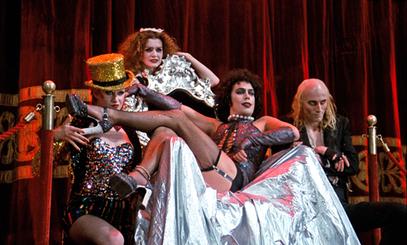
The core of the show’s explosive energy was Tim Curry. As Dr. Frank-N-Furter, he was a revelation. Having originated the role on stage, Curry delivered a performance that was part seducer, part pouting child, and all magnetic charisma. He was menacing and seductive, commanding the stage in fishnets and heels with a voice of "sugared bile," as one critic put it.
Hollywood, in the form of American producer Lou Adler, took notice. Adler brought the show to Los Angeles, where its successful run sparked talk of a film adaptation. O'Brien and Sharman retained creative control, a crucial victory that ensured the film would keep the stage show's anarchic spirit. They also kept most of the original London cast, including O’Brien as the hunchbacked handyman Riff Raff and, of course, Curry as Frank. To satisfy the studio, 20th Century Fox, rising American actors Susan Sarandon and Barry Bostwick were cast as the innocents, Janet and Brad.
The production itself was anything but glamorous. Shot on a shoestring budget of around $1.4 million at a dilapidated English country house, the conditions were gruelling. The filming took place in a damp, cold autumn, and the set had no heating. Susan Sarandon contracted pneumonia from being constantly wet and half-dressed in the freezing conditions. Bostwick recalled being perpetually soaked in icy water that nobody knew how to heat. It was a tough, miserable shoot that seemed a world away from the on-screen bacchanal.
A Resurrection at Midnight
When the film was released in 1975, it was a commercial and critical disaster. It was pulled from cinemas after a few weeks, seemingly destined for obscurity. Esteemed critic Roger Ebert declared that the show simply didn't work on screen; it needed the energy of a live audience. He was, in a sense, more correct than he could have imagined.
The film's second life began, improbably, with late-night screenings. A young Fox executive, Tim Deegan, convinced the studio to test the film as a "midnight movie" at the Waverly Theater in New York City, starting on April Fool's Day, 1976. The midnight movie was an emerging phenomenon in the 1970s, a countercultural space where strange, non-mainstream films could find a dedicated audience. Films like Alejandro Jodorowsky's surrealist western El Topo and John Waters's shocking Pink Flamingos had built devoted followings through word-of-mouth at these late-night showings.
Rocky Horror was perfectly suited for this world. Slowly, a small group of fans started returning to the Waverly every weekend. They formed a community, a ritual. Soon, the ritual became interactive. It started with a few shouted lines at the screen. Then people began dressing up as the characters. It escalated into a full-blown participatory experience, a kind of call-and-response liturgy for the disillusioned.
This audience-led performance, known as a "shadow cast," became the heart of the Rocky Horror experience. Fans didn't just watch the film; they lived it. They threw rice at the opening wedding scene, shielded their heads with newspapers during the rainstorm, and snapped rubber gloves in unison with Frank. They danced the "Time Warp" in the aisles and hurled toilet paper into the air at the cry of "Great Scott!". The film became a backdrop for a party that the audience threw for itself.
A Sanctuary for the Different
What was happening in those darkened cinemas was more than just a quirky fan obsession. It was the creation of a sanctuary. In a time before the internet provided virtual communities, Rocky Horror offered a physical space where people who felt like outsiders could gather and belong. The film's themes of sexual liberation, gender fluidity, and unapologetic individuality resonated deeply with queer audiences and anyone who felt alienated by the mainstream.
The theatres became safe havens where you could be yourself, where dressing in corsets and fishnets was not just accepted but celebrated. It was a place of queer joy, where the on-screen celebration of transgressive desire spilled into the auditorium. The film made people question their own identities and orientations in a way few cultural products had before. It offered a powerful message, encapsulated in its most famous line: "Don't dream it, be it."
The phenomenon spread from New York to small towns across America and then around the world. For five decades, this ritual has endured, passed down through generations of misfits and rebels. It is, perhaps, the ultimate form of analogue community in a digital world. The wild, unrepeatable energy of a live screening is something that can't be replicated on a streaming service. It requires presence, participation, and a willingness to give yourself over to absolute pleasure.
Fifty years on, the film remains a glorious, ramshackle tribute to B-movies, rock and roll, and the freedom to be strange. Its initial failure was a misreading of its purpose. It was never just a film to be passively consumed. It was an invitation. An invitation to a party that, for half a century, has shown no signs of stopping.