By Anna Zhila
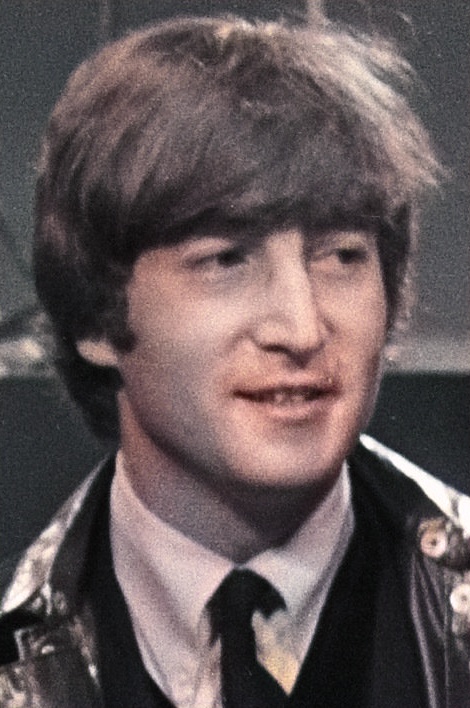
John Lennon would have been 85 this week. And you know what that means. The photos will be doing the rounds again. The round glasses, the long hair, the white piano. Saint John of the Peace and Love movement. The working-class hero, the martyr. The man who just wanted to give peace a chance.
It’s a lovely story. It’s a powerful myth. And we’ve been telling it to ourselves for so long that we’ve forgotten it’s only half the picture.
What do we do with the other Lennon? The one who doesn’t fit so neatly on a tote bag or a poster.
At first, you look at the basic biography and it all seems to track. The tough Liverpool childhood, the absent father, the mother killed in a car crash. The story starts with pain, and from that pain, art is born. It’s a classic narrative. And the anger that came from that pain, that sharp, cynical, sometimes cruel wit… that’s what powered the early Beatles. That’s what gave them their edge. Paul was the melody, the charm. But John was the grit in the oyster. He was the danger.
But we’ve sanded him down. We’ve polished the difficult edges until they’re smooth and safe and marketable. We’ve turned him into a tea towel.
The thing is, the man himself was a walking contradiction. He sang ‘All You Need Is Love’ and could be a vicious, cutting bastard to the people closest to him. He sang about imagining no possessions from a white mansion in the countryside, surrounded by beautiful, expensive things. He was a peace activist who was, by his own admission, a violent man in his youth.
Are we supposed to just ignore all that?
I remember when the Beatles Anthology came out in the 90s. You got to hear them in the studio, just mucking about, and the thing that always struck me was John’s voice. Not his singing voice, his talking voice. The sheer, relentless piss-taking. The constant needling. Nothing was ever taken seriously. Everything was a joke, especially the things that were most important. It was a defense mechanism, of course. A way of keeping the world at arm’s length. But it was also who he was.
Actually, scrap that. It wasn’t just a defense. It was a weapon. His wit could be hilarious, but it could also be unbelievably cruel. And that cruelty is all over the early songs if you listen for it. ‘Norwegian Wood’ is a song about setting a woman’s flat on fire because she wouldn’t sleep with him. We hear it now as a whimsical folk tune. But the story it tells is dark.
And then, of course, there’s Yoko. The story gets split into two clean halves: before Yoko and after Yoko. B.Y. and A.Y. In the simplified myth, she’s either the witch who broke up the band or the saint who saved his soul and turned him into a serious artist and activist.
But what if neither is true? What if he was just a deeply restless, deeply insecure man who was always looking for a new gang, a new identity to try on? First it was the leather-clad rockers in Hamburg. Then it was the mop-topped pop stars. Then it was the wise psychedelic gurus. And then it was the avant-garde art-world provocateurs. He didn’t just meet Yoko and change. He found a new partner for his particular brand of chaos, a new mirror to see himself in.
The bed-ins for peace. Was that a profound act of political protest, or the ultimate act of celebrity narcissism? Can it be both? I think it has to be. Two people using their fame to try and stop a war, but also ensuring that the cameras were always on them while they did it. It was complicated. And we don’t like complicated. We like our heroes to be simple.
His legacy is like an old, beloved leather jacket. It looks iconic from a distance. But up close, you see the cracks, the stains, the rips that have been badly stitched up. And honestly, that’s what makes it interesting. The damage is part of the story. The myth wants us to airbrush the cracks, to pretend they’re not there. But the cracks are where the light gets in. The cracks are where the humanity is.
He said he was never afraid of death, that it was like getting out of one car and into another. It’s a great line. Very Zen, very John. But his death in 1980 was the last, terrible piece of the myth-making. It froze him in time. It made him a martyr. It made it almost impossible to have a real, grown-up conversation about who he was, in all his messy, contradictory glory. It turned a complicated man into a simple slogan.
So, by all means, let’s remember John Lennon this week. Let’s play the records. But let’s try and remember the whole man. The funny one, the brilliant one, the angry one, the lost one, the cruel one. Because he was all of those things. And the man who wrote ‘Help!’ and ‘Strawberry Fields Forever’ wasn’t a saint. He was just a guy who was trying, and often failing, to figure out who the hell he was. And that’s a much better story.