London’s theatre ecosystem is currently operating at a level of global dominance that even its transatlantic rival, New York, struggles to match. While Broadway grapples with prohibitive overheads and a resulting aversion to risk, the West End and its surrounding theatrical arteries have maintained a delicate balance of commercial viability and artistic daring. For cultural tourists and domestic visitors alike, plotting a theatre weekend in the British capital requires more than simply securing a ticket; it demands an understanding of the city’s unique theatrical geography, from the historic playhouses of Shaftesbury Avenue to the experimental black boxes of Soho.
The health of this ecosystem is not merely anecdotal. Earlier this year, the heavyweight producer Cameron Mackintosh starkly outlined the growing chasm between London and New York. Speaking to The New York Times in early 2026, Mackintosh announced he would no longer produce shows on Broadway, stating: “The costs of running a show are ludicrous in New York. I won't do it anymore.” He explicitly credited the accessibility of the British model: “I know, as a producer of Hamilton in London, we have tickets under £100 here, which hardly gets you in the foyer in New York, let alone an orchestra seat. I'm not saying it's cheap, but it's certainly affordable.”
Despite the existential threats posed by recent global disruptions, the British stage has demonstrated remarkable resilience. In late 2023, while assessing the post-pandemic recovery of the live entertainment sector, Mackintosh noted to ITV News that “British theatre is in a fantastically healthy state.” This health is driven not just by tourist dollars, but by a deeply ingrained domestic theatre-going culture that views the stage as a vital civic forum rather than an exclusive luxury. This affordability, coupled with a fiercely protected artistic heritage, makes London the premier destination for stagecraft. Whether you are seeking the pyrotechnics of a blockbuster musical, the raw intimacy of a Fringe transfer, or the open-air authenticity of Elizabethan drama, the capital delivers. Here is how to navigate the ultimate London theatre weekend.
The West End: The Engine of Commercial Theatre
Often used interchangeably with “Theatreland,” the West End is a designated locus of around forty venues clustered primarily across the City of Westminster and the London Borough of Camden. Its history as an entertainment district stretches back to the late seventeenth century, but today, it functions as the glittering commercial engine of the British stage.
The architecture of these spaces - many boasting Grade II or Grade II listed status - is as much a part of the experience as the performances themselves. At the Lyceum Theatre on Wellington Street, Julie Taymor’s visionary production of Disney’s The Lion King continues to operate as a masterclass in puppetry, mask work, and set design. The venue’s grand neoclassical columns and ornate interiors provide a striking contrast to the avant-garde staging that has kept the show relevant for decades. Similarly, Her Majesty’s Theatre remains the spiritual home of Andrew Lloyd Webber’s The Phantom of the Opera*, a production that practically defined the 1980s mega-musical boom and retains its haunting, chandelier-dropping spectacle.
Yet the West End is not entirely beholden to nostalgia. The Victoria Palace Theatre currently houses Lin-Manuel Miranda’s Hamilton, a production that fundamentally rewired the contemporary musical format by fusing hip-hop, R&B, and traditional show tunes. The fact that such a distinctly American historical narrative has flourished in London speaks to the city’s cosmopolitan audience and the universal appeal of the show’s underlying themes of legacy, ambition, and political survival.
The Shakespearean Anchor: Time-Travelling on the South Bank
To understand the roots of London’s theatrical dominance, one must cross the River Thames to the South Bank. Here, standing as a testament to the vision of American actor and director Sam Wanamaker, is Shakespeare’s Globe. A faithful reconstruction of the original 1599 playhouse, the modern Globe opened in 1997 and functions as a working laboratory for early modern stagecraft.
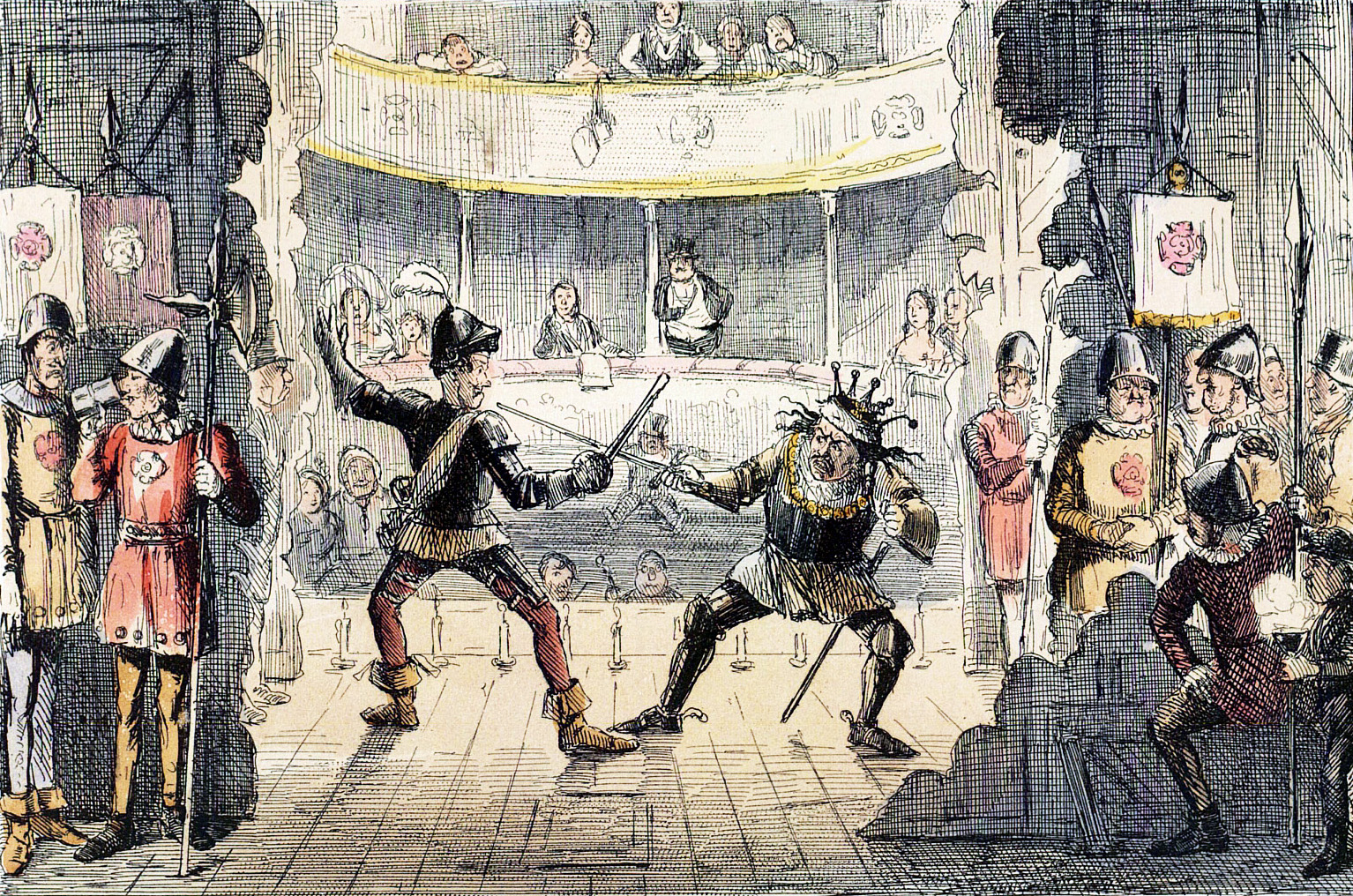
Attending a performance at the Globe is an active, visceral experience. The theatre is open to the elements, and a significant portion of the audience - the “groundlings” - stand in the yard directly below the stage. This proximity breeds an interactive dynamic rarely seen in proscenium arch theatres; actors routinely address, tease, and react to the standing crowd. During the summer season, productions of classic comedies like Twelfth Night and Much Ado About Nothing routinely lean into this lively atmosphere, transforming the yard into a raucous extension of the stage. Even the tragedies, such as Romeo and Juliet, crackle with a specific kind of kinetic energy when performed in the daylight, without the crutch of modern lighting rigs.
The Globe serves as a critical counterweight to the technological arms race of the West End. It proves that a wooden "O", natural light, and the enduring power of Elizabethan verse are sufficient to hold thousands of spectators spellbound.
Beyond the Mainstream: The Avant-Garde and The Fringe
For audiences whose tastes lean toward the contemporary, the disruptive, and the provocative, the conventional West End is only the starting point. London’s theatrical landscape is deeply enriched by its Off-West End and Fringe venues, which operate as crucial incubators for new writing and experimental staging.
The Soho Theatre on Dean Street is perhaps the most vital hub for this kind of work in central London. Operating multiple performance spaces within a single building, Soho Theatre programmed a relentless, year-round slate of drama, comedy, and cabaret. It is the premier destination for boundary-pushing solo shows, frequently catching the most exciting talent transferring directly from the Edinburgh Festival Fringe.
The economics of developing new work, particularly musicals, remain daunting. Yet, London producers have historically shown a willingness to court danger. As Nica Burns, the veteran West End producer and co-owner of Nimax Theatres, told The Guardian in 2024 regarding her strategy for backing original British work: “Developing a musical is much more expensive [than a play]. I'm prepared to take a risk and give [it a go].” This willingness to underwrite risk is what allows shows addressing contemporary social issues to evolve from fringe concepts into mainstream cultural touchstones.
Logistics and Etiquette: Navigating the Theatrical Weekend
Executing a flawless theatre weekend requires tactical planning. The days of mandatory formal evening wear are long gone; contemporary audiences generally observe a smart-casual dress code. While jeans and trainers are entirely commonplace, leaning toward a slightly more elevated aesthetic - avoiding overtly athletic wear - is still considered a mark of respect for the performers and the historic venues themselves.
Ticketing remains the primary hurdle for visitors. For marquee productions - particularly recent transfers or limited runs starring high-profile film actors - booking months in advance through official theatre websites is non-negotiable. However, for those with flexibility, London offers robust mechanisms for spontaneous attendance. The TKTS booth in Leicester Square, operated by the Society of London Theatre, remains a reliable source for discounted, on-the-day tickets. Additionally, many major productions reserve a small allocation of “day seats” or operate digital lotteries, releasing highly subsidised tickets each morning to ensure accessibility.
When mapping out the weekend, geography should dictate the schedule. A matinee in the heart of Covent Garden can easily be paired with a pre-theatre dinner in nearby Seven Dials, followed by an evening performance just a short walk away on Shaftesbury Avenue. To explore more about the top venues in the city, consult our comprehensive Top 20 Best London Theaters, Your Guide.
The Expanding Canvas: Immersive Spectacle and Dance
The definition of a theatrical experience has broadened significantly over the past decade, moving beyond the traditional relationship between the stalls and the stage. Immersive theatre, where the audience is embedded within the narrative environment, has become a staple of the London scene. Meanwhile, family-oriented productions have evolved into sophisticated spectacles that refuse to talk down to younger demographics. The Royal Shakespeare Company’s production of Matilda The Musical at the Cambridge Theatre is a prime example. Armed with a razor-sharp score by Tim Minchin and an impressive haul of Laurence Olivier Awards, it appeals as much to cynical adults as it does to its target audience.
Similarly, the Palace Theatre serves as the monolithic home for Harry Potter and the Cursed Child. Operating as a sprawling, two-part epic, the production eschews heavy reliance on digital projection in favour of practical, analogue stage magic - wirework, trapdoors, and sleight of hand. It is a monumental undertaking that anchors Cambridge Circus and demonstrates the sheer physical scale that West End productions can achieve when operating at the height of their technical capabilities.
For those immersed in the broader Theatre landscape, the weekend should also make room for physical storytelling. Venues like Sadler’s Wells in Clerkenwell and the Royal Ballet and Opera in Covent Garden represent the global vanguard of contemporary and classical dance. Whether it is a rigorous classical ballet or a stark, modern piece like Crystal Pite’s Flight Pattern, the city’s dance programming offers a deeply emotional complement to the text-heavy productions of the West End.
Harmonic Convergence: Symphonies and Concerts
While stage plays and musicals dominate the itinerary, no comprehensive cultural weekend in London is strictly confined to the spoken word. The city’s acoustic architecture provides a magnificent secondary layer of entertainment. The Royal Albert Hall in South Kensington, a spectacular Victorian amphitheatre, hosts a relentless programme ranging from classical symphonies to cinematic film-with-live-orchestra events. During the summer, the BBC Proms effectively take over the venue, offering some of the most democratic and affordable access to world-class classical music on the planet. For those seeking a louder, more contemporary frequency, the seasonal outdoor concerts in Hyde Park draw the biggest names in rock and pop, turning the royal park into a temporary, thumping epicenter of global music.
A Theatrical Odyssey
A weekend immersed in London’s theatre scene is an exercise in time travel and cultural whiplash. You can spend an afternoon standing under the open sky listening to the same dialogue that audiences heard in 1599, and the evening engulfed by the laser-lit, hip-hop historiography of an American founding father.
The enduring strength of British theatre lies in this exact juxtaposition. It is an industry that fiercely protects its heritage while aggressively pursuing the avant-garde, supported by an economic structure that, while strained, remains vastly more accessible than its international counterparts. To experience a theatre weekend here is not simply to consume entertainment; it is to participate in a living, breathing tradition that continues to shape global culture.