By Anna Zhila
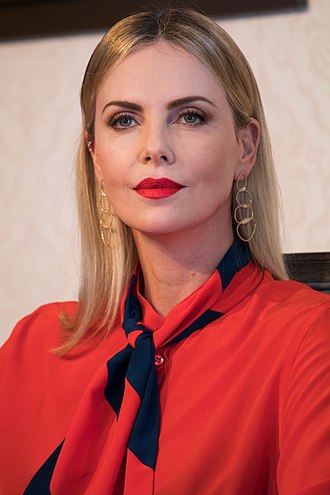
There are certain actors who are more than just performers. They are cultural barometers, artists whose careers seem to trace the fault lines of their time, who are unafraid to venture into the darkest and most difficult corners of the human experience. As she turns fifty, it is clear that Charlize Theron is such an artist. Over the course of a remarkable and often startlingly brave career, she has moved from the sunlit surfaces of Hollywood glamour to the shadowy depths of the human soul. And in doing so, she has built a body of work that is not just a collection of great performances, but a powerful and necessary argument about the nature of beauty, of rage, and of a certain kind of fierce, and often costly, female resilience.
As a curator of the stories we tell ourselves, I have always been fascinated by the trajectory of Theron's career. It is a story of a quiet, and deeply radical, rebellion. It is the story of an artist who was given a single, and very narrow, box to live in - that of the beautiful, blonde ingenue - and who, with a fierce and unwavering determination, proceeded to smash that box into a thousand pieces. Her work is a testament to the idea that the most interesting art is often born from a place of profound, and deeply necessary, dissatisfaction.
The Devil's Bargain
When she first arrived on the scene in the late 1990s, the path for an actress of her undeniable, almost classical, beauty seemed clear. And in films like The Devil's Advocate and The Cider House Rules, she played her part beautifully. In the former, a now-classic thriller, she gave a performance of startling, almost painful, vulnerability as the wife of a young lawyer who has, quite literally, sold his soul to the devil. It is a portrait of a woman's slow, and terrifying, descent into a private hell, a quiet, and deeply moving, counterpoint to the grand, operatic performances of Al Pacino and Keanu Reeves.
But to see these early roles as simply a prelude to her later, more "serious," work is to miss the point. Even here, in the guise of the beautiful, and often tragic, girlfriend, there is a flicker of something more. There is a sense of a deep, and often untapped, well of anger, of a quiet, and deeply unsettling, intelligence that is not content to simply be an object of the camera's gaze.
The Monster and the Myth
The turning point, of course, was Monster. Her 2003 portrayal of the real-life serial killer Aileen Wuornos was not just a great performance; it was an act of artistic self-immolation. It was the moment she took the very thing that had defined her - her beauty - and destroyed it. This was not just a matter of prosthetics and weight gain. It was a deep, and deeply terrifying, dive into the soul of a woman who had been brutalized by the world, and who, in turn, brutalized it back.
The Oscar that she won for the role was not just an award. It was a declaration of independence. It was a statement that she would not be confined by the narrow, and often deeply misogynistic, expectations of the industry. It was a promise that she would be a different kind of star, a star who was not afraid of the dark.
This same, fearless, and deeply empathetic, approach is at the heart of so many of her greatest performances. In North Country, another film based on a true story, she played one of the first women to file a class-action lawsuit for sexual harassment, a quiet, and deeply courageous, woman who took on the entrenched, and often violent, misogyny of a Minnesota iron mine. In Bombshell, she disappeared into the skin of the American news anchor Megyn Kelly, a woman of immense, and often contradictory, ambition, who found herself at the center of the toxic, and deeply powerful, world of Fox News.
These are not just roles. They are acts of witness. They are portraits of women who are not just victims, but survivors, fighters, women who are, in their own, often messy, and deeply human, way, trying to find a way to live in a world that is so often hostile to their very existence.
The Action Hero, Reimagined
And then, there is the other side of her career, the side that is, in its own way, just as radical, and just as important. It is the side of the action hero. In a genre that has, for so long, been the exclusive domain of men, Theron has, with a quiet, and deeply powerful, determination, carved out a space for a new kind of female hero.
Her performance as Imperator Furiosa in George Miller's masterpiece, Mad Max: Fury Road, is a case in point. Furiosa is not a damsel in distress. She is not the love interest. She is the engine of the film. She is a warrior, a leader, a woman of few words and immense, almost mythic, power. It is a performance of such iconic, and deeply felt, force that it is almost impossible to imagine the film without it.
This is a new kind of action hero, a hero who is not defined by her physical strength, but by her resilience, her intelligence, her deep, and unwavering, commitment to a cause that is greater than herself. And in a world that is so often defined by the loud, and often empty, spectacle of the male action hero, she is a quiet, and deeply necessary, revolution.
The Art of the Ordinary
But for all her iconic, and often larger-than-life, roles, some of her most powerful work has been in the small, and deeply human, dramas of ordinary life. In Jason Reitman's brilliant and deeply underrated tragicomedy, Young Adult, she gave a performance of startling, and almost unbearable, vulnerability as a woman who is, in a sense, a ghost in her own life, a former high school queen bee who is unable, or unwilling, to let go of the past.
And in Tully, another collaboration with Reitman and the writer Diablo Cody, she gave a performance of such raw, and unflinching, honesty about the realities of motherhood that it felt less like a film and more like a documentary. It is a portrait of a woman on the verge of a nervous breakdown, a woman who is drowning in the beautiful, and often terrifying, chaos of a life that is no longer her own. It is a performance that is not just brave, but necessary, a quiet, and deeply moving, testament to the unseen, and often unacknowledged, labour of women everywhere.
Charlize Theron is an artist who has spent a lifetime looking at the things we would rather not see. She has looked at the darkness, at the chaos, at the beautiful, and often terrifying, messiness of what it means to be a woman in the modern world. And in doing so, she has created a body of work that is not just beautiful, but necessary. She is a warrior, a monster, a survivor, a mother, a queen. She is, in short, one of the greatest actors of her generation. And as she enters her sixth decade, one gets the sense that the most powerful, the most challenging, and the most brilliant, work is still to come.