By Anna Zhila
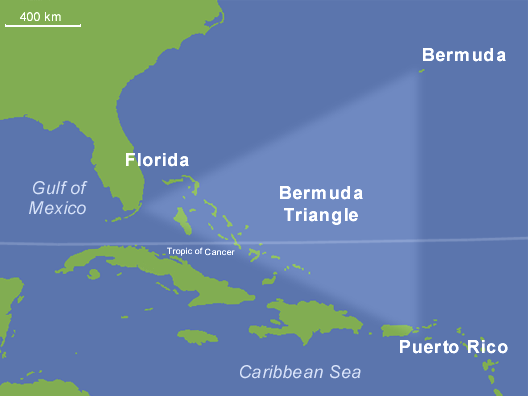
Some mysteries are not born, but made. They are assembled, piece by piece, from stray events and human anxieties until they acquire a gravity of their own, pulling in facts and fictions alike. The Bermuda Triangle is perhaps the finest example of such a creation; a story so potent it has managed to overwrite the geography it claims to describe. For decades, this patch of the Atlantic has existed more vividly in our collective imagination than it does on any official map.
The recent re-emergence of scientific explanations for the Triangle’s supposed phenomena is interesting, not because the mystery is being solved, but because it reminds us that it was never really a mystery at all. The real story is not about rogue waves or extraterrestrials. It is about our enduring need for the unknown, and the seductive power of a well-told tale.
The Assembly of a Legend
The architecture of the Triangle myth was built on a handful of core tragedies. Perhaps the most striking is the case of the USS Cyclops, a colossal US Navy supply ship that vanished with 306 souls aboard in March 1918. It left no distress call, no wreckage, no trace. It simply sailed into the hazy boundary between the known world and oblivion.
Then came the event that would become the myth’s centrepiece: the disappearance of Flight 19 in December 1945. Five US Navy Avenger bombers on a routine training flight off the coast of Florida became disoriented. We have fragments of their final communications, snippets of confusion broadcast over the crackle of the radio. “Everything is wrong… strange,” the flight leader reported. “We can’t be sure of any direction. The ocean doesn’t look as it should.” Then, silence. A search-and-rescue seaplane sent to find them also vanished.
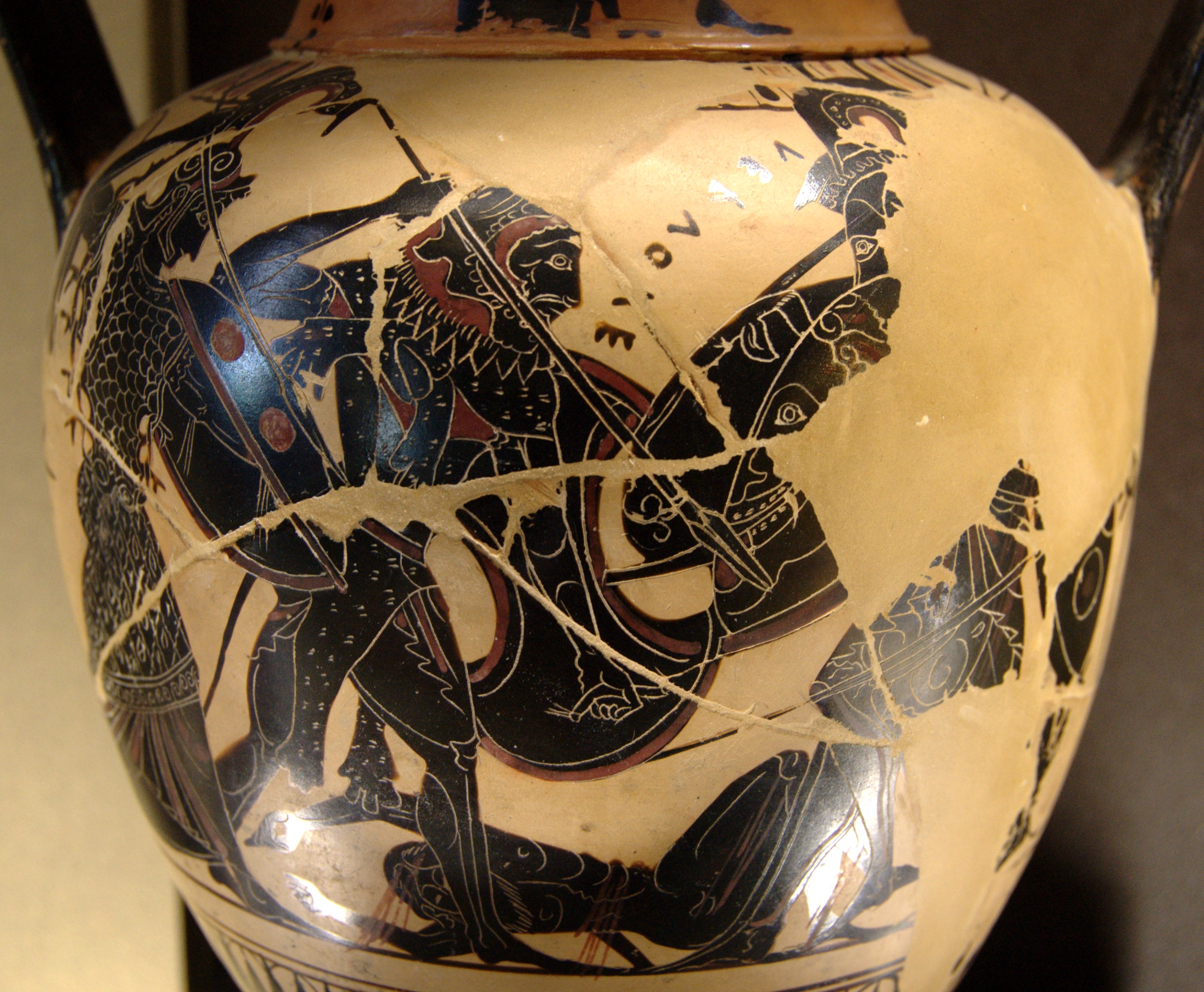
These events, separated by decades, were isolated tragedies. They were stitched together in the 1950s and 60s by a series of magazine articles and books. It was the writer Vincent Gaddis who, in 1964, gave the phenomenon its unforgettable name: “The Deadly Bermuda Triangle.” Like a Dadaist collage, the myth took unrelated disasters and arranged them into a single, unsettling composition. The artists, in this case, were authors who understood that a pattern, once suggested, is difficult for the human mind to unsee.
A Canvas for the Paranormal
Once the frame was built, it became a canvas for our wildest speculations. The 1970s, a decade steeped in paranormal fascination, were the Triangle’s golden age. Charles Berlitz’s 1974 book, The Bermuda Triangle, became a global phenomenon, proposing explanations that were far more thrilling than simple human error or mechanical failure.
Berlitz speculated about magnetic vortices that could transport vessels to other dimensions. He entertained the idea of alien abductions, with the Triangle serving as a sort of cosmic fishing ground. His own preferred theory, however, was deliciously specific. He believed the disappearances were caused by a malfunctioning energy crystal left over from the lost city of Atlantis, resting miles below the waves on the ocean floor. This ancient technology, he argued, was still active, interfering with modern navigational equipment with disastrous results.
Of course, these theories feel outlandish now, but they spoke to a particular cultural moment. In a world grappling with the cold logic of the Cold War and the terrifying power of the atom bomb, there was a strange comfort in mysteries that defied rational explanation. Atlantis and aliens were, in a sense, a more palatable kind of chaos than the man-made alternative.
The Unfolding Map of Science
For years, science largely ignored the myth. It’s hard, after all, to disprove a ghost story. But recent years have seen a more concerted effort to apply rigorous analysis to the legend, and the explanations that have emerged are, in their own way, as awe-inspiring as any tale of Atlantean machinery.
Oceanographer Simon Boxall, working from the University of Southampton, has focused on a terrifyingly real maritime phenomenon: the rogue wave. For centuries, sailors’ tales of single, mountainous waves appearing without warning on a calm sea were dismissed as exaggeration. We now know they are real. Sophisticated satellite and radar systems have confirmed the existence of these vertical walls of water, some reaching heights of 30 metres or more.
The area of the Triangle is where storms from the north, south, and east can converge. Boxall’s hypothesis is that these competing weather systems can create the perfect conditions for monstrous rogue waves to build. To test this, his team created a scale model of the USS Cyclops. Due to its flat-bottomed design, the model was particularly vulnerable. A simulated rogue wave didn't just swamp the vessel; it broke its back, snapping it in two. Such a catastrophic failure would be instantaneous. The ship would founder in minutes, leaving no time for a distress signal and dragging any debris down with it into the abyss. You can almost hear the sudden, final groan of stressed steel before the ocean rushes in.
The Argument from Banality
While Boxall’s work offers a compelling explanation for the lost ships, it does little to address the vanished aircraft. For that, we turn to the work of Australian scientist Karl Kruszelnicki, who approaches the problem from a different, and perhaps more deflating, angle.
His conclusion is simple: there is no anomaly.
Kruszelnicki argues that the Bermuda Triangle is a statistical fabrication. The area is one of the most heavily trafficked shipping and flight corridors in the world. It is also a region known for its volatile weather, including hurricanes, and the extreme depths of the Puerto Rico Trench, which plunges to more than eight kilometres. Given the sheer volume of traffic passing through a geographically challenging area, it is inevitable that some vessels and aircraft will meet with disaster.
When you analyse the data, as Lloyd’s of London and the US Coast Guard have, the percentage of losses in the Bermuda Triangle is no higher than in any other similarly busy part of the ocean. The only thing unique about it is its reputation. As Kruszelnicki points out, the great depth means that when something does sink, it is often lost for good, compounding the sense of mystery. There is no wreckage, so we are left to fill the void with our own narratives.
Other theories, like the sudden eruption of methane hydrates from the seabed, also have a basis in science. Massive bubbles of gas could, in theory, reduce the density of the water so dramatically that a ship floating above would lose buoyancy and sink. While plausible, most scientists, including Kruszelnicki, see this as a less likely culprit than the more mundane, and more frequent, dangers of extreme weather and human error.
Perhaps the most human-like imperfection in the entire story of the Triangle is our collective willingness to overlook the obvious. We prefer the intricate tapestry of conspiracy over the simple thread of probability. The story of Flight 19 is a case in point. The myth tells of experienced pilots inexplicably lost. The official report, however, suggests the flight leader, whose compass may have been malfunctioning, mistakenly led his squadron further out to sea instead of back toward land. It was a tragic, fatal error, but it was a human one.
The enduring appeal of the Bermuda Triangle, then, has very little to do with the ocean itself. It is a testament to our own psychology. We are pattern-seeking creatures who crave narrative. The world science describes is a complex and often random place. A mystery, however, implies an answer. It suggests that there is a hidden order, a secret to be unlocked. Even a malevolent order, orchestrated by aliens or ancient Atlanteans, can feel more comforting than no order at all. The Triangle is not a place where ships are lost; it is a place where our fear of the inexplicable finds a home.