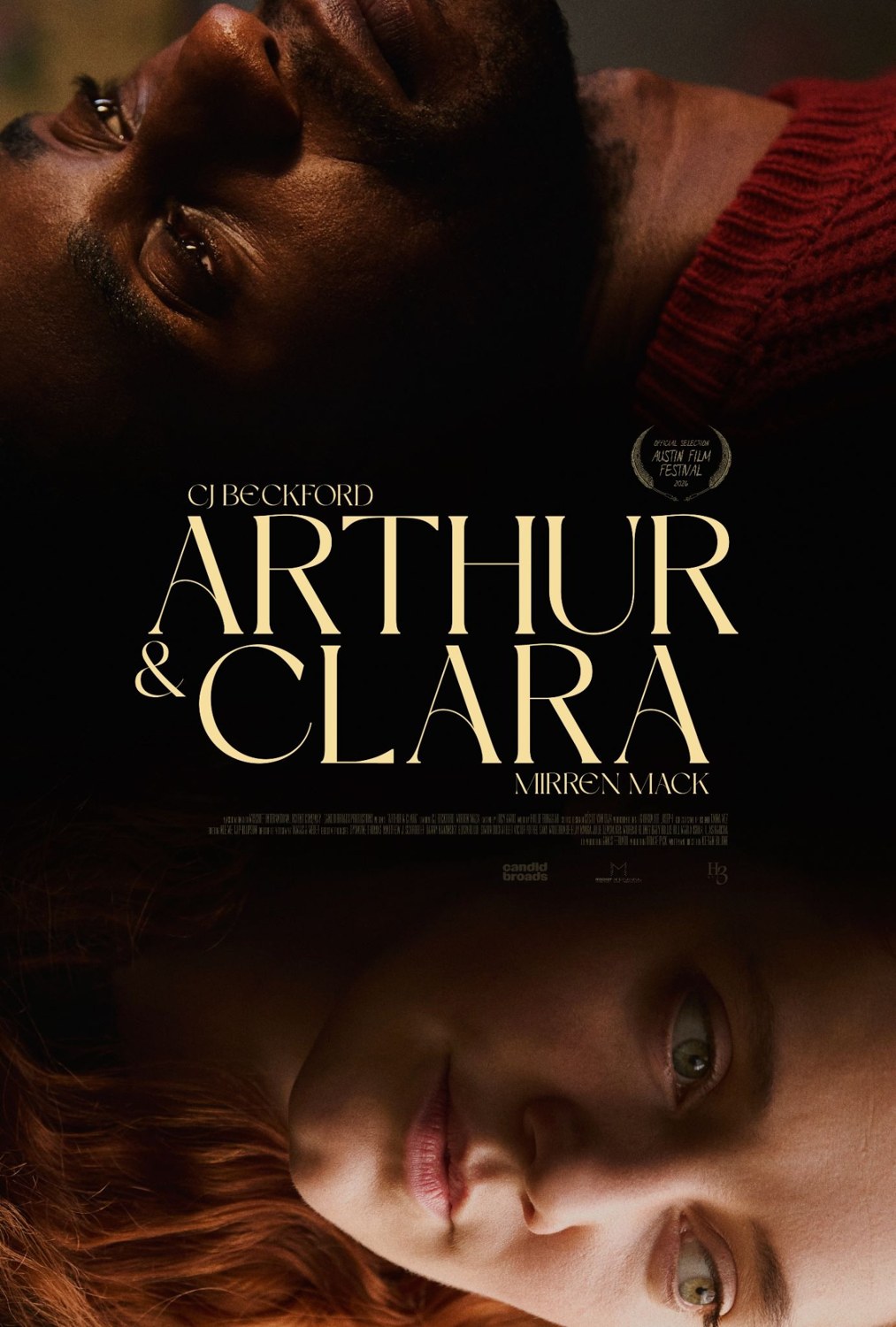
Arthur & Clara had its world premiere at the Austin Film Festival on 31 October. It is the debut feature of the British-Guyanese writer-director Kieran Bourne, and the first feature from the BAFTA-nominated Candid Broads Productions, founded by the producer Oriane Pick. The 104-minute romantic drama stars CJ Beckford and Mirren Mack as two people who run away to the same remote farmhouse: Arthur, a filmmaker struggling with his sense of identity, and Clara, an actress on the run from her press tour. Each wants solitude. Neither gets it.

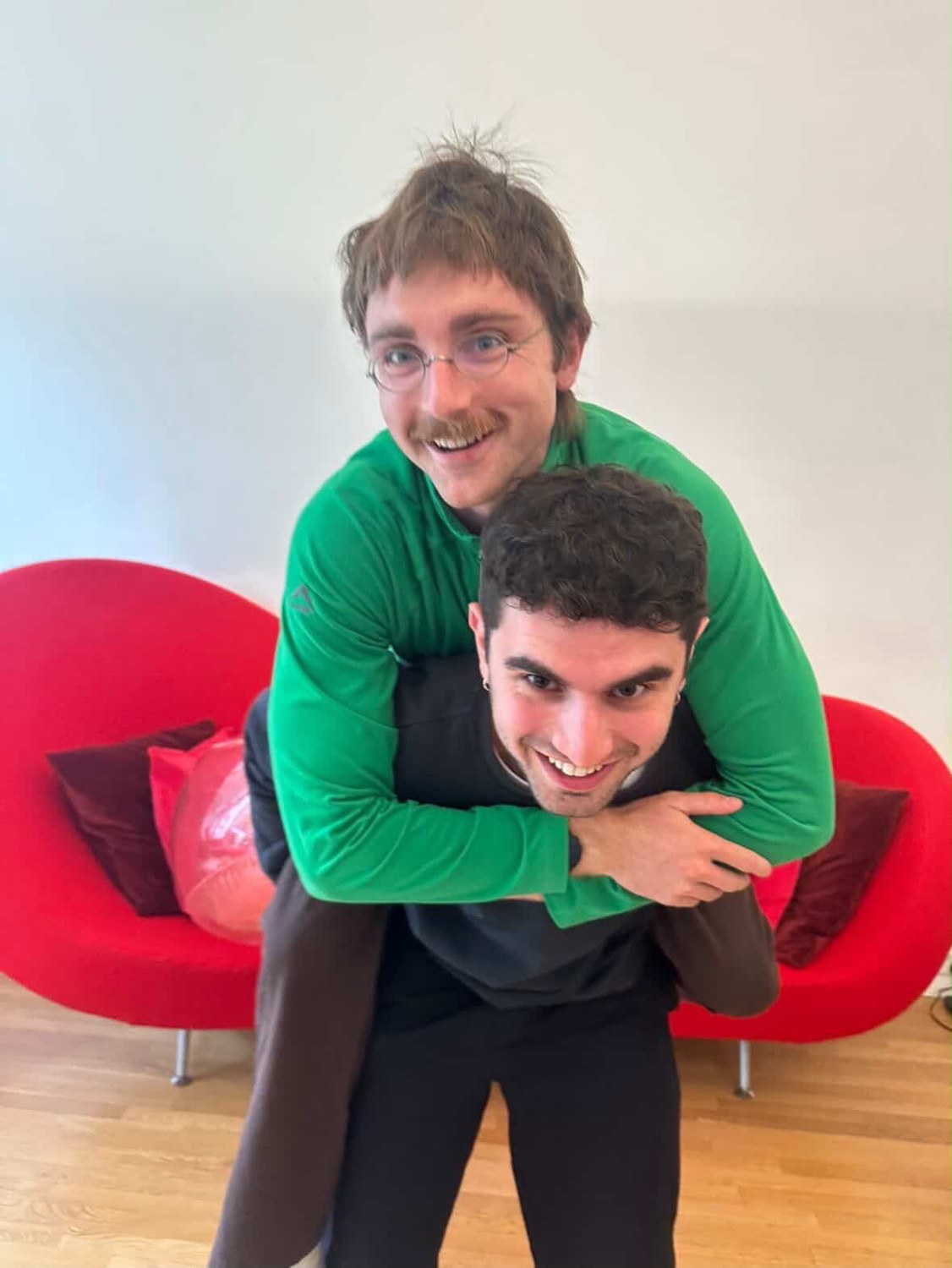
Bourne and Pick have worked together since 2018, on short films, a web series and the shorts Poles and Now's Your Time. We sent them questions by email around the premiere. Their answers are below.
Where did Arthur & Clara begin – a character, a place, a question you could not let go of?
"It started as a desire to make a version of 'Annie Hall' that I could afford at the time," Bourne says. There was a second push: "In 2015 we'd been told by a Producer that you should only go to Cannes with at least 90mins so it was also a response to that."
Arthur is a filmmaker and Clara an actress. How much of your own life in the industry went into them, and how did you keep them from becoming a film about films?
"A lot of my experiences went into the movie but my intention was for the character to become better people rather than better filmmakers," he says. "Their challenge was never about being good, it was about being authentic." He has no quarrel with the genre: "I personally love movies about movies but usually the quality that makes them great is why they need to make the movie."
The farmhouse and the countryside are almost a third character. What did the isolation give you as a writer and as a director?
"It gave me the ability to focus on the internal conflicts of the characters rather than external. They have no hostility towards each other so it allowed me to hopefully direct the audience inward." Then, more candidly: "But mainly, what it gave me was a tough test of my abilities as a writer and as a director. We'll see if I passed."
The film is about what it means to be seen. How did that idea shape the way you worked with Mirren Mack and CJ Beckford, and with Tamás Apor Méder on the camera?
"Staying out of the way as much as possible so that they could feel seen too. We're all exhibitionists in a way so my job is to make sure what they offer was authentic to the moment." He set some boundaries, but says the actors understood the script so well that his main task was to avoid over-intellectualising "for the sake of making a point. Didn't always succeed but the work they did is beautiful so must've got it right most of the time."
What changed most between the script and the final cut?
"In a literal sense, the location. It was originally set in Cornwall." Otherwise, he says, "Narratively not much aside from the usual deleted scenes that happen in the cinematic translation." Some filmmakers find the movie in the edit; Bourne is "just looking for the most cinematically impactful version of what I wrote. The intentions never change and if the audience finds something new, I love being introduced to it."
What do you hope audiences take away from it, and how does it feel to open at Austin, a festival built around writers?
"I hope they take away the same thing I did from 'Lost in Translation' which was a belief that you never know whom you'll connect with so be honest with others and yourself. And lines of dialogue. Movies aren't as quotable as they used to be."
Oriane, this is Candid Broads' first feature after your short-form and TV work. What made this the project to make that step with, and what surprised you about the jump to a feature?
"Kieran and I have been collaborating for several years, so taking the leap from short-form to feature together felt like a very natural progression," Pick says. "As a producer, I've always been drawn to complex, deeply human characters who are, above all, flawed. What I love about Kieran's writing is his ability to challenge our perceptions and make us question our own assumptions, all while drawing us into the worlds of characters like Arthur and Clara, whom we can't help but fall in love with despite their imperfections."
The material was also personal. "As an actor myself, Clara's journey and her struggles navigating what it means to be a woman in the industry resonated with me on a personal level. Equally, Arthur's inner conflict as a Black writer navigating that same industry raises important questions about identity, and belonging and the compromises we make along the way. These are exactly the kinds of stories we want to tell at Candid Broads so it was a no brainer that Arthur & Clara would end up being our debut feature."
What surprised her about the step up was how familiar it felt. "In many ways, the challenges are the same as in short-form filmmaking, just on a much bigger scale. Everything is amplified, from the creative decisions to the logistical hurdles, and with that comes an even greater sense of responsibility to honour and protect your director's vision. As a producer, you want to create the space for that vision to flourish while navigating the realities of bringing an independent film to life. It's a tricky balance, but also one of the most rewarding parts of the process."
Arthur & Clara is written and directed by Kieran Bourne and produced by Oriane Pick, with Anais Ferrato as co-producer. The director of photography is Tamás Apor Méder; the composer is Holly Buhagiar. The film wrapped production in early 2026. Its publicists say conversations about a UK release are under way and that details will follow once they are confirmed.