Album sequencing is the choice of running order for a record: which song opens it, which closes it, where the loud and quiet passages fall and how each track hands over to the next. To understand it, listen to an album straight through in its intended order and ask what each transition does, then look at the constraints the artist was working under, from the 20-odd minutes that fit on a vinyl side to the skip button on a phone. Radiohead, for example, spent two weeks deciding the order of OK Computer. That kind of effort is usually audible once you know where to listen.
Album sequencing at a glance
- What it is: the deliberate ordering of tracks, including gaps, crossfades and side breaks.
- Why it matters: each song is heard in the context of the one before it, so the same track can feel like a relief, a shock or a letdown depending on its neighbours.
- What shapes it: format (LP sides, CD length, streaming), the material itself, and commercial pressures such as singles and charts.
- How to hear it: play the whole record in order, at least once without interruption, and note where your attention rises and drops.
- A useful test: imagine any two adjacent tracks swapped. If the swap feels wrong, the sequence is doing work.
How track order shapes listening
A running order works through contrast and expectation. A fast song after a slow one feels faster; a sparse arrangement after a dense one feels more exposed. Sequencing decides where those contrasts land. It also decides pacing across the whole record, so that peaks are spaced out and quieter tracks give the ear room to recover.
The guitarist Ed O'Brien put it simply when describing OK Computer, released on 21 May 1997: "The context of each song is really important ... It's not a concept album but there is a continuity there." That quote, recorded in the OK Computer article on Wikipedia with its original sources, captures the point. A record does not need a story to benefit from a considered order. The album opens with the programmed drums of "Airbag" and closes with "The Tourist", which Thom Yorke chose as a counterweight to the faster material earlier on and described as a message to himself: "Idiot, slow down."
Openers and closers carry particular weight because they frame everything else. The opener sets the sound world and tells you what kind of attention the record wants. The closer decides what you are left with in the silence afterwards.
How the format shapes the sequence
Vinyl sides
Columbia Records launched the long-playing record at a press event at the Waldorf Astoria in New York on 21 June 1948, and early 12-inch LPs held about 23 minutes a side, according to the history of the LP record. The physics has not changed much since. The UK studio Swift Mastering advises that "aiming for 18-20 minutes max per side will yield the best sound quality", with around 22 minutes technically possible.
That limit turns one album into two halves. Each side needs its own opener and closer, and listeners get a built-in interval when they turn the record over. There is a technical layer too. As the stylus moves towards the centre of the disc, the groove passes under it more slowly and high frequencies suffer. Swift Mastering notes that "tracks with complex or high-frequency content are usually placed at the beginning of a vinyl side", and record companies have long put quieter material at the end of a side for related reasons. So when a vinyl-era album ends each side with a ballad, the choice may be partly artistic and partly engineering.
The compact disc
The first commercial CD was manufactured on 17 August 1982, and the first titles went on sale in Japan on 1 October that year, as the Compact Disc Digital Audio entry records. The disc's capacity of around 74 minutes is often linked to Sony's Norio Ohga and a 1951 Bayreuth recording of Beethoven's Ninth Symphony under Wilhelm Furtwängler, though a Philips engineer, Kees Schouhamer Immink, has said the decision was technical. Snopes has examined the claim in detail. Either way, the CD removed the side break and roughly doubled the available time, which changed the shape of many albums. Records that had been built in two halves of 20 minutes now ran as one long sequence.
Streaming and the skip button
Streaming made every track individually addressable, and listeners use that freedom. In 2014 Paul Lamere, working with Spotify data, published an analysis of skipping across billions of plays. He found that 24.14% of plays were skipped within the first five seconds, 35.05% within 30 seconds, and 48.6% before the end. Later research by Nicola Montecchio, Pierre Roy and François Pachet, published on arXiv in 2019, showed that skips cluster around points in a song's musical structure. For sequencing, the lesson is that early tracks, and the opening seconds of each track, work harder in a streaming context than they ever did on a turntable.
The most visible sequencing story of the streaming era came in November 2021, when Adele released 30. She wrote that "our art tells a story and our stories should be listened to as we intended", and Spotify removed the shuffle button as the default on album pages, as NPR reported. D. Bondy Valdovinos Kaye of Queensland University of Technology explained in The Conversation that shuffle stayed available, but behind a menu rather than beside the play button.
How charts count albums in the streaming age
Commercial rules also nudge how albums are put together. From the week beginning 23 February 2015, the UK's Official Albums Chart began counting streams. The Official Charts Company announcement explained the method: it takes the 12 most-streamed tracks from the standard version of an album, down-weights the top two "in line with the average of the rest", and divides the total by 1,000 before adding it to sales. The trade title Music Ally covered the change at the time. The aim was to stop one or two huge singles carrying an album up the chart. Chart rules are reviewed from time to time, so check the Official Charts Company's current rules before relying on any specific ratio (checked October 2026). The broad principle still matters to anyone thinking about an album as a whole: the chart rewards records whose deeper tracks also get played.
Landmark examples worth studying
Sgt. Pepper's Lonely Hearts Club Band (1967)
Released in the UK on 26 May 1967, the Beatles' album used crossfades between songs to suggest a continuous live show, a title track that returns as a reprise near the end, and "A Day in the Life" as a closer that follows the reprise like an encore. The album's history also notes that the original LP ended with a high-pitched tone and random noises in the run-out groove, a closing gesture that only exists because of vinyl.
Abbey Road (1969)
Side two of Abbey Road is the classic case of sequencing as composition: a run of short pieces stitched into a medley. Its final shape came partly by accident. On 30 July 1969 Paul McCartney decided to cut "Her Majesty" from between "Mean Mr. Mustard" and "Polythene Pam". Tape operator John Kurlander, under orders never to throw Beatles recordings away, attached it to the end of the reel after a stretch of leader tape. McCartney heard the result and kept it, which is why the 23-second song turns up after "The End" and why it was left off the original sleeve, as the history of "Her Majesty" explains. Ultimate Classic Rock tells the story with McCartney's later comment that "it's a fitting end". The 2019 50th anniversary edition included "The Long One", the 30 July trial edit with "Her Majesty" back in its original place, so you can now hear both orders and compare them.
The Dark Side of the Moon (1973)
Pink Floyd took continuity further. Each side of the vinyl album runs as a continuous piece of music, and the record begins and ends with a heartbeat. Here the sequence is the structure. Removing a single track would leave an audible hole.
A practical method for reading a sequence
- Start with the track list. Note the number of songs, their lengths and, for vinyl, where the side break falls. Long and short tracks next to each other are often deliberate.
- Listen once without stopping. No skipping, no shuffle, ideally on the format the album was made for. Keep a pen handy and mark the moments where your attention rises or wanders.
- Map the energy. On a second listen, give each track a rough score for tempo and intensity and sketch the curve. Look for peaks, valleys and the point where the record changes direction.
- Study the joins. Listen to the last 20 seconds of each track and the first 20 of the next. Is there a gap, a hard cut, a crossfade or a sound carried over? Do keys, instruments or lyrical themes link the pair?
- Check the side breaks. On an LP, ask how side one ends and side two begins. Often the second side opens with a reset: a new tempo, a brighter sound or a change of subject.
- Try a different order. Make a playlist that swaps two tracks or moves the closer to the middle. Comparing alternatives is the quickest way to hear what the original order achieves.
- Read the context. Liner notes, interviews and reissue notes sometimes explain decisions, as with OK Computer and Abbey Road.
What to check before drawing conclusions
Make sure you are hearing the sequence the artist intended. Reissues, deluxe editions and regional releases sometimes reorder tracks or add bonus material at the end, which changes how the original closer lands. Some digital versions of albums also differ from the vinyl or CD edition, so compare the track list against the original release before you analyse it.
Be careful with neat explanations. The Abbey Road ending was a happy accident that the band kept, not a master plan, and the Beethoven story about the CD remains disputed. Credit choices to the people named in reliable accounts rather than guessing who made them.
Finally, separate technical constraints from artistic ones. A quiet song at the end of a vinyl side may reflect the cutting lathe as much as the songwriter.
Frequently asked questions
Why does track order matter on an album?
Each song is heard in the context of the one before it, so order controls contrast, pacing and where the emotional weight falls. The opener frames the listening experience and the closer shapes what lingers afterwards.
How do artists decide the running order?
Usually by trial and listening. Bands try different orders, listen through and adjust. Radiohead spent two weeks on the order of OK Computer. Format limits such as vinyl side length and practical concerns like placing bright, detailed tracks at the start of a side also play a part.
Did streaming kill the album sequence?
No. Skipping is common, but artists still sequence records carefully, and in 2021 Adele's request led Spotify to stop showing shuffle as the default on album pages.
Is there a correct way to sequence an album?
There is no formula. A short, relentless punk record and a continuous ambient piece need very different orders. The test is whether the sequence suits the material and holds attention to the end.
Where can I read more about music and visual culture?
We cover music, art and visual culture at artculture.uk.
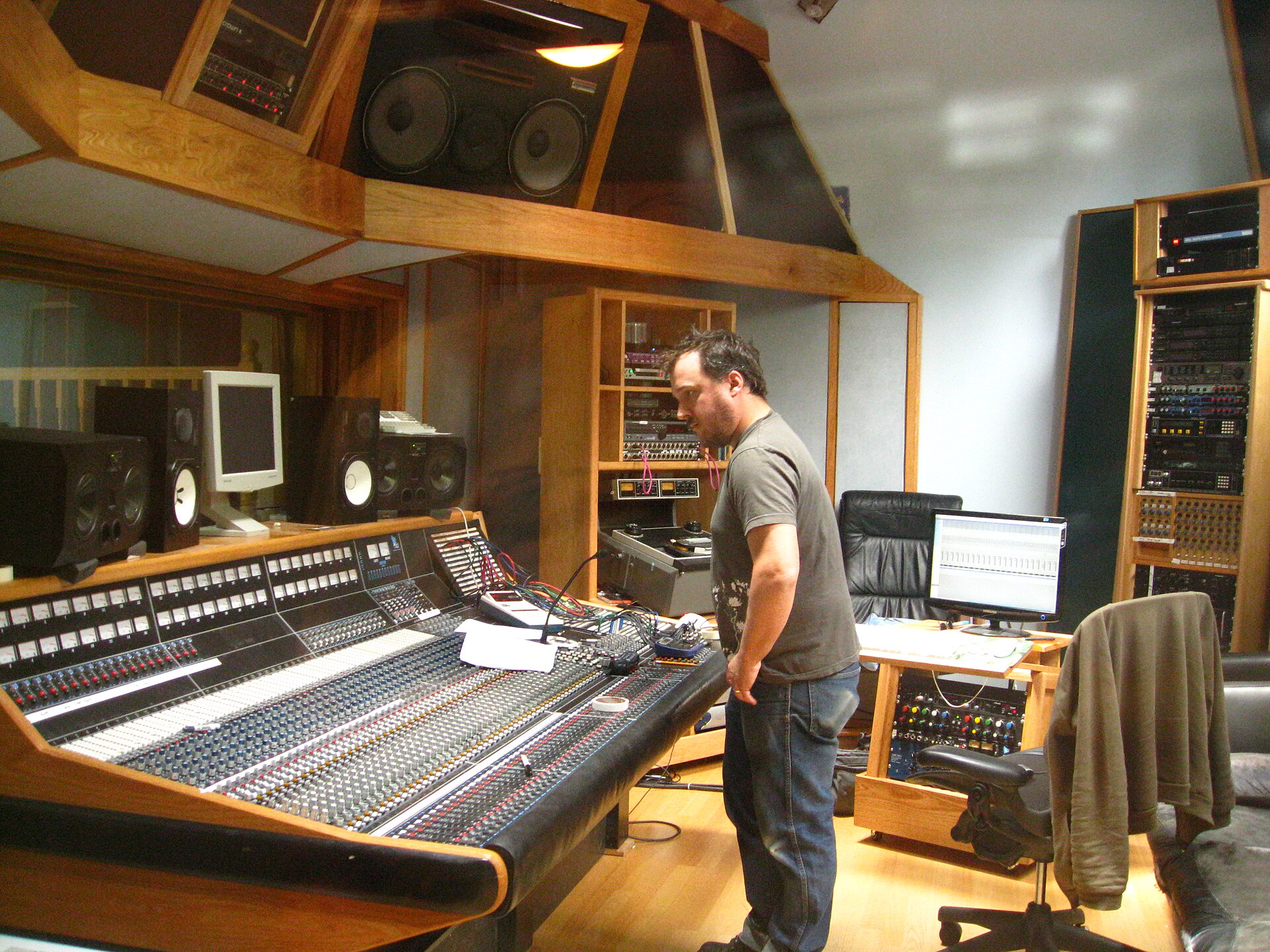
Photo: Silar, CC BY-SA 4.0, via Wikimedia Commons