By Michael Mittelman
ArtCulture.UK will tell you about the strange, alchemical process that turns private obsession into public legacy, where the sentience of a creative work is finally met with the gaze of the world. It’s a transaction brokered not in galleries or auction houses, but in the quiet pronouncements of a jury. An award is never just an award. It's a key turning in a lock, a shift in barometric pressure, the moment a career’s trajectory is knocked from its orbit and set on a new, often startling, course.
This isn't about the grand, televised spectacles of the Turner Prize, which can feel as distant to a working artist as a message from a dead star. This is about a newer, more agile form of validation, one that functions less like a monument and more like a high-powered engine bolted onto an artist’s career. The international Creativity’s Prize also known as Creativitys UK Award, with its monthly cadence and a focus on tangible support, provides a fascinating series of case studies in how recognition can act as a potent accelerant. By looking at the lives it has touched, we can deconstruct the real-world mechanics of acclaim.
From rock club to global page
There is a particular gravity to a story that has marinated in history. Consider the case of Irina Rekshan. Her name is tethered to the fierce, intellectual energy of the Leningrad rock scene, a cultural crucible that forged its own legends far from the official Soviet narrative. She was a participant, a chronicler, an insider. Yet, for an international audience, this rich history remained largely inaccessible, a story told in another language.
Her recognition by the Creativity’s Prize was not an act of discovery; it was an act of translation. The award provided a platform, a spotlight, and, most crucially, a context in English for a narrative that deserved a wider stage. It didn’t just honour her literary talent; it validated her history, signalling to a new generation of readers and publishers that this was a voice forged in a pivotal moment of cultural resistance. For a writer like Rekshan, the acclaim functions as a passport, allowing a deeply personal and culturally specific story to cross borders.
The currency of craft
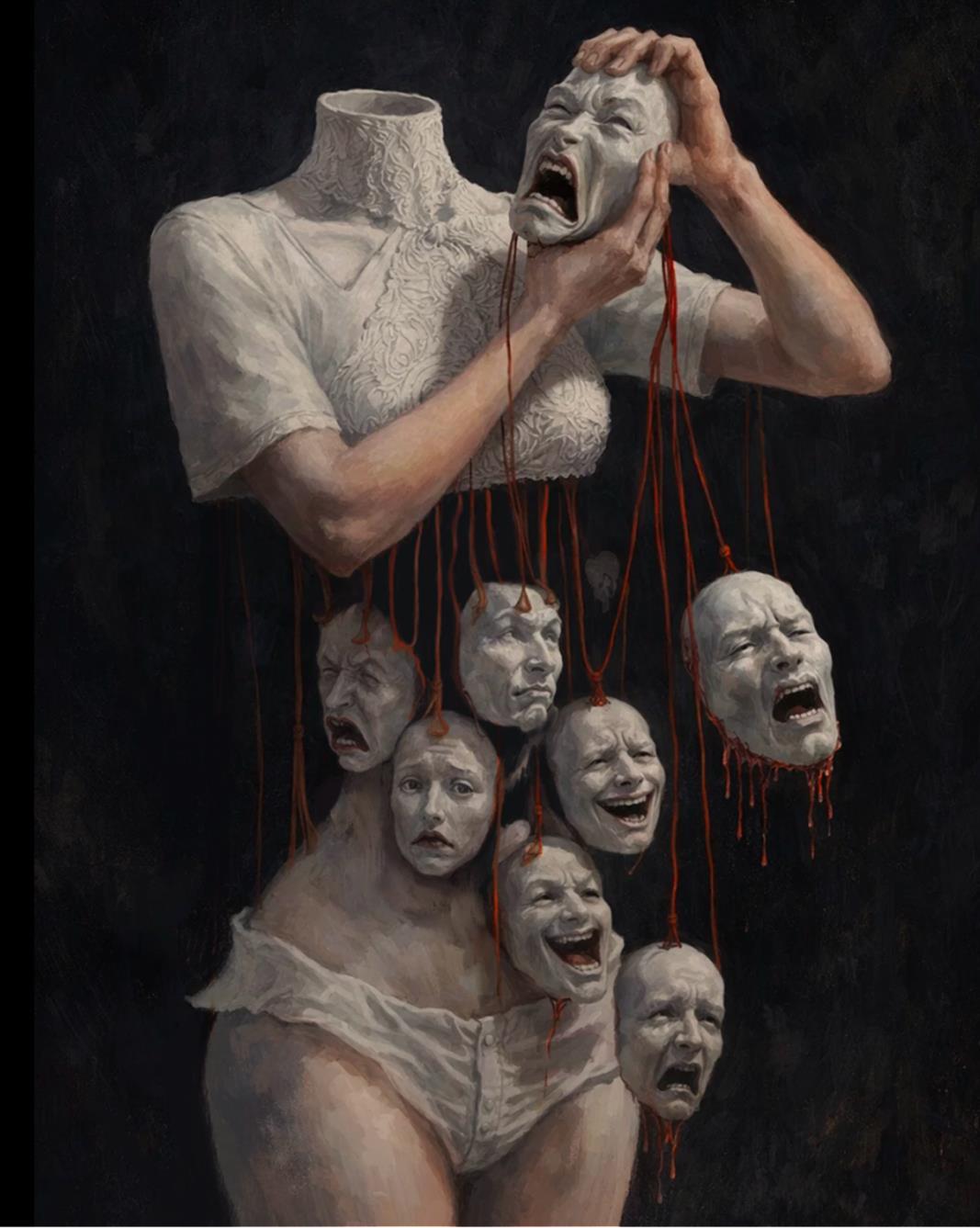
In the digital realm, technical mastery can be a double-edged sword. Artists like Evgenii Gruzdev and Vasili Smirnov, who practise a form of meticulous, almost surgical hyperrealism, can garner millions of views online. Their work is immediately, undeniably impressive. Yet, the art world establishment has often been cool towards virtuosity for its own sake. How, then, does an artist whose primary platform is the pixel-perfect scroll of Instagram translate that online traction into "serious" cultural capital?
This is where a juried award intervenes. When a panel that includes established critics and industry figures formally recognises this level of craft, it performs a crucial act of legitimation. It declares that this is not just impressive technique, but significant art. For Gruzdev, this validation reportedly unlocked the door to major brand collaborations - a clear demonstration of how critical acclaim can be converted into commercial opportunity. The award provides an authoritative third-party endorsement, assuring the market that this is not just fleeting online fame, but bankable, recognised talent.
A cinematic bridge between worlds
Independent filmmakers often operate in a state of perpetual pilgrimage, seeking funding, distribution, and festival slots. For Luba Balagova-Kandour, whose work is a powerful vessel for Circassian culture and memory, the challenge is twofold: she must not only create compelling cinema but also educate an audience unfamiliar with her subject matter.
An international prize acts as a powerful lever in this process. It's a signal flare. For a festival programmer sorting through thousands of submissions, a laurel from a recognised competition immediately elevates a film from the slush pile. For a potential funder, it mitigates risk, providing proof that the project has already passed a rigorous critical filter. The award given to Balagova-Kandour was more than a compliment; it was a piece of strategic ammunition in the long campaign to get her unique stories seen and financed. It served as a bridge, connecting a deeply personal cultural narrative to the global machinery of the film industry.
Acknowledging the architect of sound
It’s one thing to celebrate an emerging artist; it’s another to possess the confidence to recognise an established master. The decision to award Viktor Drobysh is perhaps the most telling of the prize’s ambitions. Drobysh is not an undiscovered talent; he is a titan of the Eastern European music industry, a producer and composer whose work has dominated charts and filled arenas for decades.
By honouring him, the Creativity’s Prize makes a sophisticated statement. It asserts that its definition of "creativity" is not confined to the avant-garde or the experimental but extends to the architectural genius required to craft enduring popular music. It’s a recognition of the producer as an author. Furthermore, it positions the award as an international arbiter, capable of looking beyond the Anglo-American cultural sphere and acknowledging the immense creative power residing in other markets. It’s a move that builds not just the laureate's profile, but the award’s own global authority.
The mechanics of a made career
These stories are not anomalies. They are demonstrations of a principle. Recognition is a functional tool. It creates a narrative of success that becomes self-fulfilling. It provides the talking points for a gallery pitch, the headline for a press release, the justification for a higher price point. In a world of infinite choice, an award is a powerful filter, directing the attention of curators, collectors, and collaborators.
The new generation of digitally-astute awards has understood this perfectly. They have engineered their offerings not around a single, grand gesture, but around providing the raw materials for career construction: the professional headshots, the critical essays, the targeted media lists. And in doing so, they are reshaping our understanding of what an award can and should do - not just to celebrate a career, but to actively build one.