By Yulia Tulegenova
There is a recognisable career shape in academic film studies: establish yourself on the canon, then, once tenured, permit yourself the popular material. Dana Polan's career does not have that shape. He has been writing about whatever seemed intellectually live, in whatever medium, since the early 1980s, and the field has generally caught up afterwards.
He is a professor in the Martin Scorsese Department of Cinema Studies at New York University's Tisch School of the Arts. Before that he taught at the University of Southern California and the University of Pittsburgh. He is a past president of the Society for Cinema Studies, the field's principal professional body, and a former editor of its journal, Cinema Journal.
The books, and what they have in common
Polan is the author of around eleven books and some two hundred essays and reviews. Laid out together, the list looks eccentric until you notice the pattern.
The Politics of Film and the Avant-Garde (1984) and Power and Paranoia: History, Narrative and the American Cinema, 1940-1950 (1986) are works of film theory and history in a fairly recognisable mode, though the second is unusual in treating paranoia as a formal property of a decade's cinema rather than a theme within particular films.
Then the list starts to move. Monographs on In a Lonely Place, on Pulp Fiction, on Jane Campion. A book on The Sopranos, written while the argument about whether television could sustain that kind of attention was still being had.
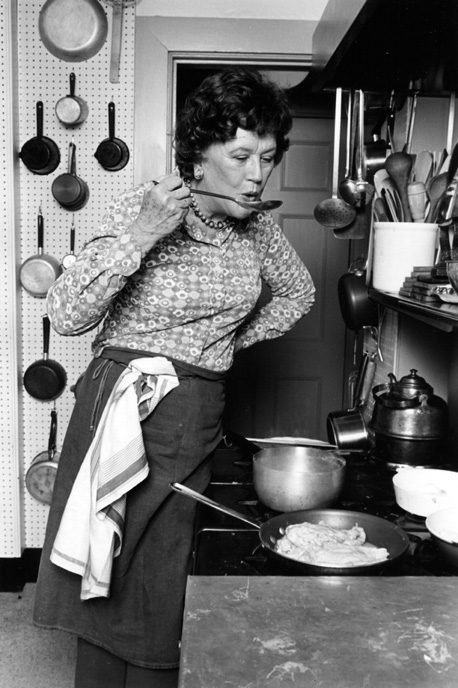
And Julia Child's The French Chef (2011), a full-length scholarly study of a cookery programme that began broadcasting in 1963.
The common thread is not the subject. It is the refusal to wait for permission.
Scenes of Instruction
The book that may outlast the others is Scenes of Instruction: The Beginnings of the US Study of Film (2007), a history of how film studies became a discipline in American universities.
It is a specialised subject that turns out to be about something general: how a field decides what counts as its object, who gets to teach it, and what has to be argued for before it can be assumed. Anyone who has watched a new medium arrive and be dismissed will recognise the pattern Polan documents in the early twentieth century.
Writing that history from inside the discipline, as a former president of its professional society, gives the book an unusual double position. It is both an account of institutionalisation and an artefact of it.
Recognition
Polan was born in France on 31 December 1953, took his BA at Cornell in 1975, and his MA and PhD at Stanford, followed by a Doctorat d'Etat from the Sorbonne Nouvelle in 1985. He has been knighted by the French Ministry of Culture for contributions to cross-cultural exchange, and in 2003 he was named one of that year's two Academy Foundation Scholars by the Academy of Motion Picture Arts and Sciences.
Why this matters outside film studies
The Julia Child book is the useful case to think with.
A cookery programme from 1963 is exactly the sort of object that gets called trivial until someone demonstrates otherwise, at which point it becomes obviously important and everyone agrees it always was. What Polan supplied was the demonstration: the argument that a programme about food, made in a particular medium at a particular moment, is a legitimate object of sustained analysis.
That move has since been made across culture, on television, games, comics, internet video. The cost of making it early is that you look eccentric. The benefit is that the discipline arrives later and finds the work already done.
Sources: Dana Polan's faculty profile at NYU Tisch School of the Arts; "Scenes of Instruction: The Beginnings of the US Study of Film" (University of California Press, 2007); "Julia Child's The French Chef" (Duke University Press, 2011); "Power and Paranoia" (Columbia University Press, 1986).