By Yulia Tulegenova
To remake Akira Kurosawa’s High and Low is an act of profound hubris. The 1963 original is a masterpiece of moral tension, a film built from stone, steel, and silence. It is a slow, methodical dissection of a man’s soul, rendered in stark black and white. For Spike Lee, a director whose cinematic language is a riot of colour, sound, and righteous anger, to take on this sacred text feels, on its face, like an act of artistic sacrilege. And yet, his new film, Highest 2 Lowest, is one of the most audacious and intellectually thrilling films of the year precisely because it refuses to be faithful.
This is not a remake. It is a hijacking. Lee has taken the chassis of a classic thriller and used it to build a vehicle for his own lifelong obsessions. To watch Highest 2 Lowest with Kurosawa’s ghost hovering over your shoulder is to miss the point entirely. The film is a declaration of independence, a brash, brilliant, and deeply personal argument that a story’s greatness is not fixed, but can be re-interrogated, dismantled, and reborn through the lens of a different culture, a different city, and a different rage.
A Fortress of Silence
To understand what Lee has done, you must first remember what Kurosawa built. High and Low is a film of two halves. The first is a claustrophobic chamber piece, set almost entirely in the luxurious hilltop home of a shoe executive whose life is upended by a kidnapping. The tension is psychological, built from agonising silences and the slow, crushing weight of a moral dilemma. The second half descends into the grimy, anonymous underworld of post-war Japan, a methodical police procedural that is as cold and efficient as the investigation it portrays.
Kurosawa’s film is an exercise in brutalist restraint. It is a story about the precariousness of social order, the thin line separating the "heaven" of wealth from the "hell" of poverty. Its power comes from its austerity, from what it withholds. It is the cinematic equivalent of a scalpel.
The Sound of a City
Spike Lee’s film, by contrast, is a gospel choir. From its opening frames, drenched in a New York sunlight that feels a thousand times hotter and brighter than anything in Kurosawa’s world, Highest 2 Lowest announces its intentions. The score is not a subtle hum of suspense, but a sweep of lush, almost grandiose strings. The setting is not the anonymous corporate world of shoes, but the culturally specific, ego-driven universe of hip-hop and R&B.
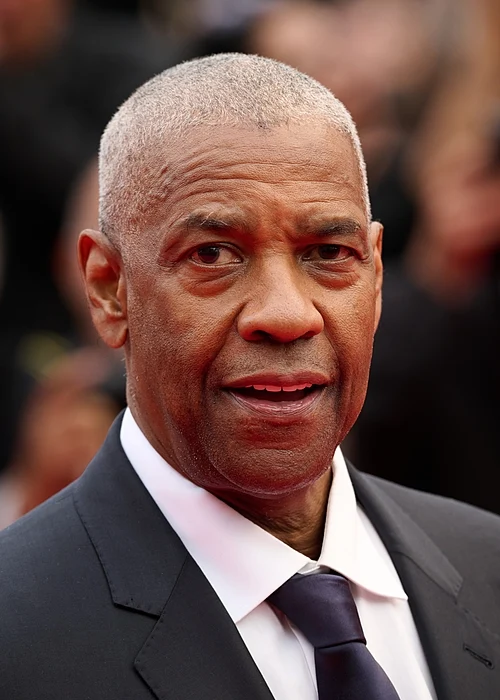
Denzel Washington plays David King, a music mogul who built an empire from the ground up, a man who considers himself royalty in the kingdom he created. His moral dilemma, when it arrives, is the same as in the original: a kidnapper mistakenly abducts the son of his chauffeur (a soulful, world-weary Jeffrey Wright) instead of his own, and demands a ruinous ransom. But the context transforms the question.
In Lee’s hands, this is no longer an abstract moral query. It is a story steeped in the complexities of Black success in America. King is a man who has ascended to the highest heights, yet the narrative constantly reminds him, and us, of the precariousness of that position. His wealth is a fortress, but it is one built on a fault line of race and class that Kurosawa’s hero could never comprehend.
A Symphony of Digressions
Perhaps the most striking thing about the film is how little Lee seems to care about the mechanics of the thriller plot. He uses it as a magnetic north, a point to return to, but his real interest lies in the detours. The film is a sprawling, two-hour-and-thirteen-minute love letter to his own obsessions, and it is in these digressions that its true genius lies.
The narrative is constantly interrupted by discussions of soul music, by montages of African-American art, by asides about the New York Knicks. A key chase sequence, a moment of pure, heart-in-mouth tension, unfolds against the vibrant, chaotic backdrop of a Latin salsa festival, the frantic pursuit becoming a dance between panic and rhythm. This is not padding; it is the point. Lee is embedding this moral fable in a thick, rich cultural soil. He is arguing that a man’s character is not revealed in a vacuum, but is shaped by the music he listens to, the art he sees, and the streets he walks.
Of course, this approach is guaranteed to alienate purists. The film is baggy, excessive, and at times, gloriously self-indulgent. There is a moment where the plot grinds to a halt so that a character can launch into an unprompted, and deeply personal, tirade against the city of Boston. It is a wildly undisciplined and completely unnecessary aside. It is also a moment of pure, unadulterated Spike Lee, a flourish that no other director would even attempt. This willingness to follow his own muse, even at the expense of narrative tidiness, is what gives the film its unique, inimitable energy.
The Anchor of a King
It is Denzel Washington who prevents this sprawling construction from collapsing under its own weight. This is his fifth collaboration with Lee, and their partnership has become one of the most vital in American cinema. Lee knows how to unlock a specific kind of righteous, wounded fury in Washington that no other director can access.
As King, Washington is a tempest of conflicting emotions. He is a man accustomed to absolute control who is suddenly rendered powerless. In one moment, he is chewing his lip with the pained majesty of a Roman emperor facing a rebellion; in the next, his face collapses into the raw terror of a father who has glimpsed the abyss. It is a performance of immense physical and emotional control, and it provides the film with its unwavering moral and emotional centre. He is the anchor that allows Lee’s cinematic ship to navigate the storm of its own creation.
To dismiss Highest 2 Lowest as a failed remake is to fundamentally misunderstand its purpose. Spike Lee has not tried, and failed, to replicate the quiet perfection of Kurosawa. He has, instead, engaged in a vibrant, noisy, and utterly compelling argument with his source material. He has taken a universal story and made it profoundly specific, asserting that the view from the top of a New York skyscraper is, and must be, different from the view from a Japanese hilltop. The film is not an act of homage. It is an act of translation, and in its beautiful, brilliant blasphemy, it becomes a masterpiece in its own right.