In the intricate dance between technology and art, certain instruments transcend their mere mechanical function, becoming imbued with a soul, a narrative, and an almost mythical status. The Leica camera is undeniably one such icon, a marvel of German engineering that not only revolutionised the practice of photography but also profoundly altered how humanity witnessed and recorded its own unfolding drama. Its compact form and whispered shutter became the discreet companions to history’s most poignant and pivotal moments, its lenses framing our collective memory with unparalleled clarity and artistry. ArtCulture.UK will tell you about the enduring legend of the Leica camera, an instrument whose optical precision and tactile grace possess an almost sentient connection to the photographer's eye, transforming mere observation into profound visual storytelling.
Barnack's Visionary Spark
The genesis of the Leica lies not in a grand corporate strategy, but in the personal necessity and brilliant ingenuity of one man: Oskar Barnack. An employee of the Ernst Leitz Optische Werke in Wetzlar, Germany, Barnack suffered from severe asthma, making the cumbersome large-format plate cameras of the early 1900s a physical burden. He envisioned a small, lightweight camera that could produce high-quality negatives, which could then be enlarged. His revolutionary idea was to utilise standard 35mm perforated cinema film, running it horizontally rather than vertically, thereby creating a larger negative format of 24x36mm – a standard that endures to this day.
Around 1913, Barnack constructed his first prototype, the "Ur-Leica." This diminutive device was initially intended as an exposure testing tool for cinematographers, allowing them to check lighting conditions with short strips of film. However, Barnack immediately recognised its potential as a standalone still camera. The onset of World War I delayed development, but by 1923, a pre-production batch of "Leica 0-Series" cameras was made, and in 1925, the Leica I (for Leitz Camera) was officially launched at the Leipzig Spring Fair. It was a sensation. Its compactness, coupled with the exceptional quality of Leitz lenses, offered photographers unprecedented freedom and spontaneity.
Engineering Quiet Perfection
What set the Leica apart from its inception was not just its size, but the extraordinary precision of its construction and the optical excellence of its lenses. Ernst Leitz II, who took the brave decision to mass-produce Barnack’s invention despite the precarious economic climate of post-war Germany, insisted on uncompromising quality. The Leica’s all-metal body was robust yet refined. Its focal-plane shutter was remarkably quiet, a crucial advantage for photographers wishing to remain unobtrusive.
The introduction of interchangeable lenses in 1930 with the Leica Standard, and then the coupled rangefinder focusing system with the Leica II in 1932, further cemented its reputation as a sophisticated photographic system. The rangefinder, which allowed for sharp, accurate focusing through a secondary window, was a game-changer. Leitz lenses, such as the Elmar, Summitar, and later the Summicron and Summilux series, became legendary for their sharpness, contrast, and unique rendering – a "Leica glow" that many photographers still cherish. Each component was meticulously crafted and assembled, contributing to the camera's reliability and longevity. This dedication to mechanical excellence meant that early Leicas are often still perfectly functional today, a testament to their build quality.
Witness to History's Turmoil
The Leica’s portability, discretion, and speed of operation made it the quintessential tool for the burgeoning field of photojournalism in the 1930s and beyond. As global political tensions escalated, Leica-wielding photographers were on the front lines, capturing images that would define an era. Robert Capa, arguably the most famous war photographer, used his Leica to document the Spanish Civil War with raw intimacy, famously stating, "If your pictures aren't good enough, you're not close enough." His images, and those of his partner Gerda Taro (who tragically died covering the same conflict, also a Leica user), brought the brutal realities of war to the world's attention with unprecedented immediacy.
From the battlefields of Europe and Asia during World War II to the political upheavals and social movements of the post-war era, the Leica was there. Alfred Eisenstaedt’s iconic V-J Day kiss in Times Square, Yevgeny Khaldei’s raising of the Soviet flag over the Reichstag, and countless other images that seared themselves into the public consciousness were captured with this unassuming German camera. Its ability to operate in diverse and often challenging conditions, combined with its inconspicuous nature, allowed photojournalists to become agile observers, embedded within the events they were documenting.
The Decisive Photographic Moment
Beyond photojournalism, the Leica became inextricably linked with the artistic philosophy of one of photography’s true masters: Henri Cartier-Bresson. A pioneer of street photography, Cartier-Bresson championed the concept of "le moment décisif" – the decisive moment. This was the instant when visual and psychological elements within a scene aligned perfectly, revealing a deeper truth or quintessential meaning. The Leica, with its quick handling and quiet operation, was his constant companion, an extension of his eye and intuition.
Cartier-Bresson, who often taped over the Leica logo to make his camera even less conspicuous, used it to create images of profound geometric harmony, human insight, and serendipitous beauty. He demonstrated that photography could be a sophisticated art form, capable of capturing the fleeting poetry of everyday life. His influence on generations of photographers is immeasurable, and his preferred tool, the Leica M-series rangefinder, became synonymous with this thoughtful, observational approach to image-making. Other luminaries of street and documentary photography, such as André Kertész, Walker Evans, and Garry Winogrand, also relied heavily on Leica cameras to craft their iconic visual narratives.
An Artisan's Enduring Legacy
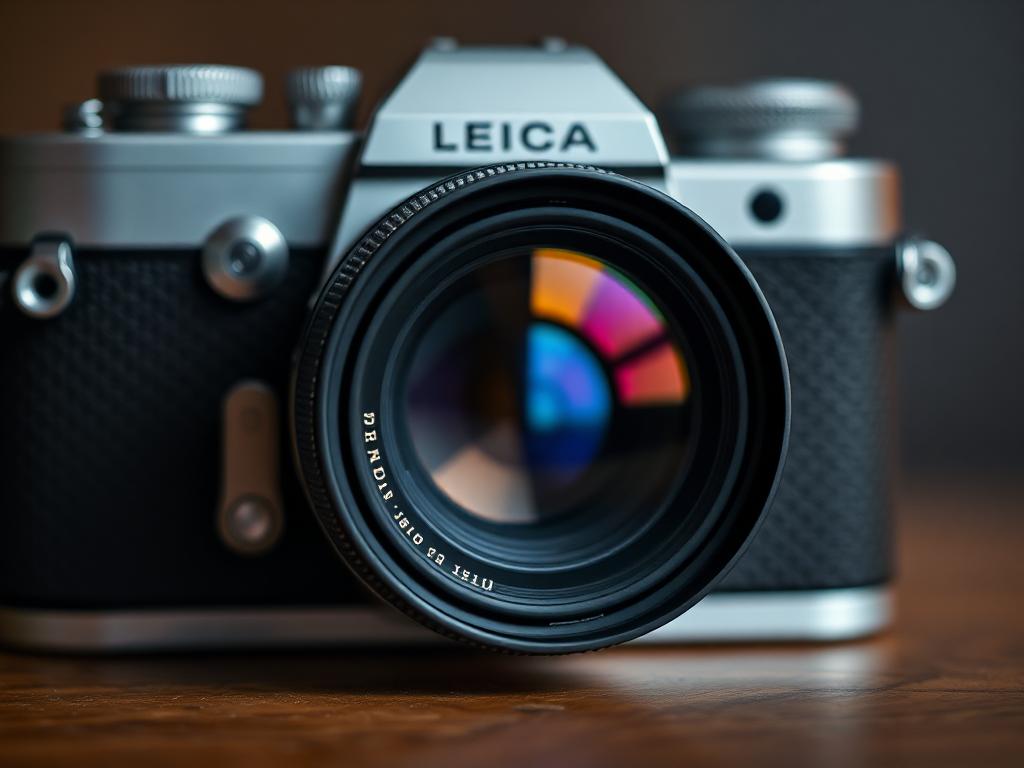
The Leica M-series, introduced in 1954 with the Leica M3, represented a significant evolution, featuring a new bayonet lens mount, a brighter combined rangefinder/viewfinder, and an automatic parallax-correcting frameline system. The M3 is widely considered a masterpiece of camera design, and its fundamental principles continue in Leica's digital M-series cameras today. The commitment to craftsmanship remains a hallmark of the brand. Each Leica M camera is still largely hand-assembled in Wetzlar (or, for a period, in Portugal for certain models), a meticulous process involving highly skilled technicians.
This dedication to artisanal production, in an age of mass-manufactured electronics, contributes to the Leica's premium price point and its mystique. Holding a Leica is a tactile experience – the cool solidity of the metal, the satisfying click of the shutter speed dial, the smooth travel of the focusing ring. It feels less like a consumer electronic device and more like a precision instrument, designed to last a lifetime. This enduring quality has fostered a passionate community of Leica users and collectors, who value not just the images the cameras produce but the heritage and craftsmanship they embody.
Beyond the Frame's Edge
The Leica’s influence extends far beyond its direct users. Its success popularised the 35mm format, which became the dominant standard for amateur and professional photography for much of the twentieth century. Its design principles – compactness, precision, and system-based modularity – influenced countless other camera manufacturers. While the digital revolution has democratised photography, making image capture ubiquitous, the Leica retains a unique position. It is both a status symbol, a luxury object coveted for its brand cachet and engineering, and a genuinely potent artistic tool still favoured by discerning photographers who appreciate its distinct shooting experience.
Contemporary photographers, working in both film and digital, continue to choose Leica for its optical superiority, its robust build, and the particular way it encourages a more deliberate, thoughtful approach to photography. The rangefinder focusing system, while demanding a learning curve, fosters a different way of seeing and composing, forcing the photographer to anticipate the moment.
Enduring Mystical Allure
In an era saturated with fleeting digital images, why does the Leica, an instrument rooted in early twentieth-century mechanics, continue to exert such a powerful allure? Part of it is undoubtedly its storied past, its intimate connection to so many iconic images and influential photographers. There is a sense of holding history in one's hands. But it is more than just nostalgia. The optical quality of Leica lenses remains world-class, delivering images with a character – a certain three-dimensionality, a subtle rendering of tones – that many find unique.
Furthermore, the deliberate, manual nature of operating a traditional Leica M camera offers a counterpoint to the instantaneity of smartphone photography. It encourages a slower, more considered process, fostering a deeper engagement with the subject and the craft. The Leica is not merely a machine for taking pictures; it is an instrument for seeing, a partner in the creative process, promising a direct, unmediated connection between the photographer’s vision and the final image. Its legend is built not just on brass and glass, but on the countless moments of human experience it has faithfully and artfully preserved.