The transition from autumn to winter in the British capital is marked less by the dropping mercury and more by a palpable shift in the city's visual geography. As the days foreshorten, plunging the streets into a mid-afternoon dusk, London mounts its annual defence against the dark: the Christmas light switch-on. What began as a rudimentary attempt to inject cheer into a post-war landscape has evolved into a multimillion-pound intersection of public art, urban theatre, and commercial strategy.
Today, the ceremonies that illuminate the West End and beyond are landmark cultural events. The switch-on is no longer simply about flicking a switch to reveal a string of festoons; it is a meticulously choreographed spectacle that defines the contemporary London Christmas lights experience. Yet, as environmental concerns rightfully dominate civic discourse, the narrative surrounding these displays has shifted. The focus is no longer solely on wattage and dazzle, but on provenance, energy efficiency, and thematic resonance. For both the casual flâneur and the dedicated shopper, understanding the history, the artistry, and the mechanics of London’s festive lights offers a deeper appreciation of the city's winter identity.
Regent Street: The Genesis of the Glow
The tradition of the grand London Christmas display finds its origins on the sweeping curve of Regent Street. In 1954, a consortium of local retailers, dismayed by reports that the capital looked inexcusably drab during the festive period, decided to act. The country was only just beginning to shake off the austerity of the post-war years, and the introduction of a coordinated, street-wide lighting scheme was viewed as a bold assertion of optimism and economic recovery.
For decades, Regent Street has set the aesthetic standard. In recent years, the street has become synonymous with the "Spirits of Christmas" installation. These colossal, sweeping angels, with their impressive wingspans hovering elegantly above the double-decker buses, have become an indelible part of London's visual vernacular. The angels are suspended using a complex matrix of cabling anchored to the historic facades, a feat of temporary engineering that requires months of planning to execute without compromising John Nash's Grade II-listed architecture.
The Regent Street switch-on usually takes place in mid-to-late November, shutting down traffic to transform the thoroughfare into a pedestrianised viewing gallery. It remains a masterclass in classical festive design, prioritising a unified, golden-white aesthetic that complements the Portland stone buildings.
Oxford Street: Scale, Spectacle, and Evolution
If Regent Street is the elegant elder sibling, Oxford Street is the louder, more populist powerhouse. Oxford Street launched its inaugural lighting display in 1959, largely in response to the commercial success enjoyed by its neighbour. Over the ensuing decades, the street has served as a canvas for varying degrees of artistic success and experimentation.
The history of Oxford Street's lights is punctuated by moments of distinct ambition. In 1978, amidst economic uncertainty, organisers experimented with laser lights in an attempt to provide a novel and cheaper display. The venture was met with mixed reviews and was not repeated, but it underscored the constant pressure to innovate.
Today, the responsibility for this monumental installation falls to the New West End Company, a business partnership that manages the district's commercial interests. Dee Corsi, the Chief Executive, has frequently articulated the gravity of the operation, noting: "New West End Company has represented West End businesses for over two decades, delivering everything from London's largest private on-street security team to Oxford Street's world-famous Christmas lights. We understand the complexity of this environment, and the scale of the opportunity at hand."
The modern Oxford Street display has largely moved away from the chaotic, multi-coloured baubles of the late twentieth century. Recent iterations have favoured a canopy of thousands of falling stars, offering a cohesive, immersive experience that stretches from Marble Arch to Tottenham Court Road. The switch-on event itself is often the most heavily attended in the capital, frequently featuring prominent musicians and broadcasting partnerships.
Carnaby Street: The Avant-Garde Alternative
A short walk from the traditionalism of the major arteries, Carnaby Street offers a radically different interpretation of the seasonal brief. Since the 1960s, Carnaby has leveraged its reputation as the epicentre of "Swinging London" to produce displays that are consistently bold, subversively thematic, and fiercely independent.
Unlike the celestial motifs preferred elsewhere, Carnaby Street’s installations operate more like pop-art exhibitions. The switch-on event, typically occurring in early November, reveals designs that often carry a distinct social or cultural message. In recent years, Carnaby has partnered with charities such as Choose Love, using the installation to raise awareness and funds for refugees.
Carnaby is also at the forefront of material innovation. While other streets focus on the bulbs, Carnaby interrogates the structure itself. Recent displays have incorporated upcycled plastic bottles, repurposed fishing nets salvaged from the ocean, and water-based, vegan-friendly paints. This commitment ensures that the Carnaby switch-on is not merely a visual triumph, but a statement on modern material ethics.
The Cultural and Commercial Axis
Beyond the core shopping streets, London's wider network of squares and neighbourhoods contributes to the city's overarching winter narrative, providing key anchors in the December cultural calendar.
Covent Garden, with its historic piazza and neoclassical market buildings, relies on an overwhelming sense of scale. The switch-on here typically involves the illumination of a colossal, hand-picked Christmas tree - often exceeding 60 feet in height - and the activation of massive, mirrored baubles or mistletoe chandeliers suspended within the market halls. The Covent Garden lights operate on a principle of historic romanticism, drawing crowds that are as interested in the architecture as they are in the retail offerings.
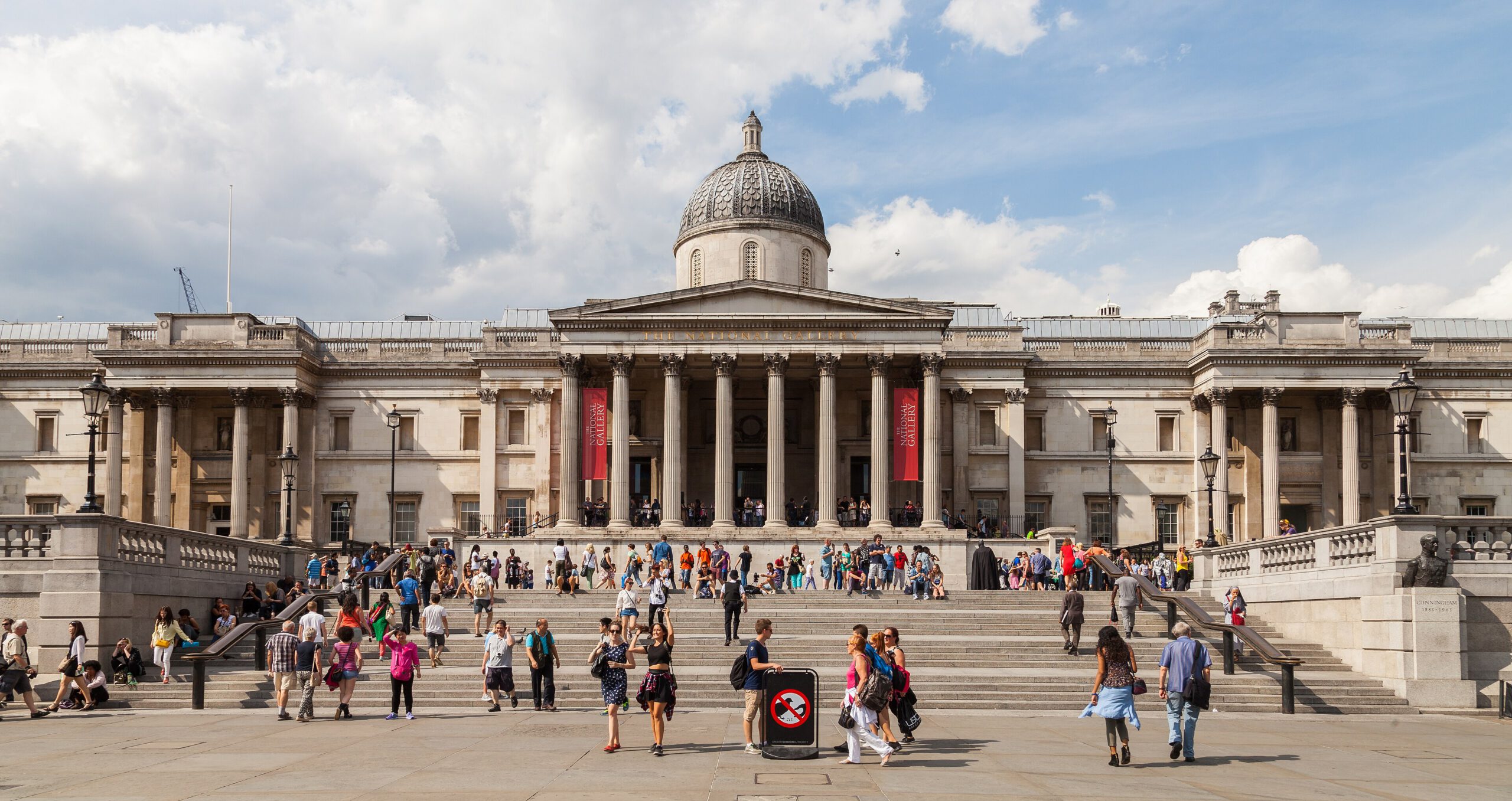
Trafalgar Square offers a different, more civic-minded illumination. Since 1947, the city of Oslo has gifted a Norwegian spruce to London as a token of gratitude for British support during the Second World War. The switch-on in Trafalgar Square, usually held in early December, is a decidedly more sombre and historic affair. The tree is decorated in a traditional Norwegian style - characterised by vertical strings of lights rather than the spiralling method preferred in the UK - serving as a towering monument to international diplomacy.
Let There Be LED: The Sustainability Shift
The spectacle of a fully illuminated metropolis inevitably invites scrutiny regarding environmental impact. In an era defined by the necessity of carbon reduction, the practice of powering thousands of decorative lights for six weeks requires justification. The custodians of London's districts have responded with a rigorous overhaul of the underlying technology.
The transition to LED (Light Emitting Diode) technology has been the single most transformative shift in the history of the displays. The contemporary LED bulbs utilised across Oxford Street, Regent Street, and Carnaby Street consume merely 3% to 10% of the power required by the archaic filament bulbs of the past. Furthermore, they boast a significantly longer operational lifespan, severely reducing the need for continuous manufacturing and replacement.
Beyond the bulbs themselves, the implementation of smart energy management systems has altered how the lights function. Historically, the installations were left blazing throughout the night. Today, business improvement districts employ precise timer systems to restrict the operational hours. This simple but effective logistical shift has resulted in drastic reductions in energy consumption, with some districts reporting a 67% decrease in power usage compared to previous decades.
There is also a growing emphasis on a circular economy within the public lighting sector. The infrastructures - the frames, the wiring, the heavy-duty cabling - are no longer viewed as single-use commodities. When a display completes its multi-year tenure in central London, the components are frequently dismantled, refurbished, and circulated to other towns and cities across the country, extending the lifecycle of the materials and amortising the environmental cost of their creation.
A Lasting Brilliance
The London Christmas light switch-on has survived economic recessions, shifts in consumer habits, and the existential threat of a climate crisis. It has done so by adapting. The transition from the energy-heavy extravagances of the late twentieth century to the thoughtful, LED-driven, charity-aligned installations of the present day demonstrates a resilience that mirrors the city itself.
These events remain a powerful draw, temporarily reclaiming the streets from the relentless flow of traffic and handing them over to the public. They are an exercise in communal gazing, a rare opportunity for millions of people to stand in the cold and collectively appreciate a shared artistic endeavour. As the switches are thrown across the capital this November, the lights will reveal not just a festive tradition, but a city continually negotiating its relationship with history, commerce, and the environment.