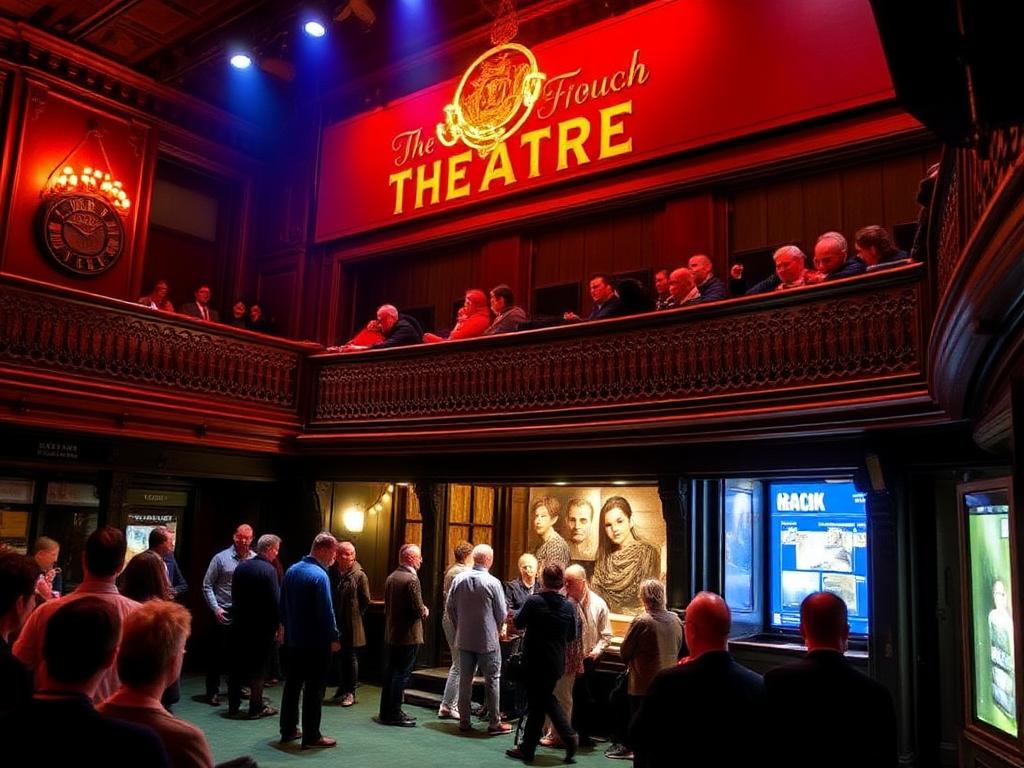
While the dazzling lights of London's West End deservedly command global attention, the true theatrical heartbeat of the city resonates far beyond its glamorous epicentre. A rich, diverse, and thrillingly innovative tapestry of performance thrives in intimate pub theatres, historic suburban playhouses, avant-garde fringe venues, and dynamic producing houses scattered across the capital. These spaces, often operating with a palpable, almost sentient creative energy, are the crucibles where new voices are nurtured, artistic boundaries are shattered, and the very definition of theatre is constantly interrogated and reimagined. ArtCulture.UK will tell you about the vibrant and essential world of London theatre beyond the West End, exploring its historical roots, its key players, and its indispensable role in shaping the future of British drama.
Fringe Theatre's Rebellious Roots
The concept of "fringe" theatre in London, denoting work existing outside the mainstream commercial sector, gained significant momentum in the post-World War II era, particularly from the late 1960s onwards. This period witnessed a cultural and political ferment that spurred a desire for more radical, experimental, and politically engaged forms of theatre. Inspired by movements like New York's Off-Off-Broadway, a wave of small, independent venues emerged, often in unconventional spaces – pub backrooms, church halls, converted warehouses – offering a platform for writers and performers disillusioned with the perceived conservatism and commercialism of the West End.
Theatres like La MaMa London (an offshoot of Ellen Stewart's New York original), the Almost Free Theatre, and the pioneering Traverse Theatre Club (though based in Edinburgh, its influence was strongly felt in London) championed new writing and alternative approaches. Pub theatres, such as the King's Head in Islington (founded in 1970 and still thriving) and the Bush Theatre (originally above a pub in Shepherd's Bush, now in its own building), became crucial incubators of talent, launching the careers of countless playwrights, directors, and actors who would later achieve mainstream success. These venues fostered an atmosphere of intimacy and immediacy, allowing for a more direct and often challenging relationship between performers and audiences.
A Spectrum of Diverse Venues
Today, London's non-West End theatre scene is a sprawling and wonderfully eclectic ecosystem. At one end of the spectrum are internationally renowned producing houses like the National Theatre on the South Bank, the Royal Court Theatre in Sloane Square, and the Almeida Theatre in Islington. While often considered part of the theatrical establishment, their mission extends far beyond commercial imperatives. The National Theatre, with its three distinct auditoria (Olivier, Lyttelton, Dorfman), presents a vast repertoire ranging from epic classical revivals to bold contemporary plays and family shows. The Royal Court is explicitly dedicated to new writing, acting as a vital engine for discovering and developing the next generation of British and international playwrights, often tackling challenging social and political themes. The Almeida, under a succession of visionary artistic directors, has gained a formidable reputation for intellectually rigorous and stylishly executed productions of classic and contemporary work.
Then there are the powerhouse Off-West End venues, often producing work of a scale and ambition that rivals their West End counterparts, but with a greater emphasis on artistic risk-taking. The Young Vic in Waterloo is celebrated for its innovative stagings and its commitment to international collaboration and director-led work. The Donmar Warehouse in Covent Garden, despite its intimate size, consistently attracts world-class talent to its critically acclaimed productions. Shakespeare's Globe, a faithful reconstruction of the Elizabethan playhouse on Bankside, offers a unique and immersive experience of Shakespearean performance. Further afield, theatres like the Lyric Hammersmith, Theatre Royal Stratford East, and the Kiln Theatre in Kilburn serve their local communities while also producing nationally significant work that often champions diverse voices and stories.
Incubators of Bold Innovation
The true engine room of London’s theatrical innovation, however, lies in its vibrant fringe scene. Hundreds of smaller venues, from established spaces like the Arcola Theatre in Dalston (known for its commitment to new writing and environmental sustainability), the Finborough Theatre in Earl's Court (a champion of neglected plays and new musical theatre), and the Orange Tree Theatre in Richmond (London’s only permanent theatre-in-the-round), to newer, more experimental spaces, provide a crucial platform for emerging artists. These theatres often operate on shoestring budgets, relying on the passion and dedication of their teams, yet they consistently produce work of astonishing quality and originality.
Pub theatres continue to play a vital role, offering affordable and accessible theatre in informal settings. Venues such as the Old Red Lion in Islington, the Hope Theatre above the Hope and Anchor pub, and the White Bear Theatre in Kennington are just a few examples of spaces where audiences can discover exciting new plays and raw talent. The Vault Festival, an annual subterranean arts festival in Waterloo, has become a major showcase for new and experimental performance, offering a bewildering array of theatre, comedy, cabaret, and immersive experiences. These fringe venues are the lifeblood of London theatre, the spaces where artistic risks are most readily taken, where new forms are explored, and where the stars of tomorrow often take their first bows.
Championing Unheard Voices, Stories
A crucial function of London's theatre beyond the West End is its commitment to diversity and inclusion, providing a platform for voices and stories often underrepresented in the mainstream. Companies like Talawa Theatre Company (the UK's leading Black theatre company), Graeae Theatre Company (which champions D/deaf and disabled artists), and Tamasha Theatre Company (focusing on British Asian narratives) have been instrumental in challenging traditional theatrical norms and enriching the cultural landscape.
Many Off-West End and fringe venues actively seek out and support work by artists from diverse backgrounds, exploring themes of race, gender, sexuality, class, and disability with nuance and urgency. This commitment to reflecting the multiplicity of contemporary London and British society is vital for the continued relevance and dynamism of the art form. It ensures that theatre remains a space for dialogue, empathy, and the exploration of different perspectives, fostering a more inclusive and representative theatrical culture.
Pathways to Future Success
The journey from a fringe stage to West End stardom or international acclaim is a well-trodden path. Many of today's most celebrated playwrights, including Caryl Churchill, Martin McDonagh, and Lucy Prebble, honed their craft and had their early works staged in Off-West End and fringe venues. Similarly, countless actors, directors, and designers gained crucial early experience and exposure in these spaces before moving on to larger stages.
These theatres serve as essential training grounds, allowing artists to experiment, to fail, and to grow in a supportive, if often demanding, environment. The critical attention and audience buzz generated by successful fringe productions can often lead to transfers to larger venues, including the West End, or even international tours. This vital pipeline of talent and innovation ensures that the entire theatrical ecosystem remains vibrant and constantly refreshed.
Resilience in Challenging Times
Operating outside the commercial mainstream often brings significant financial challenges. Many smaller venues rely on a precarious mix of box office income, arts council funding (which has faced significant cuts in recent years), charitable donations, and the sheer goodwill of their artists and audiences. The rising cost of living in London, coupled with increasing production costs, puts immense pressure on these vital cultural institutions.
Despite these hurdles, the resilience, ingenuity, and passion that characterise London's non-West End theatre scene are extraordinary. The commitment to making exciting, thought-provoking theatre accessible to a wide audience remains unwavering. These venues are often deeply embedded in their local communities, offering participation programmes, educational initiatives, and a welcoming space for creative expression.
The theatrical landscape of London is far richer and more complex than the glittering marquees of Shaftesbury Avenue might suggest. From the grand pronouncements of the National Theatre to the whispered confidences of a pub theatre production, a vast spectrum of dramatic experience unfolds nightly across the city. This diverse and dynamic ecosystem, constantly pushing boundaries and nurturing new talent, is not just an adjunct to the West End; it is its very foundation, the wellspring from which much of its energy and innovation flows. It is here, in these myriad spaces beyond the mainstream glare, that the pulse of London theatre beats most insistently, promising a future as vibrant and compelling as its storied past.