The Met Gala, that annual apotheosis of fashion and fantasy, consistently commands global attention not merely for its adherence to thematic sartorial challenges, but often, more compellingly, for its flagrant, artful defiance of them. When the dress code is announced, a peculiar sentience seems to ripple through the creative ether, a collective intake of breath before the inevitable reinterpretations, subversions, and outright rebellions unfold upon the Metropolitan Museum of Art's iconic steps. ArtCulture.UK will tell you about the perennial allure of the "naked dress" and its modern incarnations, particularly when celebrities choose audacious self-exposure over thematic conformity, transforming a high-fashion fundraiser into a provocative dialogue on modesty, power, and the very definition of glamour in the contemporary age.
The Allure of Defiance
The specified theme for a hypothetical future Met Gala, "Superfine: Tailoring Black Style," suggests a sophisticated exploration of Black dandyism, a rich tapestry of sartorial history that one might expect to manifest in impeccably cut suits, reimagined tuxedos, and perhaps elegant evening gowns infused with tailoring rigour. This fashion interpretation offers a vast canvas for creativity. Yet, as history has repeatedly shown, the most memorable Met Gala moments often arise when attendees interpret the theme not as a rigid set of instructions, but as a loose provocation, a starting point for a more personal, and sometimes far more revealing, statement. The decision to eschew thematic specificity in favour of daring décolletage, strategic cut-outs, or sheer fabrics that leave little to the imagination speaks volumes about the evolving landscape of celebrity style and the potent currency of shock value.
Body as Bold Statement
Consider the imagined scenario: amidst a sea of expertly tailored ensembles, certain luminaries choose a path of radical un-dress. A pop sensation like Sabrina Carpenter might opt for a tailored jacket and bodysuit, boldly omitting trousers, transforming a potentially androgynous look into a statement of leggy audacity. Singer Lorde, known for her distinctive artistic vision, could appear in a Thom Browne creation where the "top" is a mere whisper of fabric across an otherwise bare chest, a minimalist gesture of profound impact. These are not accidental oversights; they are deliberate acts of red carpet rebellion, leveraging the body itself as the primary canvas and the ultimate fashion accessory. This daring fashion approach immediately shifts the narrative from thematic adherence to a more visceral conversation about bodily autonomy, confidence, and the power of the female form.
Kardashian's Calculated Reveal
No discussion of audacious Met Gala fashion would be complete without acknowledging the influence of figures like Kim Kardashian. Her consistent ability to generate headlines through carefully constructed, often boundary-pushing ensembles has become legendary. In our "Superfine" scenario, one can envision her in a custom Chrome Hearts creation, perhaps leather and pearls, designed to showcase her famous physique in a manner that is both overtly sensual and undeniably high fashion. The strategic reveal, the perfectly calibrated glimpse of skin, becomes a masterclass in celebrity branding and image control. It’s a reminder that, for some, the Met Gala is less about interpreting a theme and more about reinforcing a personal brand, with the body itself as the central, most bankable asset. Such provocative attire transcends mere clothing; it becomes a performance.
The Power of Sheer
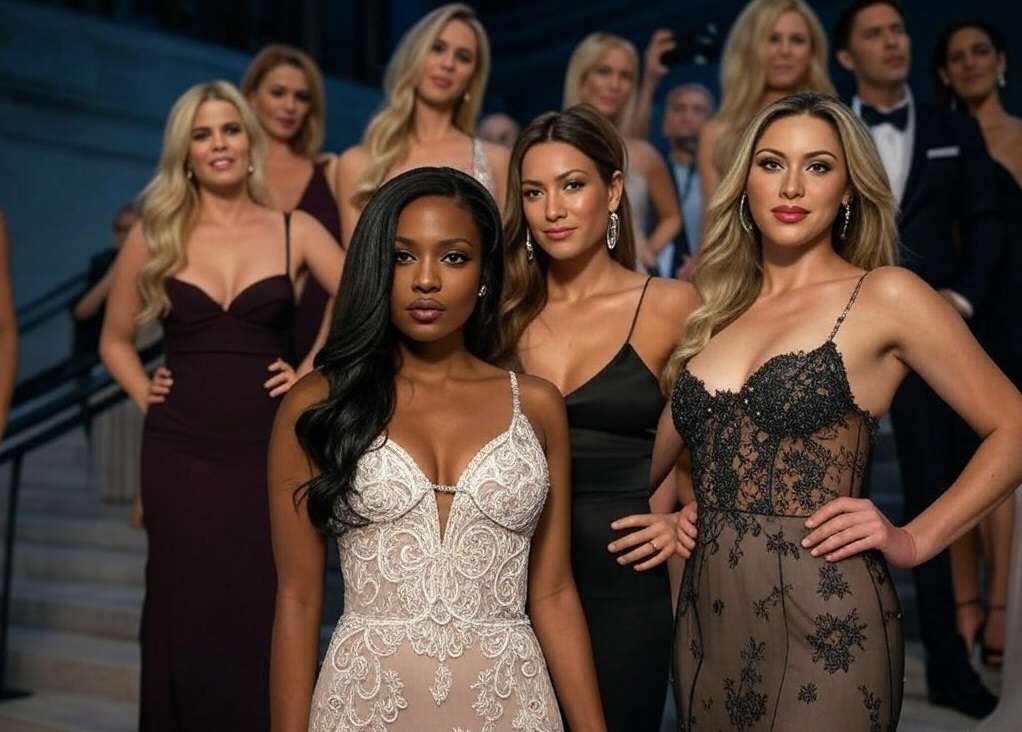
The "naked dress" phenomenon, a recurring motif in Met Gala history, takes many forms. From Lizzo in a Christian Siriano gown that celebrates her curves with a plunging neckline and figure-hugging silhouette, to Megan Thee Stallion in a custom Michael Kors number featuring a daring décolleté and a thigh-high slit, the use of sheer panels, strategically placed cut-outs, and figure-revealing fabrics is a well-established trope. Halle Berry, in a hypothetical LaQuan Smith creation with all-over transparent inserts, might push this even further, suggesting an absence of undergarments and thereby amplifying the raw, unfiltered impact. This isn't just about showing skin; it's about playing with perceptions of vulnerability and strength, modesty and exhibitionism. The fashion risk taken is directly proportional to the potential for media impact.
Artistic Interpretation vs. Exposure
It’s crucial to differentiate between gratuitous exposure and artistic interpretation that incorporates elements of the body. Lisa of BLACKPINK, for instance, might appear in a Louis Vuitton ensemble consisting of hosiery and a jacket embroidered with portraits of influential Black activists like Ann Lowe, Maya Angelou, and Rosa Parks. While potentially revealing, the primary focus here would be the powerful message embedded within the garment, aligning with a broader, more nuanced understanding of "Black Style." Similarly, Cynthia Erivo in a sculptural Givenchy gown with ruby-red sequins and dramatically open legs would be making a statement about artistry and presence as much as about her physique. The line between artistic fashion and mere shock value can be fine, but it often lies in the intentionality and conceptual depth behind the design. Natasha Poonawalla, in a Manish Malhotra couture piece featuring a fishtail skirt and a pearl-adorned lace brassiere, or Helen Lasichanh in a Louis Vuitton leather corset and hosiery, would be engaging in a similar dialogue, blending high craftsmanship with bold bodily assertion.
Dress Code Deconstructed
The very concept of a "dress code" at an event like the Met Gala is, in itself, an intriguing paradox. While ostensibly providing a framework, it also serves as an invitation for deconstruction. The most talked-about outfits are often those that flirt with the boundaries of the theme, or ignore them altogether in favour of a more personal or provocative statement. This breaking dress codes phenomenon is not new, but it has certainly been amplified in the age of social media, where a single, audacious image can go viral within minutes, eclipsing countless more thematically compliant, yet perhaps less visually arresting, ensembles. The power dynamic shifts; the institution sets the theme, but the individual celebrity, in collaboration with their chosen designer, ultimately decides how, or even if, they will engage with it. This Gala fashion controversy is, in many ways, part of the event's enduring appeal.
The Gaze and The Power
The decision to embrace a more "naked" aesthetic on such a prominent stage is a complex one, fraught with potential interpretations. Is it an act of female empowerment, a confident reclaiming of the body and its sensuality? Or is it a capitulation to a culture that often prioritizes female exposure, a strategic play for attention in a fiercely competitive media landscape? The answer likely varies from individual to individual, and from outfit to outfit. What is undeniable is the power of the gaze – both the gaze of the cameras and the public, and the reciprocal gaze of the woman who chooses to present herself in such a bold manner. This interplay, this visual dialogue, is central to the Met Gala spectacle. The fashion statement becomes a cultural one, sparking conversations about beauty standards, self-expression, and the ever-shifting boundaries of public decency.
Beyond the Theme's Horizon
When celebrities choose to bare (almost) all at the Met Gala, they are, in essence, declaring that their personal narrative, their physical presence, or their capacity to shock and awe, transcends the prescribed theme of the evening. It is a high-stakes gamble, one that can yield immense publicity and reinforce a certain brand of audacious glamour, but also risks accusations of tastelessness or irrelevance. The "Superfine: Tailoring Black Style" theme, with its inherent sophistication and historical depth, offers a rich field for sartorial exploration. Yet, the enduring allure of the body as a site of rebellion, as the ultimate fashion statement, ensures that even the most thoughtfully conceived theme will likely be punctuated by moments of breathtaking, skin-baring defiance.
This tension between thematic interpretation and individualistic exposure is what keeps the Met Gala at the forefront of fashion discourse. It is a living, breathing exhibition where the rules are made to be bent, broken, and occasionally, utterly disregarded in favour of a look that sears itself into collective memory. The audacious reveal, the strategically bared skin, the "naked dress" in its myriad forms – these are not merely deviations from the dress code; they are potent assertions of presence, a bold declaration that, on this particular night, the most compelling statement might be the one that says the least with fabric, and the most with fearless self-presentation.