By Anna Zhila
So, another Taylor Swift album has landed.
Of course, to say it has ‘landed’ is like saying a meteor has landed. It’s not a quiet arrival. It’s an extinction-level event for everything else in the cultural calendar. The half-a-billion-view podcast announcement. The cinema release for what are essentially lyric videos. The record-breaking pre-saves. The machine that surrounds a Taylor Swift release is now so vast, so powerful, that the album itself feels almost like an afterthought. An excuse for the real business of breaking records and dominating the conversation.
And this time, with The Life of a Showgirl, that feeling is stronger than ever.
Because what happens when you strip away the noise, the hype, the sheer, crushing weight of her celebrity? What are you left with? You’re left with the songs. And the songs, this time around, are… fine. They’re just fine. Which, for an artist of her calibre, is perhaps the most damning thing you can say.
At first, I thought this was just a middling pop record, the kind even the biggest stars are allowed to make now and then. A slight misstep. Nobody gets it right every time. But the more I listened, and the more I thought about the machine that produced it, the more it felt like something else entirely. A symptom. A warning sign.
The whole narrative going in was that this was the big pop comeback. She’d finished with the quiet, folky introspection of her lockdown albums, done the two-year-long victory lap of the Eras tour, and now she was back with the Swedish hit-makers, Max Martin and Shellback. The guys behind 1989 and Reputation. The architects of her imperial phase. The expectation was for fizzing, electronic, undeniable pop bangers.
What we got was breezy soft-rock. Misty synths, acoustic guitars. It’s pleasant. It’s background music for a dinner party you’re not really paying attention to. Where are the hooks? Where are the melodies that get lodged in your brain for weeks? The review in the Guardian called it “slight on tunes,” and that’s being kind. The songs just drift by, one after the other, leaving no real impression.
It’s like your favourite corner chip shop. It used to do one thing perfectly. The best chips in town. Then it got popular, expanded next door, started doing pizzas, kebabs, milkshakes. The business is bigger, the queues are longer, but everything’s just… fine. The chips are a bit soggy, the pizza’s a bit bland. The machine is feeding more people, but is anyone really enjoying the meal as much as they used to?
The problem isn’t that the album is bad. It’s that it’s hollow. It feels like an album made by someone who is deeply, profoundly tired. Someone who’s been on the road for two years, living in a bubble of private jets and stadiums, and has simply run out of things to say. Or at least, run out of interesting ways to say them.
And the lyrics. This is where it really starts to unravel. This is supposed to be her superpower, the thing that separates her from the other pop girls. The sharp, witty, observational writing. Here, it just feels flat. She’s revisiting old feuds from 2016. Still. Taking pot-shots at other artists from her position as the most powerful musician on the planet, which just comes across as petty. Is this really what’s on her mind? Or is this just what she thinks a Taylor Swift song is supposed to be about? The brand demands a certain amount of grievance, so grievance is duly supplied.
But it’s the songs about her relationship with Travis Kelce that are the most revealing. The supposed heart of the album. There’s a constant, jarring disconnect. She sings about wanting a quiet, suburban life with kids and a basketball hoop, about being over the “yacht life under chopper blades”. A perfectly relatable sentiment for her fans who are now in their thirties. But then, in the same breath, she’s comparing their romance to Elizabeth Taylor and Richard Burton, name-dropping the Plaza Athénée in Paris, where you can’t get a room for less than two grand a night.
Which is it? Does she want the quiet life or the five-star luxury? You can’t have it both ways. It rings completely false. It sounds like someone trying to remember what normal life feels like, but can only see it through the distorted lens of extreme wealth and fame.
Actually, scrap that. The most obvious lyrical clunker isn’t the contradictory materialism. It’s the song ‘Wood’. A song that is, and there’s no delicate way to put this, a four-minute tribute to her fiancé’s penis. His “magic wand”. His “redwood tree”. It’s breathtakingly awful. Not because it’s crude, but because it’s just weak, clumsy writing. I remember reviewing 1989. The sheer, undeniable brilliance of a line like “you got that long hair, slicked back, white t-shirt”. The craft. The economy. It painted a perfect picture. This… this is the opposite of that. It’s embarrassing. And it makes you ask a serious question: is there no one left in her inner circle who can just say, “Taylor, love. Maybe let’s not”?
Is she now so powerful that she’s beyond editing? Beyond critique? It certainly feels that way. The whole project feels rushed, like an obligation that had to be met. The machine demands new content. The tour is over, the churn must continue. So an album is produced. It doesn’t matter if the songs are half-baked, if the lyrics are cringeworthy. The machine will sell it regardless. The pre-saves are locked in, the cinema tickets are sold. The album’s success is a predetermined fact, completely disconnected from its actual quality.
And this, really, is the heart of the problem. What does it mean to be an artist when you are also a global industry? When your every move is a business decision calculated for maximum impact? It feels like the industry is now wearing the artist like a skinsuit. The creative impulse seems to have been replaced by a set of brand directives.
We’ve seen this before, of course. With Elvis in his later years, churning out terrible film soundtracks. With Michael Jackson in the 90s, lost in a bubble of his own myth-making. Extreme fame is creatively corrosive. It isolates you, it distorts your view of the world, and it surrounds you with people who will never say no.
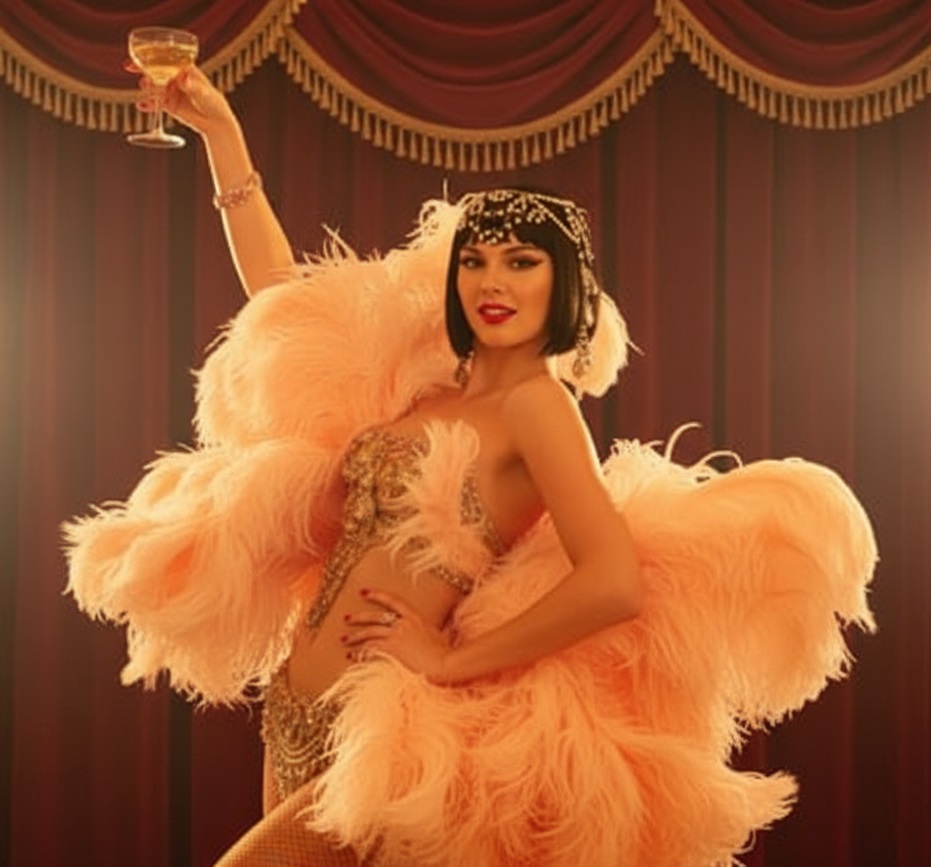
This isn’t to say that Taylor Swift is finished. That would be ridiculous. She is an immense talent, and she has a body of work that speaks for itself. But The Life of a Showgirl feels like a turning point. It’s the first time that the commercial imperative has so completely eclipsed the artistic one. It’s the sound of a showgirl going through the motions, hitting her marks, delivering the spectacle, because the show must go on. Even if she looks absolutely knackered while doing it. The title, in the end, is more telling than she perhaps intended. It’s not about the life of a showgirl. It’s about the life that has been consumed by the show.