By Maria Bregman
How she works with antiquity, translation and the borders of genre – the method of the sole laureate
The Nobel Prize in Literature for 2026 has gone to the Canadian author Anne Carson, announced by the Swedish Academy on 8 October 2026 as a sole award, prize share 1/1, worth SEK 12 million. The citation praises "her bold and inventive oeuvre that, in playful dialogue with the classical tradition, has created new forms for contemporary literature". Biographies of the laureate are easy to find. This article asks a narrower question: how does the work actually get made? What does Carson do to a fragment of ancient Greek, a dictionary entry or a family grief so that a book comes out that nobody else would have written, and why does the Academy count her translations among her own works?
Begin with the Academy's own account of her workshop. According to the biobibliography written by Anders Olsson, chair of the Nobel committee, Carson has herself named the etymology of words as the starting point for all her work, and almost everything she has written sits at the intersection between "the philologist's obsession with words and the poet's desire for new meaning". Most poets treat research as scaffolding and take it down before the reader arrives. Carson leaves it up. Lexicon entries, scholarly commentary and a translator's second thoughts stay on the page, and the reader watches meaning being put together rather than receiving it finished.
The Academy's text also supplies the best short description of the method: it speaks of her, often unexpected, literary constellations. In Economy of the Unlost (1999) Carson sets the sixth-century BC poet Simonides of Keos against Paul Celan; in Men in the Off Hours (2000) she aligns the historian Thucydides with Virginia Woolf. Two writers who never met, separated by twenty-five centuries or by language, are made to light each other up. This is the "stereoscopic vision" she describes in her first major book, Eros the Bittersweet (1986): the ability, in her words as quoted by the Academy, to "hold in equipoise two perspectives at once". The book grew from a single compound adjective in Sappho that defines Eros as pain and sweetness combined, and it argues that desire lives in the distance between lover and beloved. The same distance, between two voices, two periods or two genres, drives almost everything she wrote afterwards.
Translation is where the method is most visible, and the Academy says so explicitly: her translations from Classical Greek "may be regarded as independent works in their own right". Among them are If Not, Winter (2002), her Sappho, and tragedies by Sophocles and Euripides. Sappho survives in scraps – a line quoted by an ancient grammarian, a papyrus torn in half. Carson does not hide the damage. In her introduction she writes: "Brackets are exciting. Even though you are approaching Sappho in translation, that is no reason you should miss the drama of trying to read a papyrus torn in half or riddled with holes or smaller than a postage stamp – brackets imply a free space of imaginal adventure." The bracket, a mark that normally apologises for a gap, becomes the poem's most characteristic gesture. Translation stops being a bridge between two settled shores and becomes a way of writing with loss as the material.
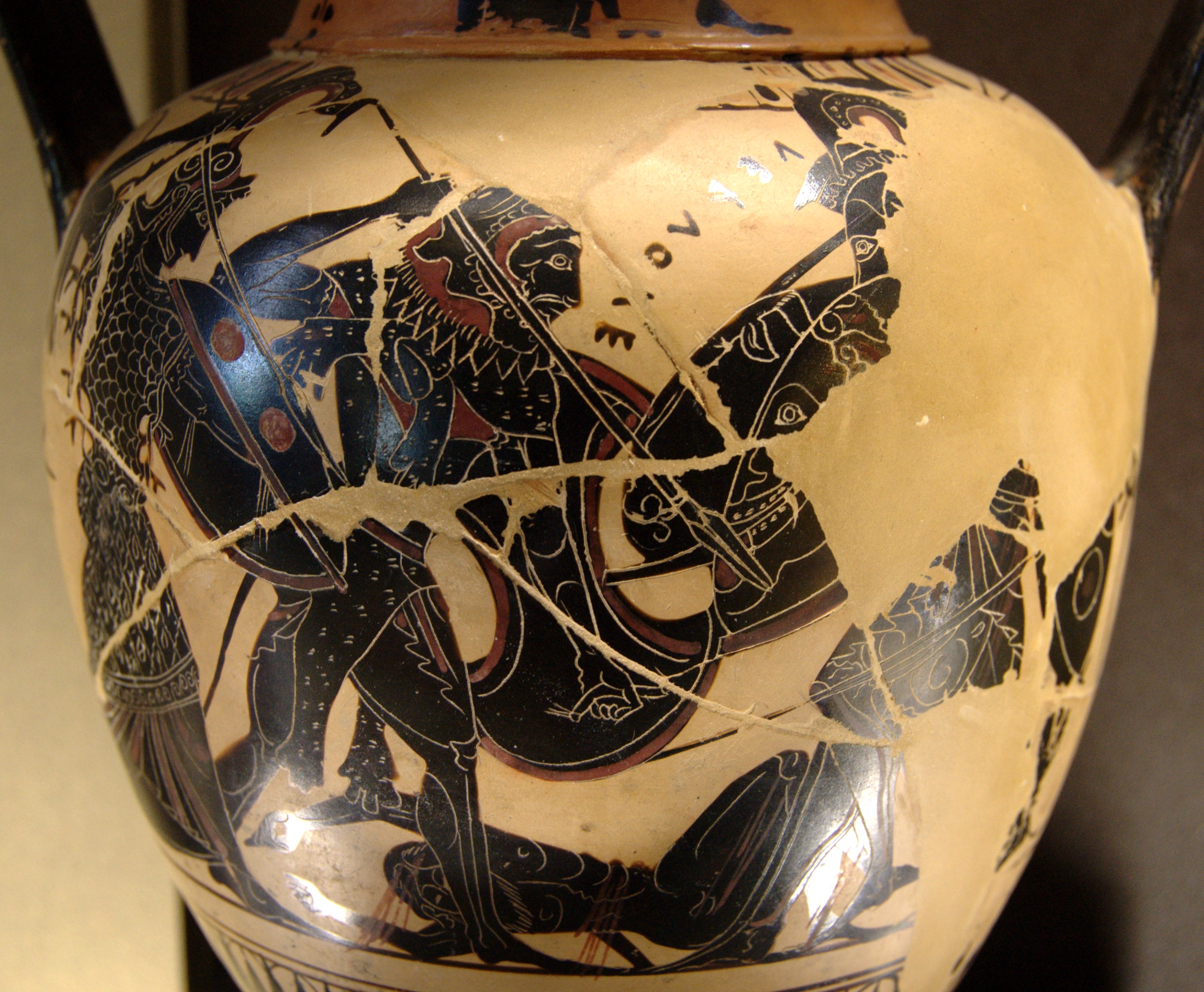
Autobiography of Red: A Novel in Verse (1998) does the same with myth. Its raw material is a handful of fragments by the sixth-century BC poet Stesichoros about Geryon, the winged red monster whom Heracles kills in one of his labours. Carson keeps the red wings but moves the story into the present, and the monster becomes the hero of a modern coming-of-age story. The book sits between epic, novel and love poem and refuses to settle in any of them, and that refusal is the form. The Academy's text notes that it is often heralded as her greatest work, and in the announcement interview the committee member Steve Sem-Sandberg named it as the gate through which many readers have entered hers. Nobody who opens it can say where the classical scholar stops and the contemporary poet begins.
Nox (2010) shows what happens when the same procedure is applied to private grief rather than to myth. Her brother Michael had been, in the Academy's words, "mysteriously absent" before his death in Denmark in 2000. The New Yorker described how Carson answered with an object rather than a poem: a box, about the size of a large Bible, holding a full-colour, accordion-folded reproduction of a notebook. On the left-hand pages she took apart Catullus's poem 101, the elegy he wrote for a brother who died on a distant shore, giving a dictionary-style entry for each Latin word in turn; on the right she circled the brother who had vanished from her life long before he died. The first page, the magazine noted, shows the Latin text on yellowed paper. The poet Andrew Motion, reviewing it for the Guardian, called the box a combination of "the raw materials of elegy, and the thing itself". A two-thousand-year-old poem is used not as ornament but as a measuring instrument for a grief that will not close.
The latest generation of her work extends the practice into performance and the visual arts. Norma Jeane Baker of Troy (2019), described by the BBC as a performance piece, laid Helen of Troy over Marilyn Monroe until two famous beauties from different centuries exposed how each had been constructed. The Trojan Women: A Comic (2021), made with the artist Rosanna Bruno, retells Euripides as sequential art. Wrong Norma (2024) gathers texts that the Academy describes as having a strongly performative aspect, with Carson crossing into various artistic and academic fields. Olsson's biobibliography adds that her collaborations with visual artists, choreographers and opera and theatre directors show the freedom with which she treats literary expectations and rule systems. Each time the operation is the same: take a received whole – a myth, a poem, a book – break it into parts and rebind it in a structure of her own design.
That is why "created new forms" is better read literally than as ceremonial praise. The earlier prizes on Carson's shelf – the MacArthur fellowship of 2000, two Griffin Poetry Prizes, the T. S. Eliot Prize, a Governor General's Award – reward books. The Nobel rewards the discovery that the book itself is negotiable. Susan Sontag, quoted in the New York Times in 2000, put the effect on readers plainly: Carson is "one of the few writers writing in English that I would read anything that she wrote". People follow her from title to title not for plot but to see what she will do to the form next.
The method has a price, and fair criticism names it. The learning worn without apology, the abrupt cuts and the refusal of a stable speaking self can leave readers admiring the mechanism without feeling addressed by it. Olsson himself put the break precisely: through her constellations Carson "has broken away from lyrical poetry bound to the narrative self". A poetry unbound from the self asks the reader to supply the binding, and that is a real demand. The prize will now test whether a wider public is willing to meet it. A practical way in is to start where the apparatus is lightest, with the Sappho translations or the story of the red monster, and let the method explain itself. The difficulty is genuine, but it is never decoration: every bracket and every gap on the page marks a place where something was lost, and the author declines to pretend otherwise.
Image: Heracles fighting the three-bodied Geryon, Attic black-figure amphora, c. 520–510 BC, Louvre (F 115). Painter: Class of Cabinet des Médailles 218. Photograph by Bibi Saint-Pol (2007). Public domain. Source: Wikimedia Commons.