

By Anna Zhila
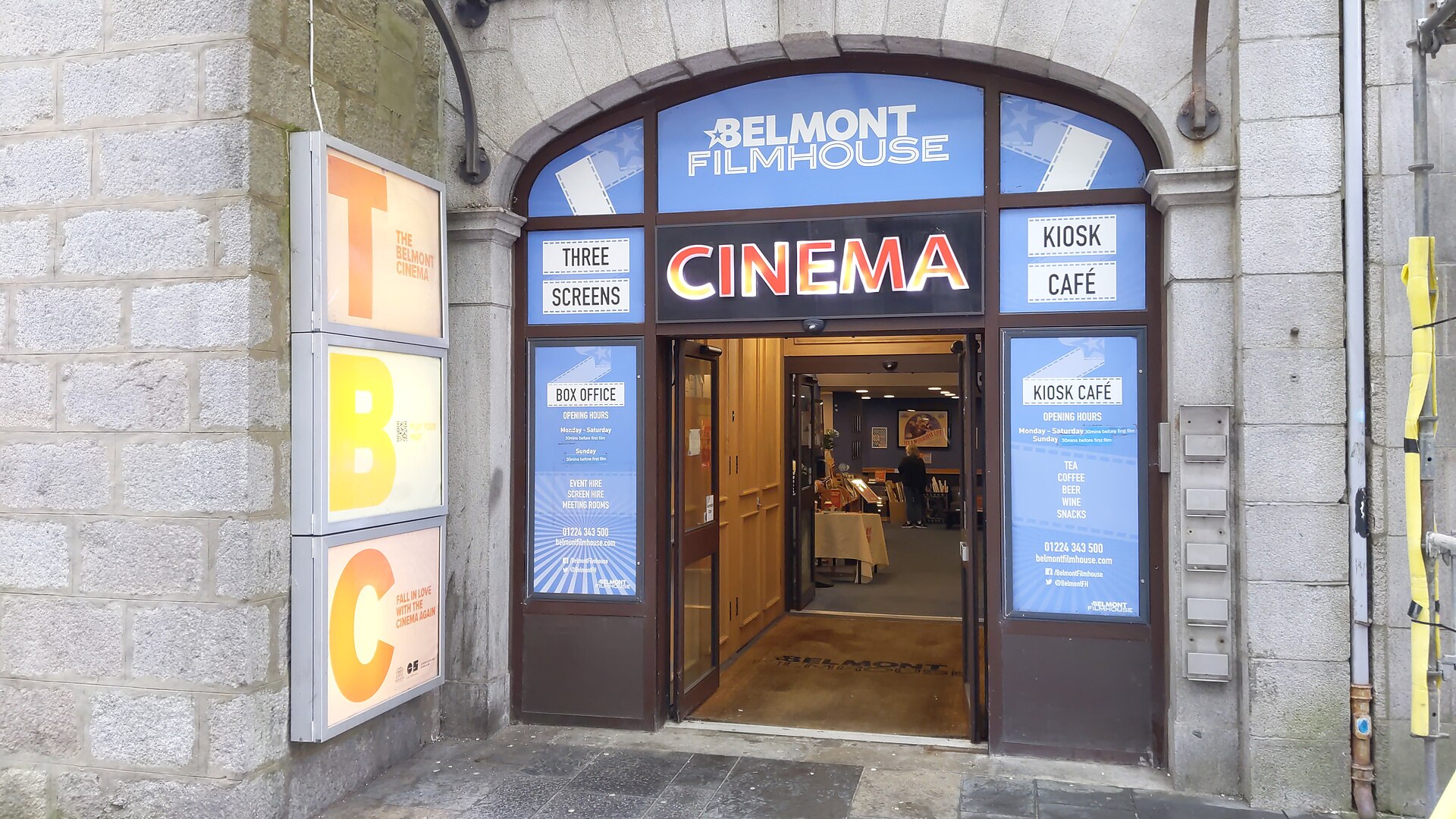
There is a specific, heavy silence that falls on a cinema when the projector goes dark for the last time. It is not an empty silence. It is a space thick with the ghosts of every gasp, every shared laugh, and every collective, held breath a community has ever experienced within its walls. For the past year, this has been the silence of the Belmont Cinema in Aberdeen. Its doors have been locked, its screens dark. A cultural institution that has served the city for over 125 years was shuttered, a casualty of the cold, administrative logic that governs the arts in a time of crisis.
Now, a small, fragile flicker of light has appeared in that darkness. A question raised in the Scottish Parliament. A minister, Neil Gray, agreeing to a meeting. For the campaigners and former employees fighting to save the Belmont, it is a moment of profound, if tentative, hope. But the fight to save this single cinema is about more than one building on one street in one Scottish city. It is a frontline in a much larger, quieter war: the war for the soul of our public, cultural spaces. To argue for the Belmont is to argue for the irreplaceable value of sitting together, in the dark, and watching a story unfold.
The Cathedral of Dreams
A city’s cinema is never just a room with a screen. It is a repository of shared dreams, a public living room, a secular cathedral. In an age of atomised, individualised entertainment - the solitary confinement of the streaming algorithm, the placeless, sterile comfort of the multiplex - the independent cinema remains a radical proposition. It is a space that demands a temporary surrender of our personal sovereignty. For two hours, we agree to put away our phones, to silence our own private worlds, and to submit to a single, curated vision.
This is a profoundly civic act. The shared darkness is a great equaliser. In the anonymous community of the cinema, we are all equally vulnerable to the power of a story. We are strangers, sitting shoulder to shoulder, experiencing a collective emotional journey. The communal gasp at a moment of shock, the infectious spread of laughter, the palpable, unified tension of a suspenseful scene - these are experiences that cannot be replicated on a laptop screen. They are the subtle, essential glue of a common culture.
The architecture of a place like the Belmont is part of this magic. It is not a generic, acoustically-panelled box. It is a place with a history, a building that carries the memory of every film that has ever flickered across its screen. You can feel it in the slight sag of the velvet seats, in the faint, sweet smell of dust and old popcorn, in the very quality of the silence. To lose such a place is not just to lose a venue; it is to erase a chapter of a city’s emotional history.
The Granite and the Light
The importance of a place like the Belmont is magnified by its context. Aberdeen is the Granite City, a place built of stern, enduring stuff, a city defined by the cold, hard logic of the North Sea and the oil industry. It is a city of pragmatists, of engineers, of people who understand the unforgiving realities of the physical world.
In such a place, a cinema like the Belmont is not a luxury; it is an essential piece of emotional infrastructure. It is a portal. It is a place of colour and shadow in a city so often defined by its shades of grey. For decades, it offered a window onto other worlds, a place to experience the sun-drenched landscapes of Italian neorealism, the psychological turmoil of a French New Wave apartment, the dizzying sweep of a Hollywood epic. It provided a vital counterpoint to the city’s dominant narrative, a space where the imagination was valued as highly as the barrel of oil.
To lose the Belmont is to diminish Aberdeen’s capacity to speak to itself in a different language. It is to accept a future where the only stories available are the globally-marketed, four-quadrant blockbusters on offer at the out-of-town retail park. It is to cede a vital piece of the city’s cultural territory to the forces of homogenization.
The Quiet Violence of Closure
The closure of the Belmont, and its sister cinema the Edinburgh Filmhouse, was not the result of a single, dramatic failure. It was the result of a quiet, creeping crisis, the slow administrative death of their parent company, the Centre for the Moving Image (CMI). It is a story that has become depressingly familiar in the arts: a story of rising costs, dwindling public subsidy, and the immense difficulty of operating a cultural institution in a market that is fundamentally hostile to anything that does not generate a tidy profit.
But a cinema’s value cannot be measured on a balance sheet. Its profit is measured in the conversations it sparks in the pub afterwards, in the young person who sees a film that changes their life, in the sense of community it fosters among its patrons. These are the "soft" metrics that are so often invisible to the administrator and the accountant, but they are the very things that make a city a place worth living in.
The campaign to save the Belmont, led by former employees and passionate local advocates, is a testament to this unquantifiable value. The intervention of North-east MSP Maggie Chapman, bringing the issue to the floor of the Scottish Parliament, is a crucial recognition that the fate of a local cinema is a matter of national cultural policy. It is an acknowledgement that the market, left to its own devices, will not protect these spaces. They require a conscious, collective act of will.
An Argument for Shadows
The meeting with the Culture Minister is not a guarantee of salvation. The path to reopening the Belmont will be long and difficult. It will require a new business model, a coalition of public and private support, and a great deal of political and creative will. But it is a start. It is an admission that something of value has been lost and is worth fighting for.
In a sense, an independent cinema is a kind of lighthouse. It projects stories into the dark, offering a fixed point of navigation in a confusing and often chaotic world. It reminds us of other lives, other possibilities. It fosters empathy. It teaches us how to look.
To save the Belmont is not an act of nostalgia. It is not about clinging to an outdated model in a digital age. It is a forward-looking investment in a city’s capacity to dream. It is a bet on the enduring, irreplaceable power of the shared, public experience of art. It is an argument for the importance of shadows, for the value of quiet, and for the simple, profound magic of a beam of light, cutting through the darkness, and showing us who we are. The ghost in the projection booth has been silent for too long. It is time to let it speak again.





Leave a Reply
You must be logged in to post a comment.