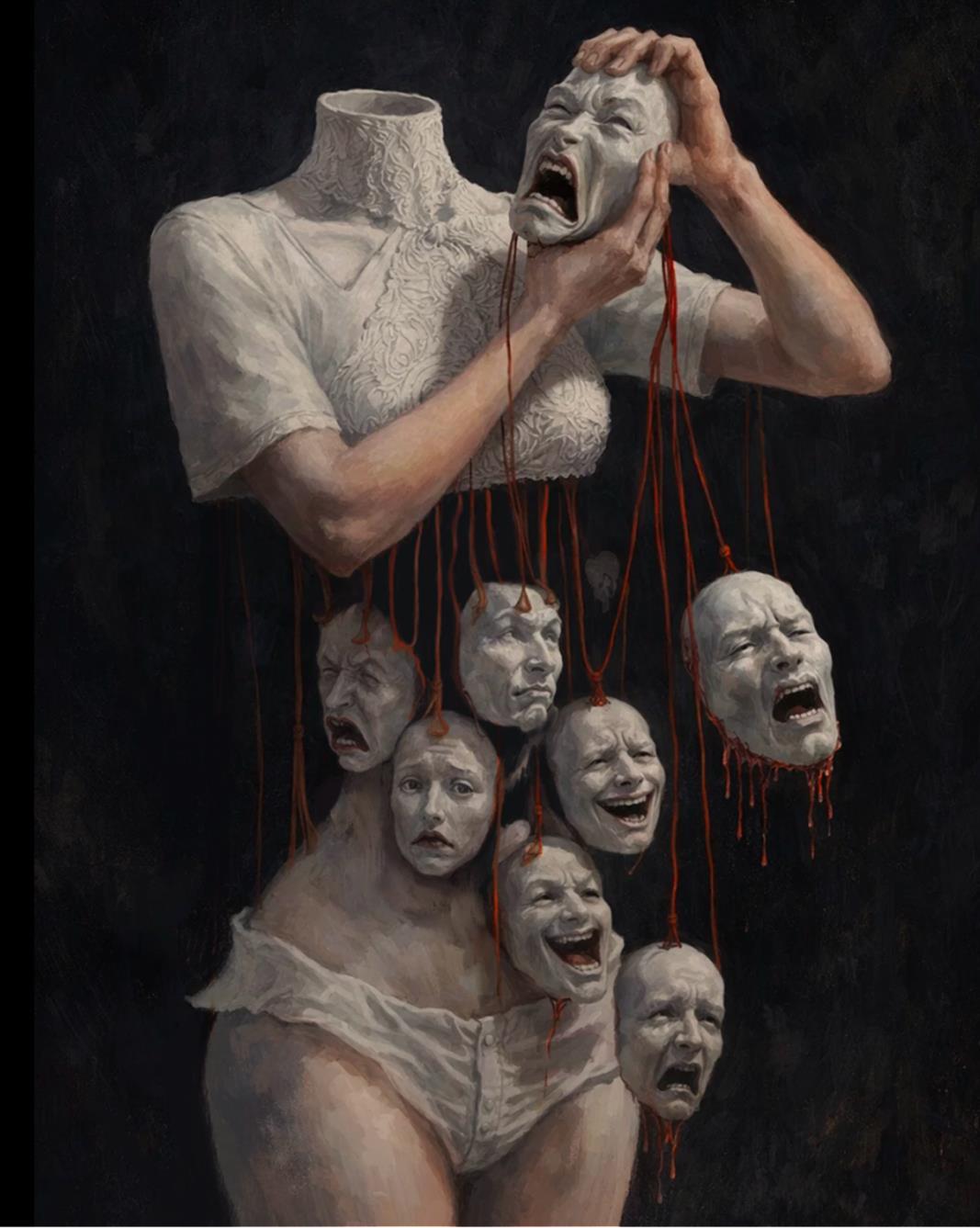
You are sitting across a candlelit table from someone you have been dating for a few weeks. The conversation has been flowing effortlessly, the attraction is palpable, and the prospect of a shared future feels genuinely exciting. Then, they do something utterly trivial. Perhaps they chase a rolling coin across the pavement with slightly too much earnestness, or they misuse a common colloquialism, or the way they hold their fork suddenly seems profoundly unnatural. In a fraction of a second, the romantic illusion shatters. A visceral, physiological wave of repulsion washes over you. The attraction does not simply fade; it aggressively reverses.
This is the phenomenon known in modern parlance as "the ick," or in more analytical circles as Sudden Repulsion Syndrome. It is a psychological detonator that has quietly ruined countless nascent courtships. While the term itself has roots in late-nineties television and modern reality dating formats, the psychological architecture underpinning this sudden revulsion is deeply complex. It sits at the intersection of evolutionary biology, attachment theory, and the modern crisis of perfectionism. Understanding why we suddenly find a romantic prospect physically or emotionally repellent requires looking beyond the trivial trigger itself, and examining the neurological and psychological defence mechanisms that govern our closest relationships.
The Evolutionary Biology of Disgust
To decode sudden repulsion, one must first understand the primary emotion driving it: disgust. From an evolutionary perspective, disgust is a primal, hard-wired emotion designed to keep us alive. It functions as a core component of the behavioural immune system, an unconscious radar that detects pathogens, disease, and contamination. When you smell spoiled meat or encounter poor hygiene, your brain triggers a physical recoil to protect your body from infection.
However, evolutionary psychologists argue that this biological pathogen-avoidance system has been co-opted by our social brains. In a romantic context, disgust functions as a rapid, unconscious filter for perceived incompatibility. The trivial behaviours that trigger sudden repulsion are rarely offensive in isolation; rather, they serve as heuristics. The subconscious mind interprets a clumsy gesture, a specific vocal inflection, or a lack of social grace as an indicator of lower "mate quality."
This is not a conscious, rational evaluation. It is an amygdala-driven alarm system. The feeling signals that a behaviour or trait is inherently misaligned with your own survival or social standing. In the ruthless calculus of evolutionary psychology, the sudden disgust is a protective mechanism, saving you from investing time and reproductive energy into a partnership that your subconscious has deemed suboptimal. Yet, in the safety of the modern dating landscape, this primal alarm is frequently triggered by false positives, misinterpreting mundane human awkwardness as a fundamental threat.
Cognitive Dissonance and the Shattering of Illusion
Beyond biology, the mechanics of sudden repulsion are deeply rooted in cognitive psychology, specifically the phenomenon of cognitive dissonance. The early stages of courtship are heavily reliant on the "halo effect," a cognitive bias where we project an array of positive attributes onto a new partner based on a few attractive traits. During this honeymoon phase, we do not see the real person; we see an idealised fantasy, an avatar onto which we map our own unmet desires and romantic expectations.
Sudden repulsion is the precise psychological detonation that occurs when this illusion collides headfirst with stark reality. When the partner does something deeply human, slightly embarrassing, or inherently flawed, the brain struggles to reconcile this new information with the flawless avatar it has constructed. The resulting cognitive dissonance - the mental discomfort of holding two conflicting realities - is resolved through a rapid emotional pivot.
Instead of gradually adjusting the fantasy to accommodate the flaw, the psyche forcefully ejects the partner from the pedestal. The sudden intensity of the disgust is proportional to the height of the pedestal. It is the jarring transition from witnessing a polished performance to suddenly noticing the stagecraft, the lighting rigs, and the script. The repulsion is not merely directed at the partner's faux pas; it is a subconscious reaction to the discomfort of our own shattered illusions.
Attachment Theory: Disgust as a Defence Mechanism
For clinical psychologists, the timing of this sudden revulsion is often more revealing than the trigger itself. The phenomenon frequently occurs just as a relationship transitions from casual dating to genuine emotional intimacy. Here, attachment theory offers a vital lens. Individuals with avoidant attachment styles - those who inherently associate emotional closeness with a loss of autonomy or a threat of engulfment - are particularly susceptible to experiencing this sudden disgust.
As the relationship deepens, the avoidant individual's subconscious registers the growing intimacy as a danger. To protect against the vulnerability of truly connecting with another person, the mind manufactures disgust. By suddenly hyper-focusing on a minor physical flaw or an irritating habit, the individual creates an immediate, unbridgeable emotional distance. The revulsion serves as a highly effective defence mechanism, providing a socially internalised justification for withdrawing from the relationship without having to confront the underlying fear of intimacy.
This dynamic highlights how the "ick" is frequently a mirror rather than a magnifying glass. We are often most repulsed by behaviours in others that reflect our own insecurities, our unacknowledged shame, or our deepest fears regarding commitment. For a deeper exploration of how modern individuals navigate these fears of vulnerability, one might examine the broader cultural shifts in modern intimacy. When we abruptly sever ties over a triviality, we preserve our own emotional safety at the cost of authentic connection.
The Role of Personality: Perfectionism and Narcissism
The propensity to experience sudden repulsion is not distributed equally across the population. Recent academic research has begun to map the personality profiles most likely to experience this phenomenon. A 2025 study published in Personality and Individual Differences by psychologists Brian Collisson, Eliana Saunders, and Chloe Yin investigated the psychological correlates of the phenomenon. Their findings illuminated a stark reality: the tendency to feel sudden romantic disgust is strongly linked to specific personality traits, most notably high disgust sensitivity, perfectionism, and grandiose narcissism.
Perfectionists apply their rigid, often unattainable standards not only to themselves but to their romantic partners. When a partner inevitably deviates from this flawless script - perhaps by demonstrating a lack of coordination or a moment of social ineptitude - the perfectionist's threshold for tolerance is instantly breached. Similarly, individuals with elevated narcissistic traits may experience sudden repulsion because they view their partner as a direct extension of their own status. A partner's mildly embarrassing behaviour is perceived as a direct threat to the narcissist's own social cachet and self-image, triggering an immediate and ruthless emotional detachment.
These findings suggest that the frequency with which one experiences sudden repulsion may be less indicative of the poor quality of the dating pool, and more reflective of a rigid, unforgiving psychological architecture that demands an impossible standard of human execution.
Pop Culture and the Lexicon of Love
While the psychological mechanisms are timeless, the cultural framing of this phenomenon is distinctly modern. The term "the ick" first entered the cultural lexicon via a 1998 episode of the seminal television show Ally McBeal, before cementing itself in the millennial and Gen Z consciousness through the UK reality juggernaut Love Island in 2017.
Having a specific, viral term for this experience has arguably amplified its frequency. This is a classic example of linguistic relativity: the language we use shapes our perception of reality. By weaponising a catchy moniker for the sudden loss of attraction, modern dating culture has normalised and almost gamified the premature termination of relationships. It has become a socially acceptable shorthand, a get-out-of-jail-free card that requires no further introspection or emotional labour.
The media's portrayal of romance often exacerbates this by presenting sanitised, highly curated depictions of courtship that leave little room for the awkward, messy realities of human interaction. For further context on how screens shape our expectations of love, it is worth looking at the depictions of romance in modern television and film. When our cultural diet consists of flawlessly choreographed romance, the inevitable clumsiness of real-world dating feels less like a natural human quirk and more like a terminal flaw.
Moving Beyond the Repulsion
Experiencing sudden disgust in a relationship does not necessarily mandate the end of the partnership, nor is it always a definitive signal of underlying incompatibility. It is, more accurately, an invitation for introspection. It marks the precise boundary where the performance of dating concludes and the rigorous, often uncomfortable work of authentic connection begins.
When the illusion of perfection shatters, we are presented with a choice: to flee at the first sign of human frailty, blaming the visceral nature of our repulsion, or to pause and interrogate the feeling. Is this disgust a genuine evolutionary warning of incompatible values, or is it a protective wall hastily erected by our own fears of intimacy? By understanding the complex biological, cognitive, and cultural forces that manufacture this sudden revulsion, we can begin to differentiate between a true lack of compatibility and the mere terror of being truly seen by a flawed, ordinary, and wonderfully human partner.