Quiet luxury is a way of dressing in which the money goes into fabric, cut and construction rather than into logos, so that the clothes look expensive only to people who know what they are looking at. Think of an unbranded cashmere jumper in oatmeal, a navy wool coat with plain horn buttons, or loafers with no hardware at all. The term became a fashion headline in spring 2023, but the habit it describes is at least two centuries old, and the brands most associated with it were still growing their sales in 2025.
Quiet luxury at a glance
- What it is: clothing defined by material quality, precise fit and the near absence of visible branding. Wikipedia's entry summarises it as understated elegance, high-quality materials and timeless styling, "with no visible logos or other open markers of wealth".
- Typical palette: cream, camel, grey, navy, chocolate brown and black.
- Typical materials: cashmere, merino and other fine wools, silk, linen, heavy cotton poplin, good leather.
- Brands usually named: Loro Piana, Brunello Cucinelli, Zegna, Hermès, The Row, Bottega Veneta, and Celine during Phoebe Philo's years there.
- When the phrase took off: 2023, driven by the final series of HBO's Succession and by Gwyneth Paltrow's court wardrobe in Utah.
- Status in 2026: the catwalk has moved towards louder branding, but the companies built on discreet clothing remain commercially strong.
How the look works
The principle is substitution. Where a logo-led wardrobe signals value with a monogram, quiet luxury signals it through things that are hard to fake at a glance: the drape of a heavy wool, the softness of a well-spun cashmere, a shoulder that sits exactly on the shoulder, a trouser hem that breaks once over the shoe.
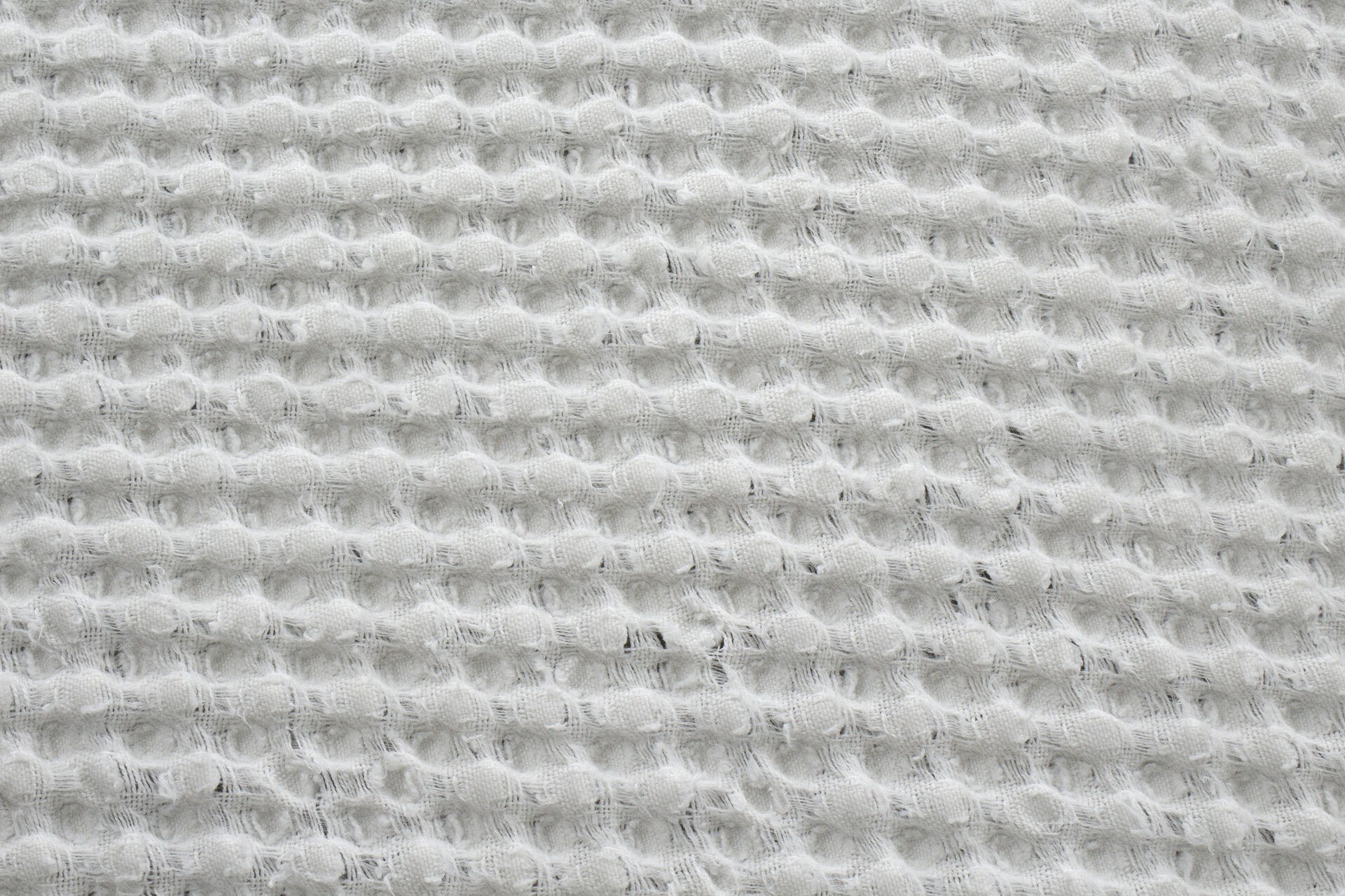
Fabric carries most of the weight. A cheap synthetic blend cut beautifully still tends to look cheap after a few wears, because it pills, shines or loses its shape. Natural fibres in good qualities age differently, though they are not immune to wear. The Woolmark Company's guide to pilling points out that pilling comes mostly from friction at elbows, underarms and cuffs, and that manufacturers reduce it by using longer fibres, a higher twist and more tightly constructed fabrics. Those are exactly the invisible decisions a quiet luxury label charges for.
Colour stays narrow so that every piece works with every other piece. Silhouettes are relaxed but controlled: generous coats, straight trousers, knitwear that skims rather than clings. Hardware is small or hidden. The overall effect is meant to be anonymous to most observers and legible to a few, and that gap is the social point of the style.
A history of understated dress
The idea that the powerful should dress soberly has a long history. In 1930 the British psychologist John Flügel coined the phrase "the Great Male Renunciation" for the shift at the end of the eighteenth century, when affluent Western men gave up silks, bright colours and lace for the dark suit. Flügel wrote that men had abandoned their claim to be considered beautiful and aimed instead at being only useful. Writing in ArtReview in June 2023, the Design Museum curator Danielle Thom made the same argument for interiors: simplicity and excellent execution have marked the very rich for centuries.
The opposite habit got its name in 1899, when the American economist Thorstein Veblen published The Theory of the Leisure Class. "Conspicuous consumption of valuable goods is a means of reputability to the gentleman of leisure," he wrote. Quiet luxury is often described as a reaction against conspicuous consumption, but it can just as easily be read as a refined version of it, aimed at a smaller audience. In 2017 the University of Southern California academic Elizabeth Currid-Halkett described a related shift in The Sum of Small Things, arguing that a highly educated "aspirational class" now signals status through "discreet, inconspicuous consumption" rather than obvious goods.
British fashion has its own lineage. Margaret Howell, a Goldsmiths graduate, began making shirts in a Blackheath flat in 1972 and opened her first shop on South Molton Street in 1976. Her company's own account traces her approach back to an old pinstripe shirt found at a jumble sale in 1970. Phoebe Philo, creative director of Celine from 2008 until 2018, is widely credited with the modern template: long coats, flat shoes, almost no visible branding. The Sloane Rangers of the 1980s, catalogued in The Official Sloane Ranger Handbook (1982), are sometimes cited as a precursor, but the style that book described leaned on conservative, branded heritage clothing. It belongs more to the "old money" family than to quiet luxury proper.
Why quiet luxury became a headline in 2023
Two events in March 2023 did most of the work. The fourth and final series of Succession premiered on HBO on 26 March 2023, and viewers began cataloguing Kendall Roy's cashmere baseball caps and Shiv Roy's tailoring. Around the same time, Gwyneth Paltrow's civil trial over a skiing collision in Utah put her muted, logo-free courtroom wardrobe in front of news cameras, and commentators read it as the same aesthetic.
The show's costume designer, Michelle Matland, was candid about where the idea came from. In an interview with W magazine published on 8 May 2023, she said that "certain kinds of wealth were not only not interested in a logo world, but were antithetical in feeling about it", and described "some disdain for the logo world" that "has something to do with old money and new money". Asked about the "quiet luxury" label, she said: "I wish I knew more about it, as well as the 'stealth wealth' terminology." The Ringer's account of the final season's wardrobe shows how carefully the characters' clothes were matched to their positions in the family.
The timing also suited the market. According to UBS Evidence Lab figures cited by CNBC, luxury prices rose by a record 8 per cent on average in 2022, against about 1 per cent a year before Covid. Discreet clothing offered a way to keep spending at those prices without appearing to show off.
Then, on 30 October 2023, Phoebe Philo launched her own label online, with LVMH as a minority shareholder. Drapers reported that the brand promised "clothing and accessories rooted in exceptional quality and design", and its arrival was treated as confirmation that the mood had staying power.
Quiet luxury, stealth wealth and old money style
The three terms are used interchangeably online, but they describe different things.
- Stealth wealth is a behaviour. It means hiding money, often for privacy or security, and can involve dressing like everyone else.
- Quiet luxury is a fashion category. It does not hide money so much as signal it discreetly, to people equipped to read the signal. That is the distinction drawn in the Wikipedia summary of the debate.
- Old money style is an aesthetic built on inherited codes: blazers, loafers, cable knits, signet rings, country clothing. It overlaps with quiet luxury in restraint but is more nostalgic and more specific.
The distinction matters when you shop. A quiet luxury wardrobe does not require a particular background or a particular set of references. It requires good materials and good fit, which can be found at many price points if you know what to check.
Where the money is in 2026
The business story is more interesting than the trend cycle. Loro Piana, founded in 1924 in Quarona, Piedmont, became part of LVMH in July 2013, when the group bought an 80 per cent stake and the family kept the rest. Brunello Cucinelli, perhaps the purest listed example of the style, reported 2025 revenues of €1,408.0 million, up 11.5 per cent at constant exchange rates, with net profit of €142.0 million, and guided for growth of around 10 per cent in 2026 (checked October 2026).
That performance came in a weak year for the sector overall. Bain & Company's study with Altagamma, published on 20 November 2025, estimated personal luxury goods sales at €358 billion for 2025, down from €364 billion in 2024, and said the post-Covid era of price rises "appears to be ending, as demand from mid-tier aspirational shoppers falters".
Meanwhile, the catwalk has turned. The Wall Street Journal was already describing a move towards flair at the January 2024 Paris men's shows. In August 2025, CNBC reported that new creative directors at Gucci, Chanel and Versace were expected to bring back statement styles, and quoted Carole Madjo, head of European luxury goods research at Barclays: "Luxury fashion is a cycle. Now, with quiet luxury being a few years old, you want something else." The same report noted that Brunello Cucinelli, Hermès and Loro Piana had come through the downturn largely unscathed. The trend headline has moved on, but the very top of the market still buys this way.
How to build a quiet luxury wardrobe
The look is easier to buy badly than well. A few working rules:
- Start with four or five anchor pieces. A well-cut coat in navy, camel or grey; one or two fine knits; tailored trousers; a plain white or blue shirt; a simple leather shoe or boot.
- Judge fabric with your hands. Look at the composition label first. Then feel the weight, check that knitwear springs back after a gentle stretch, and hold woven cloth up to the light to see how dense it is.
- Check the construction. Seams should lie flat, patterns should match at seams on checks and stripes, buttonholes should be neatly finished, and linings should not pull.
- Pay for alteration. A tailor taking up sleeves and hems does more for the look than a higher price tag.
- Keep the palette tight. Three or four colours that all combine let a small wardrobe go a long way.
- Look after what you buy. Woolmark's wool care advice covers gentle washing and flat drying, and its pilling guide recommends turning garments inside out before washing, skipping fabric softener and removing pills with a comb or a battery-powered de-piller.
Keeping clothes longer also has a measurable environmental side. Research by the UK charity WRAP, quoted by Oxfam, found that extending the active life of clothes by just nine months would reduce their carbon, water and waste footprints by 20 to 30 per cent each. Buying fewer, better pieces is not automatically ethical, since cashmere and leather carry their own supply-chain questions, but wearing clothes for years is a sounder starting point than chasing a new trend every season.
What to check before you buy into the trend
- Logo-free does not mean well made. Many high-street ranges borrow the beige palette without the fabric quality. The label and the handfeel tell you more than the styling.
- Read the composition carefully. "Cashmere blend" can mean a small percentage of cashmere in a mostly synthetic yarn.
- Avoid the costume effect. Head-to-toe beige can look like a uniform. Danielle Thom's ArtReview essay puts the danger plainly: "Predominantly white people in grey and brown clothes, living in their white homes filled with grey and brown furniture. Where's the joy?" Texture, a good shoe and one well-chosen colour keep the look personal.
- Think in years, not seasons. The useful test is whether you would still wear a piece in five years' time, whatever the trend reports say.
Frequently asked questions
What defines quiet luxury?
High-quality materials, precise fit and minimal or absent branding, usually in a neutral palette. The clothes are designed to last several years and to look expensive only to people who know textiles.
Where did the term quiet luxury come from?
It spread through fashion journalism in spring 2023, driven by the costumes in the final series of Succession and by Gwyneth Paltrow's wardrobe during her Utah trial. The underlying idea is much older, going back at least to the sober menswear of the late eighteenth century.
Is quiet luxury still in fashion in 2026?
On the catwalk, louder branding has returned since 2024. In shops, discreet labels such as Brunello Cucinelli and Loro Piana have kept growing, so the style remains a durable part of the market rather than a passing look (checked October 2026).
Is quiet luxury the same as old money style?
No. Old money style borrows inherited codes such as loafers, blazers and signet rings, while quiet luxury is a broader fashion category built on fabric and fit. They overlap in restraint, but quiet luxury does not depend on any particular background.
Photo: Alexandra.birenbaum, CC BY-SA 4.0, via Wikimedia Commons