
By Anna Zhila
Nostalgia is a dangerous fuel. It can power a brief, sweet journey into the past, but it can also lead to a creative dead end, a place where familiar stories are endlessly recycled, their original magic diluted with each retelling. The West End is littered with the wreckage of such journeys: musical adaptations of beloved films that felt less like celebrations and more like cynical cash grabs, hollow echoes of a tune we once loved.
When the news broke that Back to the Future was being adapted for the stage, a collective shiver of apprehension ran through a generation. The 1985 film is not just a classic; it is a perfectly calibrated piece of storytelling machinery. Every line, every plot point, every musical cue is precisely engineered for maximum effect. To tamper with it felt like an act of profound hubris. How could a stage show, with its inherent limitations, possibly replicate the kinetic energy of the film? And, more importantly, why should it even try?
The answer, now thundering nightly from the stage of the Adelphi Theatre, is both a surprise and a profound relief. Back to the Future: The Musical is a work of dazzling, audacious, and ridiculously enjoyable theatre. It succeeds not by slavishly imitating the film, but by understanding its essential, beating heart. It is a show that weaponises nostalgia, using our deep affection for the source material as a launchpad for a spectacle that is both a faithful tribute and a thrillingly theatrical experience in its own right.
The Anxiety of Adaptation
The central challenge of adapting Back to the Future for the stage is a problem of physics. The film is a story about speed, about movement, about the visceral thrill of a DeLorean tearing through the fabric of time. How do you capture that on a proscenium stage? The solution, it turns out, is to lean into the artifice of theatre itself.
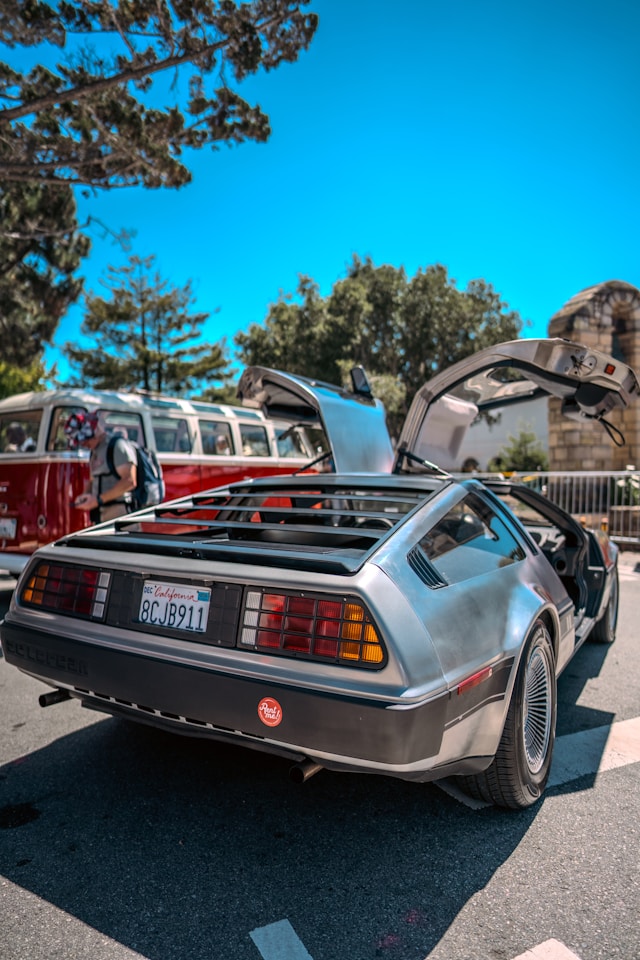
The show’s creative team has not tried to hide the strings. Instead, they have made the stagecraft a central part of the spectacle. The DeLorean is the star of the show, a masterpiece of technical wizardry that zooms, spins, and, in a moment of pure, gasp-inducing theatrical magic, takes flight over the audience. It is a stunning illusion, one that doesn’t try to replicate the seamlessness of cinema, but instead celebrates the ingenuity of the live experience. You are not just watching a car fly; you are watching a team of brilliant engineers and designers solve an impossible problem, right in front of your eyes.
This is the show’s central, and smartest, argument. It understands that the language of theatre and the language of film are different. It doesn’t try to compete with the film’s realism. Instead, it offers a different kind of magic: the magic of the shared, in-person spectacle, the thrill of seeing the impossible happen in a physical space. The giant, crackling clock tower, the dazzling light shows that simulate time travel - these are not just special effects; they are a love letter to the power of the theatrical illusion.
The Chemistry of the Cast
A great machine, however, is nothing without a human element. And the show’s casting is a masterclass in honouring a legacy without being imprisoned by it. Olly Dobson, as Marty McFly, does not do a Michael J. Fox impersonation. Instead, he captures the essence of the character: the frantic energy, the desperate desire to be cool, the fundamental decency that shines through his panic.
Roger Bart, as Doc Brown, has the even more daunting task of stepping into the iconic, wild-eyed shoes of Christopher Lloyd. He succeeds by finding his own, slightly different, brand of madness. His Doc is a little more Vaudevillian, a little more of a classic musical theatre showman, but the core of the character - the obsessive, brilliant, and deeply humane scientist - is perfectly preserved. The chemistry between the two leads is the engine that drives the show, a frantic, funny, and surprisingly touching partnership.
The supporting cast, too, finds the right balance. Hugh Coles’ George McFly is a symphony of nerdy, lovable awkwardness, while Rosanna Hyland’s Lorraine captures the strange, unsettling experience of seeing your mother as a lust-crazed teenager. They are not simply mimicking the film’s performances; they are re-interpreting them for a new medium, and finding new laughs and new layers in the process.
The Sound of Time
The musical’s score is a delicate and dangerous balancing act. The film’s soundtrack, from Huey Lewis’s ‘The Power of Love’ to Chuck Berry’s ‘Johnny B. Goode,’ is iconic. How do you write new songs that can stand alongside these classics without feeling like pale imitations?
The new score, by the film’s original composer Alan Silvestri and songwriter Glen Ballard, succeeds by not trying to compete. The new songs are bright, catchy, and functional. They do the work that musical theatre songs are supposed to do: they advance the plot, they reveal character, they heighten the emotion of a scene. ‘Gotta Start Somewhere’ is a perfect, yearning anthem for Marty’s rock-and-roll dreams. ‘Put Your Mind to It’ is a frantic, hilarious number that turns George McFly’s creative process into a showstopper.
But the show’s smartest musical move is to save the big guns for the right moments. When the opening chords of ‘The Power of Love’ finally blast through the theatre, the effect is electric. It is a moment of pure, unadulterated nostalgic bliss. The show earns this moment by building its own, distinct musical world first. It doesn’t just rely on our pre-existing love for the songs; it creates a new context for them, and in doing so, makes them feel fresh and thrilling all over again.
A Machine with a Heart
For all its technical brilliance and nostalgic pleasure, the reason Back to the Future: The Musical ultimately succeeds is because it understands what the story is actually about. Beneath the DeLorean and the lightning and the rock and roll, it is a story with a profound and deeply conservative heart.
It is a story about family. It is about the strange, unsettling realisation that our parents were once young, foolish, and just as confused as we are. It is about the idea that the small, seemingly insignificant choices we make can have profound and far-reaching consequences. Marty’s journey is not just about getting back to 1985; it is about repairing his own origin story, about ensuring that his own existence is built on a foundation of genuine love, not just proximity and resignation.
This is the show’s 1.21 gigawatts of emotional power. It is a story that, for all its sci-fi trappings, is deeply, fundamentally human. It taps into a universal longing: the desire to understand where we come from, and the hope that we can, somehow, make it better.
The show is a triumph. It is a rare and beautiful thing: an adaptation that both honours its source and justifies its own existence. It is a dizzying, hilarious, and surprisingly moving piece of theatre that proves that some stories are, truly, timeless. It is a blast from the past that feels, right now, like the future of the West End musical.





Leave a Reply
You must be logged in to post a comment.