By Anna Zhila
The Playful Menace of Billy Barratt
There is a particular kind of actor who seems to arrive on our screens fully formed. They are not the product of a stage school’s careful polish, but possess a raw, intuitive intelligence that feels both ancient and thrillingly new. This is the curious case of Billy Barratt. At seventeen, he is already a veteran of the industry, an International Emmy Award winner who has held his own in projects ranging from Disney blockbusters to prestige television. And yet, he retains the playful, almost feral, energy of a kid who is just starting out, a kid who might, at any moment, rope you into a midnight game of knock-down-ginger.
His recent work in the A24 horror film Bring Her Back, from the visionary Australian directors Danny and Michael Philippou, marks a new stage in his evolution. It is a performance that solidifies his position as one of the most interesting young actors working today. But to understand his power on screen, you have to understand the unique, almost paradoxical, combination of serious artistry and joyful irreverence that defines him. He is a testament to the idea that the most profound work can come from a place of serious play.
An Education in Atmosphere
Barratt’s artistic sensibility seems to have been forged in a unique and fertile environment. His grandfather is the Welsh singer Shakin’ Stevens. His mother, Carolyn Owlett, sang with the R&B group The 411, and his father, Dean James, is a recording engineer. He grew up surrounded not just by music, but by the craft of it, by the unseen labour that goes into creating a finished product. This has given him a kind of workmanlike, unpretentious approach to his own creative life.
He speaks of filmmaking not as a mystical art form, but as a thrilling, collaborative process. It is clear that he is as fascinated by what happens behind the camera as he is by what happens in front of it. After being on set with the Philippou brothers, he was so inspired that he immediately went home and started shooting his own videos with his friends, of bowling trips and camping excursions. This is not the behaviour of a jaded young star. It is the behaviour of an artist who is in a constant, joyful state of learning.
He is drawn to horror, not just for the thrill of it, but for the way it can explore complex psychological states. He speaks with a genuine, almost fan-like, reverence for films like Hereditary and the Philippous’ previous hit, Talk to Me. He understands that the best horror is not about jump scares, but about creating an atmosphere, a "weird mindset," that stays with the viewer long after the credits have rolled. This appreciation for the subtleties of genre is evident in his own work. He is an actor who understands that the most terrifying moments are often the quietest ones.
The Gift of Trust
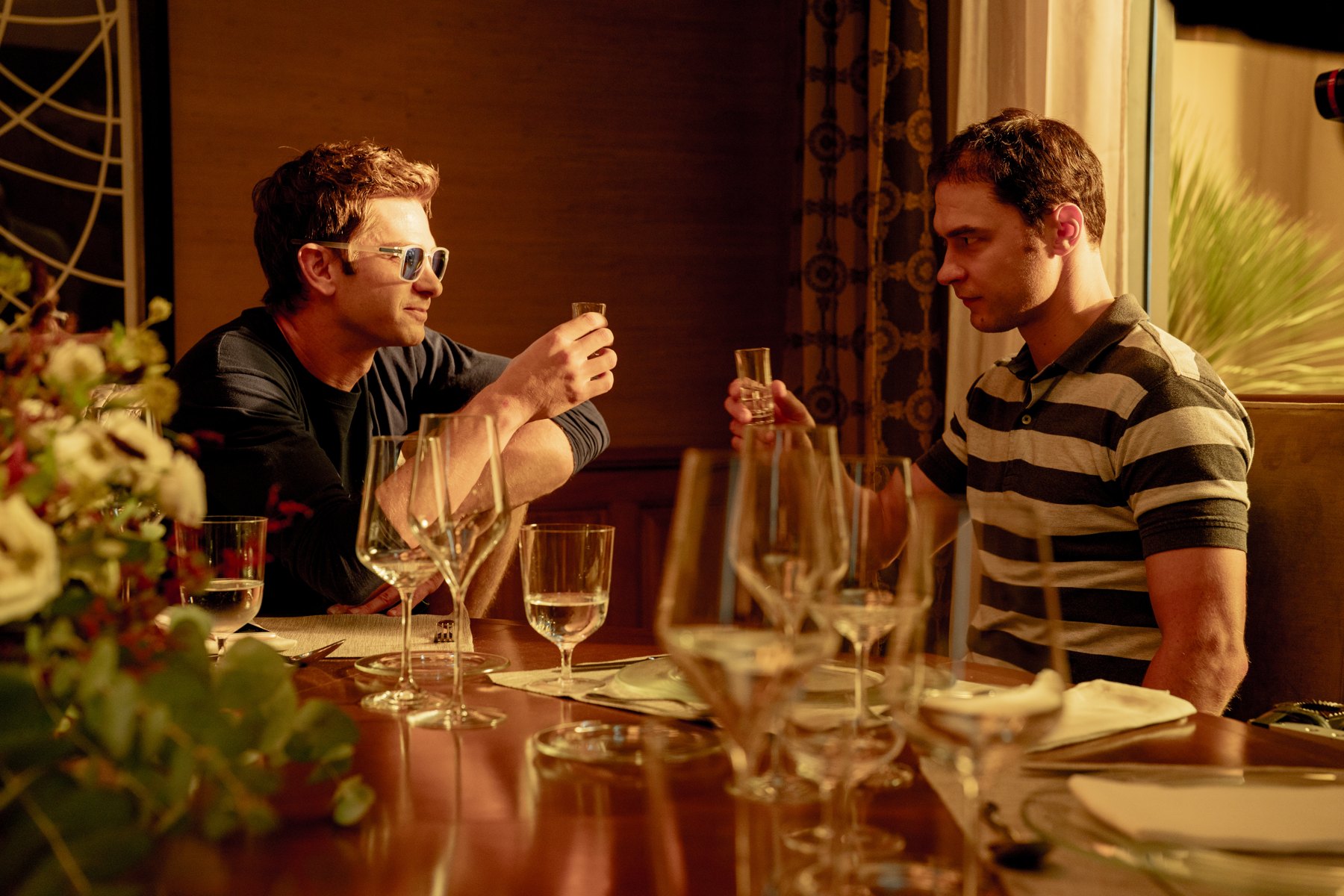
His performance as Andy in Bring Her Back is a study in quiet desperation. He plays a young man caught in a web of psychological manipulation, a character who is reserved, lonely, and constantly coming in second. It is a role that requires a huge degree of internal work, and he speaks with a refreshing honesty about the process.
He recounts how Danny Philippou once locked him in a room for twenty minutes before a scene, with no phone, no music, just the instruction to sit with the character. He describes it as feeling like he was on the "naughty step," a moment of tough but necessary love. And in that enforced quiet, he found the focus, the calm, the deep understanding of the character’s loneliness that he needed. This is not the story of a tortured method actor. It is the story of a young artist who is open, who is willing to trust his directors, who understands that the work is a collaboration.
This sense of trust seems to have permeated the entire set. He speaks with a genuine warmth about his co-stars, particularly Sora Wong, who was making her debut. He saw it as his job to be an "older brother," to create a safe space for her to be brave. He describes the set as a place where everyone wanted to be, where the cast and crew were so invested that they would happily skip lunch to get the shot, to adapt to the unpredictable whims of the weather. It is this sense of a shared mission, of a family built in the trenches of a difficult shoot, that clearly fuels him.
The Primal Scream
And then, there is the other side of his creative life. Beyond the discipline of the film set, there is the chaotic, joyful release of his band, The Hunger. Here, the quiet, internal work of the actor is replaced by the primal scream of the musician. He speaks of playing live with a visceral, almost giddy, excitement. He loves the energy of the crowd, the fact that kids his own age are not on their phones, but are dancing, moshing, and singing the words back to him.
His musical inspirations are the raw, unfiltered energy of bands like Green Day, Nirvana, and Queens of the Stone Age. He was inspired to start a band after watching an old video of Green Day playing in Chicago, of seeing the way an entire room could lose itself in the music. For him, music is not about perfection. It is about release. It is about the "nuts" feeling of hearing a crowd sing a song that you wrote in your bedroom.
This duality is the key to understanding him. He is both the disciplined craftsman and the joyful punk. He is the actor who can find the quiet truth in a moment of enforced solitude, and the musician who can lose himself in the glorious noise of a live show. He is not interested in choosing between these two worlds. He makes it work. He will fly back from a film set for a single day to play a gig, driven by a pure, uncomplicated love of the act itself.
Billy Barratt is a rare and exciting talent. He is an artist who approaches his work with a profound seriousness, but who never loses his sense of play. He is a young man who has already achieved a level of success that would make many complacent, but who remains hungry, curious, and deepl