
By Anna Zhila
The Audacity of Culture in a Bankrupt Borough
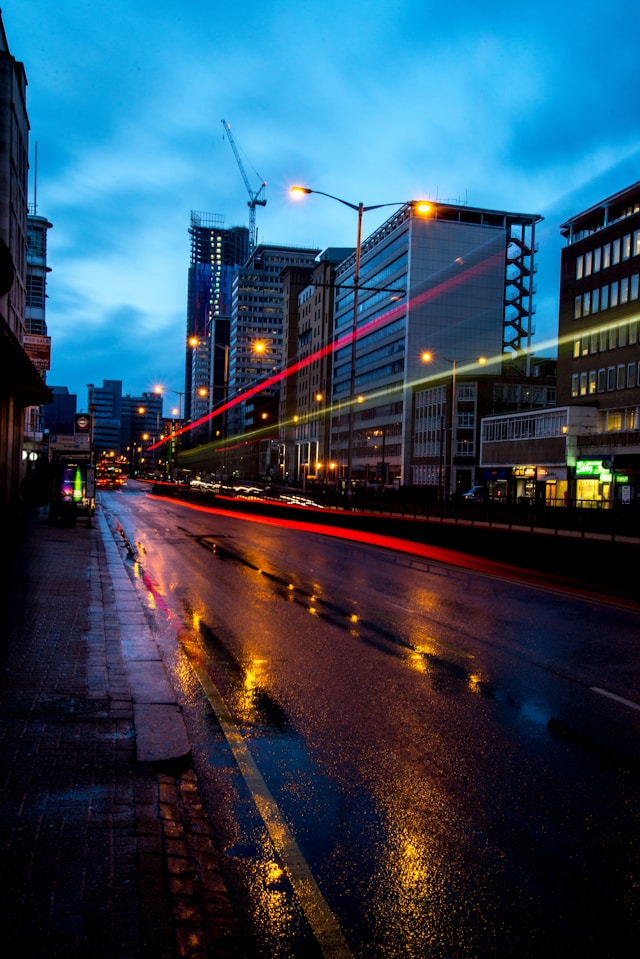
There is a specific quality to the light in South London on a grey afternoon, a diffuse, almost watercolour wash that seems to cling to the concrete canyons of Croydon. It is a light that reveals everything. It catches the proud, brutalist sweep of the NLA building, a relic of a future that never quite arrived, and it falls, with equal indifference, on the shuttered shopfronts and the faces of people for whom the phrase ‘cost of living crisis’ is not a headline, but a daily, grinding reality.
It was into this unforgiving light that Croydon stepped in 2023 to assume the title of London’s Borough of Culture. The very juxtaposition is jarring, a dissonance that borders on the surreal. Culture, with its connotations of enrichment, of leisure, of surplus, set against a backdrop of municipal bankruptcy so profound it has become a cautionary tale in British local government. A year-long celebration in a borough that, since 2020, has been forced to issue three Section 114 notices - the bureaucratic equivalent of a white flag - and impose a staggering 15% council tax hike on its residents. It is little wonder the announcement was met not with a universal chorus of civic pride, but with a deeply divided, often cynical, and entirely justifiable public response.
As an artist and observer of the urban condition, I have always been drawn to these points of friction, these places where a city’s official narrative collides with the lived experience of its people. The question that hangs over Croydon is not simply whether it can afford a party. It is a far more fundamental inquiry into the very nature and purpose of culture itself. In a place of such acute social and economic precarity, is a festival of the arts a grotesque frivolity, as some residents argue, or is it, perhaps, an act of radical necessity?
A Tale of Two Croydons
To understand the division, one must first grasp the sheer scale of the financial collapse. This is not a story of temporary belt-tightening. It is a narrative of systemic failure, of a council brought to its knees by what auditors damningly described as “collective corporate blindness.” A debt burden of over £1.4 billion, risky commercial property investments that soured, and the decimation of essential services have created a landscape of deep public anger and mistrust. When a resident is struggling to pay for basic services, when libraries are closing and social care is stretched to its breaking point, the announcement of a year of dance, music, and street art can feel like a profound insult. It speaks of a governing class so detached from reality that they offer cake to those who can barely afford bread. A debt burden of over £1.4 billion, risky commercial property investments that soured, and the decimation of essential services have created a landscape of deep public anger and mistrust. When a resident is struggling to pay for basic services, when libraries are closing and social care is stretched to its breaking point, the announcement of a year of dance, music, and street art can feel like a profound insult. It speaks of a governing class so detached from reality that they offer cake to those who can barely afford bread.
The argument is not without merit. I spoke with a woman in the Whitgift Centre, a sprawling, cathedral-like shopping precinct that feels like a monument to a more optimistic era of consumerism. Her voice, a mixture of fatigue and fury, was representative of many. “They can find money for this,” she said, gesturing vaguely towards a promotional banner, “but they can’t find money to keep the streets clean or support the youth centres. Who is this culture for? It’s not for us.”
This sentiment - this feeling of an invisible wall between the celebrated and the celebrants - is the greatest challenge the Borough of Culture faces. It is a perception that the festival is not a reflection of the community, but an imposition upon it; a Potemkin village erected for the benefit of visitors and the media, which will be dismantled as soon as the spotlight moves on, leaving the underlying problems to fester in the dark.
And yet, there is another story here. The history of state-sponsored cultural mega-events, from the European Capital of Culture to its UK counterpart, is not one of unmitigated failure. On the contrary, the data suggests a powerful, if complex, positive impact. Look at Hull, the 2017 UK City of Culture. A post-industrial port city with deep-seated social problems, it saw its year in the sun generate significant tourism, boost local business turnover, and, perhaps most importantly, foster a tangible increase in civic pride. Coventry, which held the title in 2021, secured over £183 million in additional investment and saw a £156 million rise in tourism income compared to pre-pandemic levels. Coventry, which held the title in 2021, secured over £183 million in additional investment and saw a £156 million rise in tourism income compared to pre-pandemic levels.
These are not insignificant figures. They represent jobs, investment, and a shift in the way a place is perceived, both by outsiders and, crucially, by its own inhabitants. The advocates for ‘This is Croydon’ - the slick, hopeful branding for the 2023 programme - point to this potential. They argue that culture is not an alternative to economic recovery, but a vital catalyst for it. It is a way to re-imagine the borough’s identity, moving it beyond the tired tropes of concrete jungles and urban decay, and celebrating its genuine, often overlooked, assets: its youth, its diversity, its raw creative energy. Croydon, after all, gave the world punk and dubstep; it is home to the BRIT School, a veritable incubator of talent. This is not a cultural wasteland. It is a place of immense, if often underground, creative ferment. This is not a cultural wasteland. It is a place of immense, if often underground, creative ferment.
Beyond the Balance Sheet
The true debate, then, is not about money. It is about imagination. The crisis facing Croydon is, at its root, a crisis of imagination - a failure to envision a future for the borough beyond speculative property development and retail-led regeneration. The concrete utopia of the 1960s failed. The shopping centre boom of the 1990s has stalled. The question now is: what comes next?
Here, the role of culture becomes critical. It is a space for experimentation, for asking difficult questions, for proposing alternative futures. It is, or should be, the research and development department of society. An artist’s work may not balance a budget, but it can challenge the assumptions that led to the budget’s collapse. A community theatre project may not fill a pothole, but it can build the social cohesion needed to demand better infrastructure.
The most successful aspects of previous City of Culture programmes have been those that were deeply embedded in the local community, that felt authentic and participatory rather than parachuted in from on high. In Coventry, 77% of the non-co3 for her. Iis for her. It must be a culture that is not afraid of the borough’s problems, but engages with them head-on.
But to argue that the borough should simply abandon the project, that it should focus solely on the grim arithmetic of cuts and balanced books, is to fall into the same poverty of imagination that created the crisis in the first place.
A city is more than a balance sheet. It is a collective act of will, a shared story we tell ourselves about who we are and who we want to be. For too long, Croydon’s story has been one of decline, of mismanagement, of being a punchline for those in the more fashionable postcodes of London. The Borough of Culture, for all its flaws and for all the legitimate anger it provokes, is an attempt to change the narrative. It is an assertion that even in the most difficult of circumstances, a community has the right to joy, to expression, to beauty. It is an assertion that culture is not a luxury, but a fundamental human need, as essential as any other service. And in the grey, unforgiving light of a South London afternoon, that feels like a story worth telling.




Leave a Reply
You must be logged in to post a comment.