
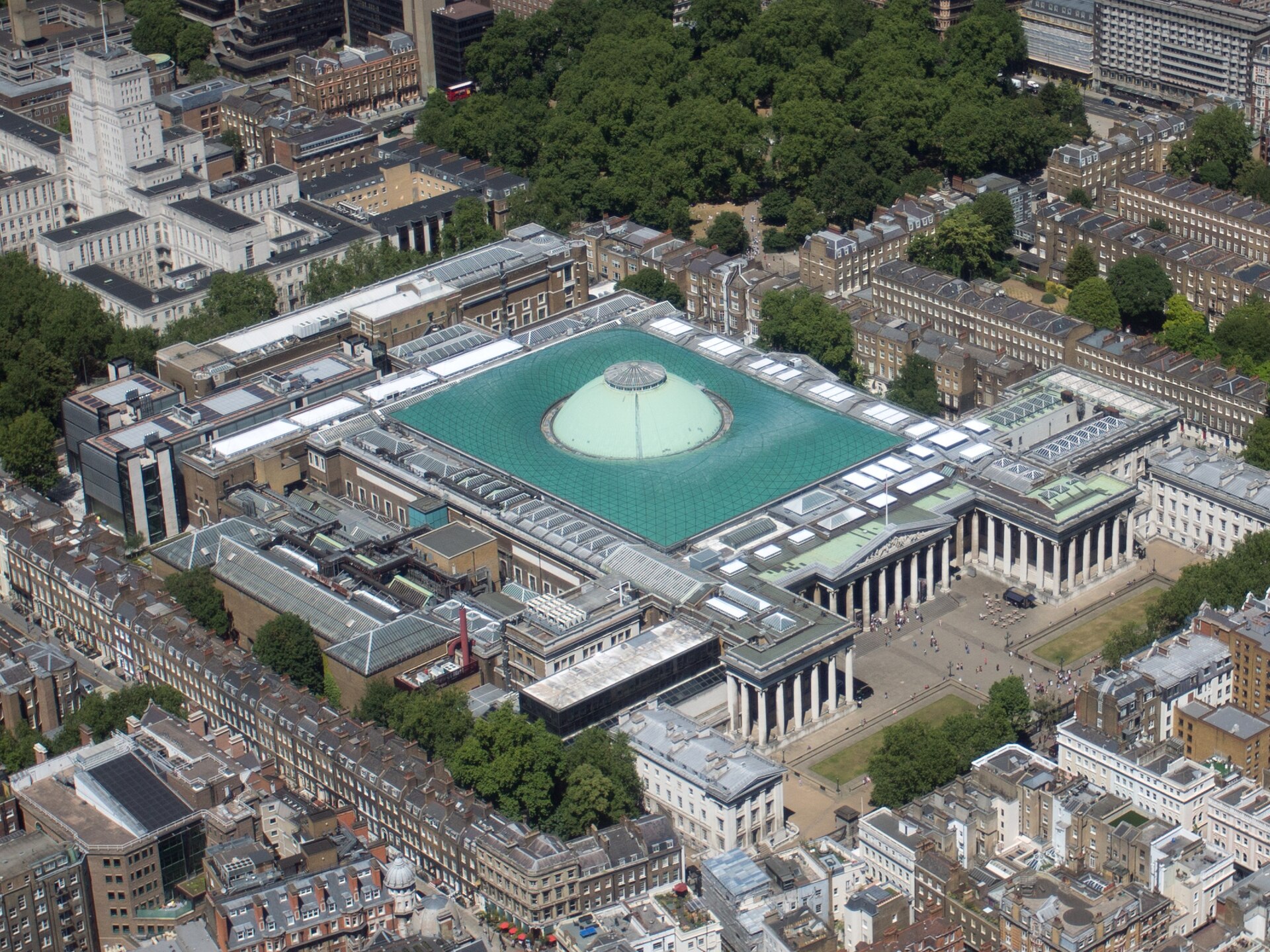

A literary prize sponsored by a bank is a strange and beautiful contradiction. The European Bank for Reconstruction and Development, the EBRD, is an institution of hard numbers and geopolitical strategy. Its business is the world of infrastructure projects, of loans and investments designed to foster market economies in the vast, complex territories stretching from Central Europe to Central Asia. It is a world of concrete, steel, and policy papers.
And yet, each year, this institution pauses its work of tangible reconstruction and turns its attention to a different, more fragile, and arguably more fundamental kind of development: the translation of literature. The EBRD Literature Prize is not a glamorous, red-carpet affair. But it is one of the most quietly significant and intellectually honest awards in the literary world. By choosing to honour not just an author, but also their translator, the prize makes a powerful and sophisticated argument: that the free movement of stories is as vital to a healthy and interconnected world as the free movement of capital.
An Act of Radical Empathy
To read a novel in translation is to perform an act of radical empathy. It is to agree to leave the familiar comfort of your own linguistic and cultural landscape and to enter a world that is, by its very nature, other. It is an act of listening. And in the current global climate, where the forces of nationalism and xenophobia are constantly urging us to retreat into the perceived safety of our own tribes, this act of listening has become a form of quiet, essential resistance.
The EBRD Prize, by its very design, is a map of this resistance. Its remit covers the vast and often misunderstood territories in which the bank operates. These are the countries of the former Eastern Bloc, of Central Asia, of the Southern and Eastern Mediterranean - places that, in the Western imagination, are too often reduced to a set of tired geopolitical clichés or consigned to the footnotes of history.
The prize insists that these are not just zones of investment or strategic interest. They are sources of vital, world-class literature. By funding the translation and publication of novels from these regions into English, the prize performs a kind of cultural archaeology, excavating stories that would otherwise remain inaccessible to the vast majority of the English-speaking world. It is a project of deliberate and necessary de-centering.
The Case of Serhiy Zhadan
Consider the 2022 winner, Serhiy Zhadan’s The Orphanage. Zhadan is a titan of contemporary Ukrainian literature, a poet and novelist whose work is a raw, unflinching, and deeply humane chronicle of life in the war-torn Donbas region. The Orphanage is a brutal, heart-wrenching, and strangely beautiful book. It is a road novel in reverse, the story of a teacher who must navigate a landscape of checkpoints, shelling, and shifting allegiances to rescue his nephew from a residential school.
This is not a novel that offers easy political answers. It is a novel about the texture of life in a state of perpetual, low-grade warfare. It is about the moral compromises, the small acts of kindness, and the sheer, stubborn will to survive that define a world where the grand narratives of politics have collapsed into the terrifying, immediate reality of a broken-down car and a sky full of incoming artillery. The sound of a shell, scraping the air as it passes overhead, is a recurring sensory detail.
For an English-language reader to experience this novel, in a superb translation by Reilly Costigan-Humes and Isaac Stackhouse Wheeler, is to be given a glimpse into the human cost of a conflict that, for many, had been an abstraction. To award this book a major prize, as the EBRD did months before the full-scale invasion of 2022, was a profoundly political act. It was an assertion that the stories of the people living in the shadow of this conflict mattered, that their experience was a central part of the European story, not a peripheral one.
A Double Vision
The prize’s unique insistence on honouring the translator alongside the author is a stroke of genius. It is a public acknowledgement of a truth that is too often ignored: that the translator is not a passive conduit, but an active, creative partner in the making of a book.
Translation is an art of impossible choices. The translator is a tightrope walker, constantly balancing the demands of fidelity to the original text with the need to create a new work that is alive and resonant in its adopted language. They must be a linguist, a cultural historian, a literary critic, and a writer in their own right. They are the invisible architects of our global literary conversation.
By putting the names of the translators on the cover, by splitting the prize money equally between author and translator, the EBRD Prize gives this invisible labour the visibility and the respect it deserves. It is a move that subtly rewires our understanding of authorship itself, suggesting that a book in translation is a product of a dual consciousness, a shared act of creation.
Beyond the Anglosphere
The prize also serves as a vital corrective to the notorious insularity of the British and American literary markets. Despite the global dominance of the English language, a shockingly small percentage of the books published in the UK and the US are works in translation. This creates a cultural echo chamber, a world where we are, for the most part, content to listen to our own stories, told in our own voices.
The EBRD Prize is a crowbar, prying open a window in that echo chamber. The shortlists are a revelation, an annual reading list that can take you from the surreal, post-Soviet satire of Slovakia to the intimate, historical dramas of Greece. To read the finalists is to be reminded of the sheer, exhilarating diversity of the European literary landscape.
It is a project that understands that literary culture is not a zero-sum game. The presence of a translated novel on our shelves does not diminish the value of our own literature; it enriches it. It provides new forms, new ideas, and new ways of seeing the world. It is an injection of vital, foreign DNA into a literary ecosystem that is always in danger of becoming too inbred.
In the end, the EBR-prize is an act of enlightened self-interest. A bank, an institution dedicated to fostering stable and prosperous market economies, understands something fundamental: that a society that does not read, that does not listen to the stories of its neighbours, is a society that is fundamentally unstable. It is a society that is vulnerable to the simplistic, dangerous narratives of nationalism and fear.
The prize is a small, but powerful, investment in the infrastructure of the European soul. It is a bet on the enduring power of literature to build bridges, to foster understanding, and to remind us of our shared, complex, and often difficult humanity. It is a prize that understands that the most important reconstruction is the one that happens in the quiet, private space between a reader and a book. It is, in its own quiet way, a work of peace.





Leave a Reply
You must be logged in to post a comment.