By Anna Zhila
There is a particular kind of courage that leaves almost nothing behind. It produces no monument, wins no case in the end, and is remembered mainly by people who go looking. Hans Litten's courage was of that kind for most of a century, and it is only now being widely retold.
In May 1931, at the Tanzpalast Eden trial in Berlin, Litten did something no one else attempted. He subpoenaed Adolf Hitler as a witness and cross-examined him for three hours.
What the case was actually about
The trial concerned an attack on a dance hall in which four members of the SA stabbed two workers. On its face it was an ordinary case of political street violence, of which Berlin had a great deal.
Litten, then in his late twenties, saw a different case inside it. He was not trying to convict four men of an assault. He was trying to establish, in a courtroom, on the record, that the violence was not spontaneous, that it was organised, and that the organisation ran to the top of the Nazi Party.
To prove that, he needed the man at the top in the witness box.
Three hours
Hitler appeared. Litten questioned him, methodically, about the party's own publications and about the relationship between its public respectability and the conduct of its paramilitary wing. He forced contradictions into the open and made Hitler defend, under oath and in public, the gap between what the party said and what it did.
Accounts agree on the effect. Hitler lost his composure. The performance of legality that the party was carefully constructing in the years before it took power was, for three hours, dismantled by a young Jewish lawyer with a subpoena.
It changed nothing about the trial's larger context, and Litten certainly knew it wouldn't. What it created was a record.
Afterwards
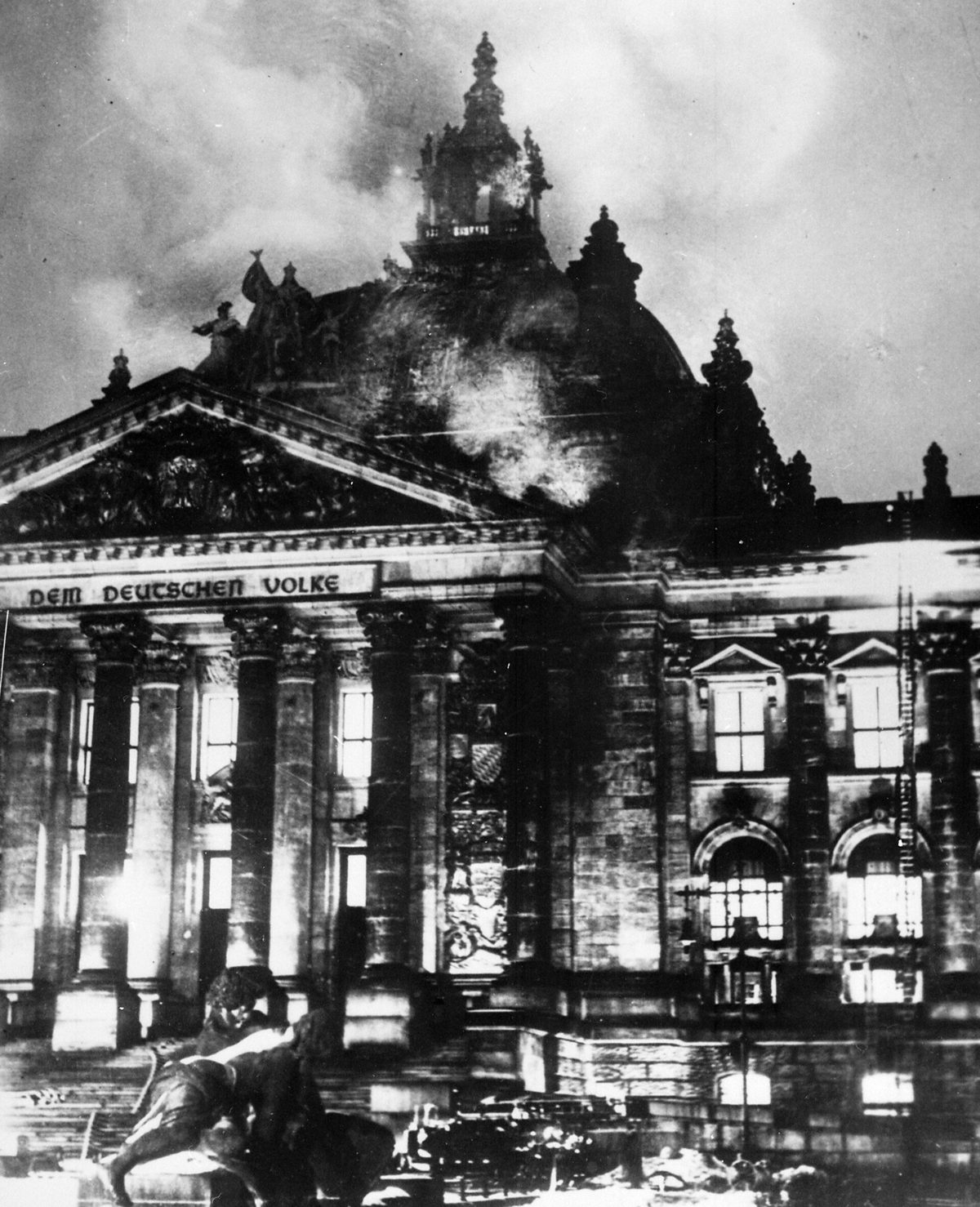
Hitler did not forget. On the night of the Reichstag fire in February 1933, within weeks of taking power, Litten was among those arrested.
He was held for five years. He was interrogated, tortured, and moved between Sonnenburg, Lichtenburg and finally Dachau. He was never tried. His mother, Irmgard Litten, campaigned continuously for his release and was refused, and her account of those years is one of the few sources for what was done to him.
He died at Dachau on 5 February 1938, aged 34. The circumstances are recorded as suicide, arrived at after five years designed to produce exactly that.
Why the story returns now
Litten's name has been carried mostly by the legal profession. Bar associations in Germany and Britain have honoured him; the German lawyers' association is housed in a building bearing his name. Outside the law, he remained largely unknown.
That is changing. His story reached wider audiences through Benjamin Carter Hett's biography Crossing Hitler, a BBC drama, and most recently a stage production in New York, Hans Litten: The Jew Who Cross-Examined Hitler, which opened in early 2026 and has been reviewed as a study of how legal systems behave while authoritarian movements are still inside them.
The renewed interest is not hard to account for. The Litten story is not about a regime already in power. It is about the years before, when the courts still functioned, when the paperwork was still in order, and when a lawyer could still compel a party leader to answer questions.
What the case actually demonstrates
It is tempting to file this under heroic failure, and that reading is too easy.
Litten was not trying to stop Hitler in a courtroom, and there is no evidence he believed he could. He was doing something narrower and more durable: establishing, through the ordinary machinery of evidence and cross-examination, a factual record that the violence was directed rather than incidental.
Records of that kind matter later, when the question stops being political and becomes historical. Litten was building for a future in which someone would want to know exactly what was known, and when, and by whom.
That the future arrived far too late for him is a fact about the century, not about the work.
Sources: contemporaneous accounts of the Tanzpalast Eden trial, May 1931; Benjamin Carter Hett, "Crossing Hitler: The Man Who Put Hitler on the Stand" (Oxford University Press, 2008); Irmgard Litten's memoir of her campaign for her son; records of Dachau concentration camp.