
By Yulia Tulegenova
For two months, the silence was the story. In the vacuum left by an official statement of surgical success and a request for privacy, a strange and feverish madness took hold. The digital world, a place that abhors a void, filled it with a cacophony of speculation, with conspiracy theories that veered from the absurd to the grotesque. A global search party was launched for a woman who had simply asked to be left alone.
And then, the noise stopped.
It was stopped not by a palace decree or a legal threat, but by the quiet, steady gaze of the woman herself. On a simple park bench, against a backdrop of pale daffodils, the Duchess of Cambridge, stripped of the usual regalia of her role, spoke directly to millions. The video was a medical bulletin, a confirmation of a cancer diagnosis and the beginning of a course of preventative chemotherapy. But it was also something far more profound. It was a masterclass in the management of a modern crisis, a quiet revolution in the performance of royalty, and a defining statement on the brutal, unwritten contract between the private self and the public gaze.
The Architecture of Absence
The monarchy has always understood the power of silence. The old mantra, “never complain, never explain,” was more than a piece of advice; it was a foundational principle. It was a strategy of mystique, a belief that the institution’s power lay in its symbolic distance, its refusal to engage with the messy, emotional fray of everyday life. The royal body was a symbol, not a person, and symbols do not get sick, they do not suffer, they simply endure.
For generations, this strategy worked. But it was a strategy designed for an analog world, a world of deferential journalism and a slower, more deliberate news cycle. It was not designed for the instantaneous, insatiable, and fundamentally anarchic ecosystem of the internet.
In this new world, the traditional royal silence was not interpreted as dignified reserve, but as a cover-up. The absence of information became, in itself, a piece of evidence. The vacuum created by the palace’s well-intentioned request for privacy became a petri dish in which every fear, every suspicion, and every crackpot theory could multiply at an exponential rate. The pressure cooker of online speculation, with its memes, its hashtags, and its amateur digital detectives, was building towards an explosion. The old code was failing.
A Portrait on a Park Bench
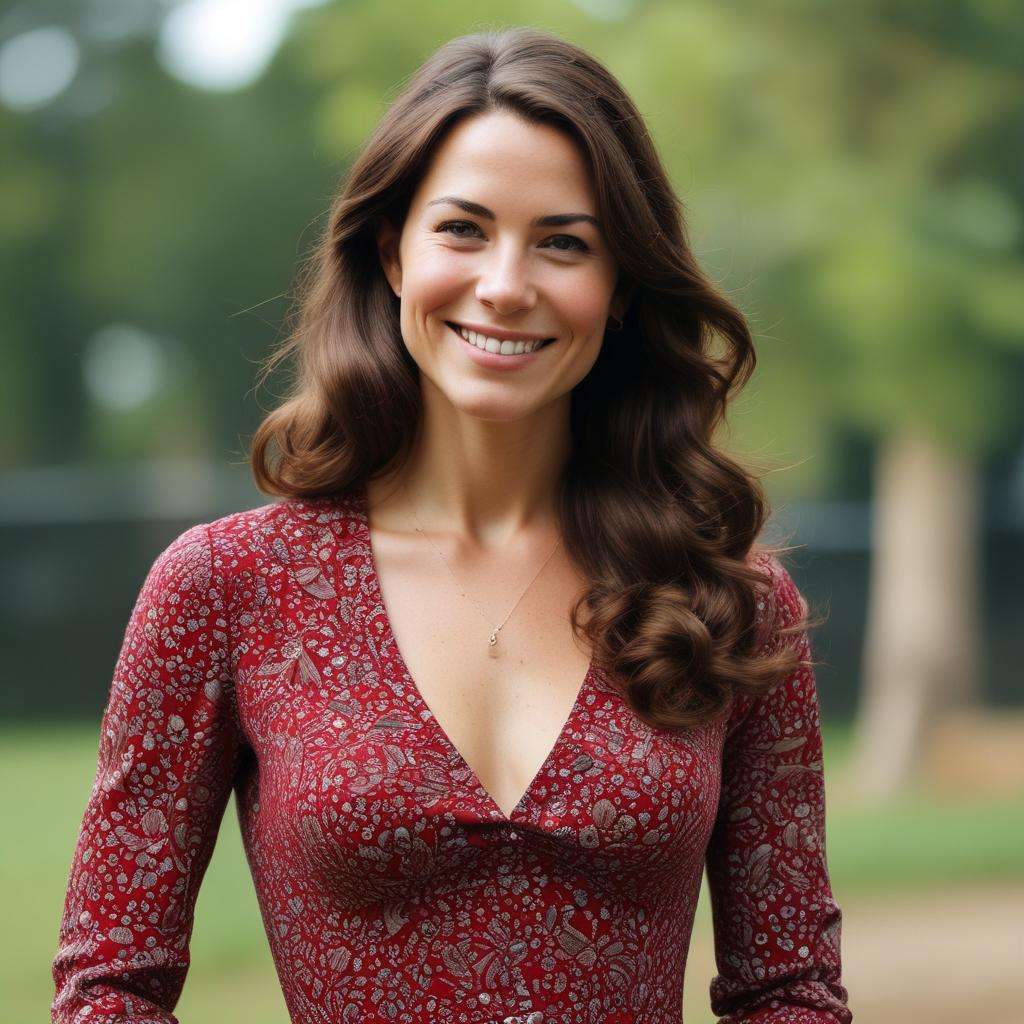
The video statement was the moment the pressure was released. And its power lay in its complete and total rejection of the traditional royal aesthetic. There was no grand throne room, no rustle of silk, no carefully arranged display of dynastic legitimacy. There was only a woman in a striped jumper, sitting on a bench, speaking in a calm, measured voice. The setting was deliberately, radically ordinary. It was the public park, the most democratic of spaces.
This was an act of profound vulnerability. To speak of fear, of shock, of the difficulty of explaining such a thing to your young children - these are not the traditional communications of the House of Windsor. But it was also an act of supreme control. This was not a tearful, spontaneous confession. It was a carefully scripted, perfectly executed piece of communication. The Duchess was not a victim of the story; she was its narrator.
By choosing this format, she bypassed the entire media apparatus that had been hounding her. She spoke directly to the public, on her own terms, without the filter of a journalist’s question or a photographer’s lens. It was an act of disintermediation, a quiet seizure of power. In a sense, she used the tools of the digital age - the intimate, direct-to-camera address - to defeat the madness that the digital age had unleashed.
The Politics of Empathy
The effect was instantaneous and absolute. The noise ceased. The conspiracy theories evaporated, suddenly looking not just foolish, but cruel. The narrative shifted in a single moment from suspicion to sympathy. The Duchess was no longer an object of speculation, a missing person on a milk carton. She was a mother, a wife, a human being navigating a terrifying diagnosis.
This is the new currency of public life. In an age of deep institutional distrust, authenticity - or at least, the convincing performance of it - is a source of immense power. The statement was a masterstroke of humanisation. By speaking of her family, of the need to process the news in private, and of her thoughts for others affected by the disease, she transformed her personal crisis into a moment of collective empathy.
She was not asking for pity. She was asking for understanding. And in doing so, she tapped into a deep and universal well of human experience. The message was clear: this can happen to anyone. The crown, for a moment, was set aside, and what remained was simply a person, asking for the same compassion and space that any of us would want in similar circumstances.
An Unspoken Dialogue
The crisis unfolded against the backdrop of another, more traditional, royal health battle. King Charles, facing his own cancer diagnosis, had followed the old playbook. His illness was announced in a formal statement. He was seen attending church, a stoic, symbolic figure reassuring the nation through his continued, visible presence.
This created a fascinating, unintended dialogue between two different models of monarchy. The King’s approach was the classic, institutional response: duty first, the personal subordinate to the symbolic. The Duchess’s approach, forged in the crucible of a more intense and personal media storm, was something new: a model that recognised that in the modern world, the personal is the political.
The two approaches, running in parallel, revealed the monarchy in a state of transition, grappling with how to adapt its ancient codes to a new and unforgiving media landscape. It was a real-time experiment in crisis management, a stress test of two different theories of what the public now needs, and expects, from its sovereign.
The New Royal Code
In the end, Catherine’s statement was more than just a successful piece of crisis communication. It was a quiet manifesto. It has, perhaps unintentionally, written a new chapter in the unwritten constitution of the modern monarchy. It suggests a new code, one where the old mystique is replaced by a carefully managed transparency, where vulnerability, when deployed with intelligence and control, can become a powerful source of connection and legitimacy.
Of course, this is a dangerous path. The line between authentic vulnerability and calculated performance is a thin one. The monarchy cannot become a reality television show, its members endlessly narrating their emotional lives for public consumption. The magic of the institution still depends on a degree of distance.
But the Duchess of Cambridge, sitting on that park bench in the pale spring light, has shown that a new balance is possible. She proved that it is possible to be both a symbol and a person, to guard one’s privacy while still offering a moment of genuine, human connection. She faced down the chaos of the digital mob, not with a royal decree, but with a quiet, devastatingly effective act of honesty. It was the performance of a lifetime. And in doing so, she may just have secured the future of the institution she has married into.



Leave a Reply
You must be logged in to post a comment.