By Yulia Tulegenova
There is a ghost in the pocket of British history. It is the ghost of a jumble of coins that made perfect, intuitive sense for a thousand years and now seems like a form of deliberate, almost beautiful, madness. For anyone born after 1971, the old monetary system of pounds, shillings, and pence is an artefact from a foreign country. The very idea - a pound made of twenty shillings, and a shilling made of twelve pennies - feels impossibly arcane. It is a mathematical puzzle, a historical curiosity that we, the inheritors of the clean, rational decimal system, can barely comprehend.
But to dismiss it as merely illogical is to profoundly misunderstand it. This was not a system designed by machines for machines. It was a currency that evolved organically, a monetary language that encoded a pre-modern way of seeing the world. Its eventual demise was not just a technical adjustment; it was a cultural amputation, the moment a system rooted in the human body and the natural world was replaced by one born of abstract, decimal mathematics. The story of the shilling is the story of a lost grammar of money.
The Ghost of Rome
The architecture of this system was, like so much of European culture, a creative misremembering of the Roman Empire. Its blueprint was laid down in the 8th century by the Frankish kings, most notably Charlemagne, who sought to impose a sense of imperial order on a fractured continent. They reached back to the monetary language of Rome, adopting its three core units: the libra, the solidus, and the denarius.
The libra, or pound, was the heavyweight, a large unit of account equivalent to a pound of silver. It was too vast to exist as a physical coin; it was a concept, a financial north star against which all other values were measured. The solidus was the middle child, originally a late Roman gold coin, now redefined as a twentieth of a silver libra. The smallest, and for a long time the only coin in common circulation, was the denarius, a small silver piece valued at a twelfth of a solidus.
This Carolingian framework - £sd, for libra, solidus, denarius - was a piece of cultural DNA. It replicated itself across Europe, adapting to local conditions but retaining its fundamental tripartite structure. The French had their livre, sou, and denier. The Italians had the lira, soldo, and denaro. And in the Germanic and Anglo-Saxon world, the solidus became the shilling, and the denarius became the penny. For a millennium, this was simply how money worked. It was an echo of a dead empire, ringing in the purses of everyone from a French peasant to an English merchant.
A Human-Scale Calculus
The critical question, of course, is why? Why the bewildering divisions of twenty and twelve? The answer is that these numbers were not bewildering at all. They were the native mathematics of the pre-modern world, a world that did not count in abstract tens, but in tangible, practical, and often mystical groups.
Twelve is a profoundly human number. It is the number of months in a year, the signs of the zodiac, the tribes of Israel, the apostles of Christ. It is a number that is eminently divisible. You can split a dozen into halves, thirds, quarters, and sixths with perfect ease. For a society without calculators, this was not a trivial feature. It meant that a shilling’s worth of goods could be easily divided among two, three, four, or six people. It was a number for the market stall, not the laboratory.
Twenty, or a score, was another fundamental unit of counting, rooted in the human body itself - the sum of our fingers and toes. "Three score and ten" is not just a poetic phrase from the Bible for seventy years; it is a record of how people thought and counted. The division of a pound into twenty shillings fit seamlessly into a world that naturally grouped things into scores.
This was a system built for a world of tangible things. A "shilling's worth of bread" was, in a sense, a unit of weight, a physical amount of sustenance that could be understood without recourse to abstract grams. It was a currency that felt rooted in the rhythms of agriculture, trade, and daily life. It was as organic as a baker’s dozen, a system whose slight "illogic" was a direct reflection of the messy, practical needs of human beings.
The Weight in the Pocket
This physicality was reflected in the coins themselves. They were not the bland, homogenous discs of modern currency. Each had a character, a weight, a name that felt like it had been worn smooth by centuries of use. There was the tiny, silver threepenny bit and its later, thick, twelve-sided brass successor. The sixpence, or "tanner," small enough to be tucked into a Christmas pudding for luck. The shilling, the "bob," the workhorse of the system.
And then there were the grandees. The florin, a handsome two-shilling piece. The half-crown, worth two shillings and sixpence, a coin of satisfying heft. And the crown itself, a magnificent five-shilling piece, too large and cumbersome for daily use, reserved for ceremony and commemoration. To hold a handful of these coins was to feel a physical connection to history. The jingle in a pocket was a complex, polyphonic sound, a tiny orchestra of silver and bronze, each with its own story to tell.
The Great Upheaval
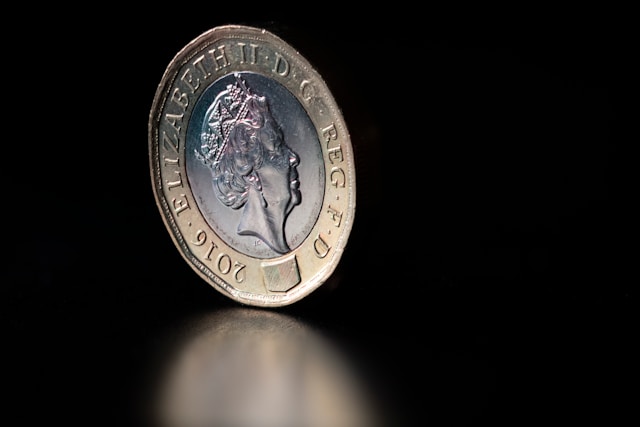
The end, when it came, was swift and absolute. On the 15th of February 1971, known as "Decimal Day," a thousand years of monetary tradition were wiped away. The pound was decimalised. It would now be divided into one hundred "new pence." The shilling, the florin, the half-crown - they were all rendered obsolete overnight.
For the government, it was an act of necessary modernisation, a streamlining of the national accounts to bring Britain in line with the rest of the world. For a significant portion of the population, it was a moment of profound cultural trauma. The transition was a period of national confusion, a fog of conversion charts and dual pricing. One can still hear the stories of shopkeepers patiently explaining the new system to bewildered pensioners, of the frustration of trying to translate a lifetime of financial muscle memory into a new, alien language.
The new coins felt thin, anonymous. The familiar weight and texture of the old money were gone. The new "5p" piece was a poor substitute for the solid, dependable shilling. The rich tapestry of slang - the quid, the bob, the tanner - began its slow fade from common usage. Something more than just a currency had been lost. A whole system of cultural memory, embedded in the very objects people handled every day, had been erased.
The Logic of the Machine
The death of the shilling was, in a larger sense, a victory of one kind of logic over another. It was the victory of the abstract, mathematical logic of the machine over the embodied, human logic of tradition. The decimal system is, of course, far more efficient. It is easier to calculate, to standardise, to input into a computer. It is the currency of the globalised, digitised world.
But in gaining that efficiency, we lost a system of extraordinary texture and depth. The old £sd system was a living thing, a currency that carried its Roman and medieval history within it. It was a system that reflected the very way our ancestors counted, divided, and made sense of their world. It was inconvenient, it was complicated, and it was utterly, stubbornly human.
Perhaps the most telling thing is how quickly we have forgotten it. We now live so completely inside the decimal system that the world of the shilling seems almost unimaginable. Its ghost still lingers in the name of the pound, the last survivor of the old Roman libra. But its soul, that beautifully illogical calculus of twelves and twenties, has vanished. We live in a more efficient world now, a world of clean, rational numbers. One can’t help but wonder, though, what other ghosts we have exorcised in our relentless pursuit of the logic of the machine.